Trump’s Iran Strategy Falters, Allies Question U.S. Role
Former White House Communications Director Michael Dubke discusses the complexities of the Trump administration's strategy in Iran, suggesting a missed opportunity for early withdrawal. He analyzes the impact on Trump's base and international alliances, while also touching on the president's unique communication style.

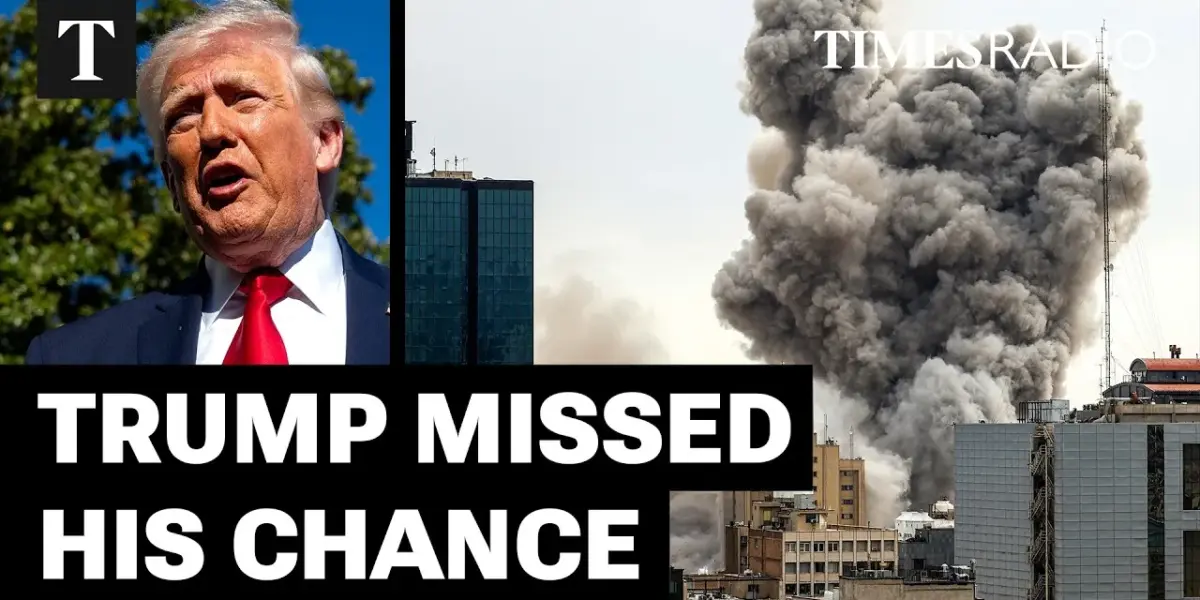
Trump Administration Faces Criticism Over Iran Conflict
The Trump administration’s approach to the conflict in Iran has drawn significant scrutiny, with former officials and commentators questioning the strategy and its impact on international relations. Michael Dubke, who served as White House Director of Communications during Trump’s first term, offered insights into the situation, suggesting that the U.S. may have missed an opportunity for a swift exit from the conflict.
Missed Opportunity for Early Withdrawal
Dubke believes the United States missed a crucial window to disengage from the Iran conflict shortly after the initial attacks. He stated, “I think we missed an opportunity of getting out of the um this situation after 4 to 7 days after the initial uh attack.” This perspective suggests that while initial military objectives may have been met, including degrading Iran’s air force and navy, the prolonged engagement has led to a more complex situation.
The focus, according to Dubke, has shifted from the original goal of preventing Iran from obtaining nuclear weapons to concerns about the Strait of Hormuz. “We’ve now kind of gotten stuck a bit in the mud, so to speak,” he explained, highlighting the unintended consequences of extended military action.
Impact on Trump’s Base and Allies
Despite criticism from some prominent figures like Tucker Carlson and Candace Owens, who have been vocal Trump supporters, Dubke argues that Trump’s core base remains largely intact. He cited recent poll numbers showing high support, especially within the MAGA movement. “The numbers don’t back that up,” Dubke stated, referring to claims of eroding support. He suggested the current friction is more between media personalities and the loyal base.
However, the conflict has strained relationships with key allies. Dubke noted that the image of Gulf States as safe havens for capital has been shattered due to their proximity to the conflict and Iran’s retaliatory actions. Regarding NATO, he acknowledged the president’s disappointment with the alliance’s response but emphasized NATO’s defensive nature.
American public opinion towards Israel has also reportedly shifted due to the war. Dubke observed a growing split, suggesting that Israel’s actions, particularly in southern Lebanon, may be inadvertently harming its reputation in the U.S. by complicating ongoing diplomatic efforts.
Challenging Comparisons to Suez
While some historians have drawn parallels between the current situation and the 1956 Suez Crisis, Dubke finds the comparison weak. He noted that while both involve crucial transportation chokepoints, the geopolitical context of the Cold War and decolonization in the Suez Crisis differs significantly from the present-day dynamics.
A key difference, Dubke pointed out, is the lack of open pushback from European allies, unlike the U.S. stance against Britain and France during Suez. The role of China remains a significant wildcard, as Beijing has maintained a notably quiet stance so far, making the analogy uncertain.
Trump’s Unique Communication Style
Dubke, having served as Director of Communications, described the challenge of managing messaging for Donald Trump. He stated that Trump essentially serves as his own director of communications, a reality shaped by his early adoption and mastery of social media.
“He does feel… that he is his own best communicator,” Dubke explained. This direct-to-public approach, often through platforms like Truth Social, can create challenges for staff seeking a cohesive message. Dubke acknowledged that while Trump consults with staff, he is decisive and often acts without waiting for full consensus.
Comparing the Trump administration’s use of social media to the Obama era, Dubke highlighted the stark contrast. “It was like night and day,” he said, describing the Obama administration’s approach as a “shortened version of a press release,” unlike Trump’s dynamic and often unfiltered communication.
Melania Trump Breaks Silence
In related news, First Lady Melania Trump recently broke her usual media silence to address the ongoing situation. Dubke suggested her statement garnered significant attention precisely because she rarely speaks publicly. He indicated that she likely felt compelled to speak out, and while the president was aware of her intention, the timing and content were her own.
Source: Trump ‘Stuck In The Mud’ After Missing An Early Exit From Iran War | Michael Dubke (YouTube)

Related Articles

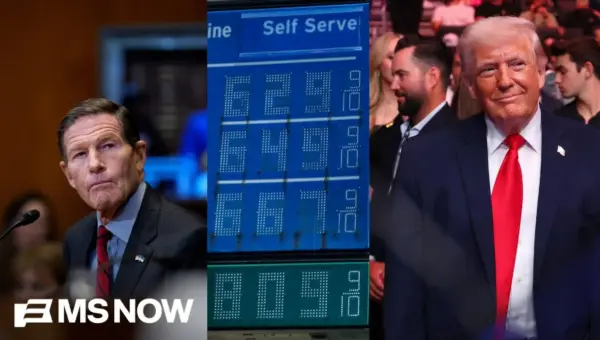
Trump’s Economy Crumbles as Iran Conflict Sparks Price Hikes
Soaring gas prices and inflation are hitting Americans hard, with a Democratic Senator blaming President Trump's policies and the conflict with Iran. The economic pain is causing widespread anxiety and forcing difficult choices for families. Senator Blumenthal calls for diplomacy and a stronger Congressional role in foreign policy.
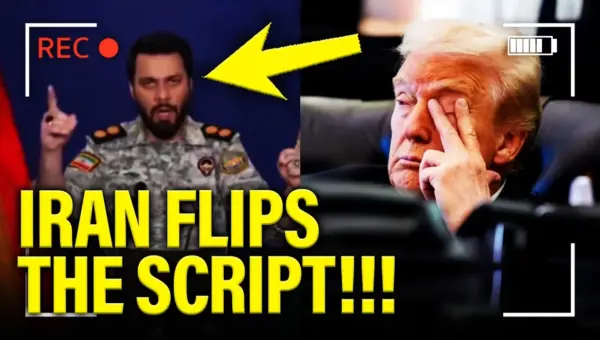
Iran’s AI Trolls Outsmart Trump’s Online War
Iran has turned to AI-generated videos and a relentless online trolling campaign to counter Donald Trump following failed negotiations. This strategy highlights a new form of asymmetrical warfare in the digital age, raising questions about the future of international relations and information control.
Trump Escalates Iran Conflict, Threatens Blockade
Former President Donald Trump has escalated tensions with Iran by threatening to blockade the Strait of Hormuz following failed negotiations led by Senator JD Vance. This move is marked by significant contradictions and raises concerns about global economic stability and the risk of wider conflict.