Trump’s Iran Strategy Fails: Bolton Exposes Lack of Planning
John Bolton critiques the Trump administration's Iran strategy, highlighting a lack of planning, contradictory demands on allies, and an undefined objective of regime change. The analysis explores the consequences of this approach on regional stability and global politics.

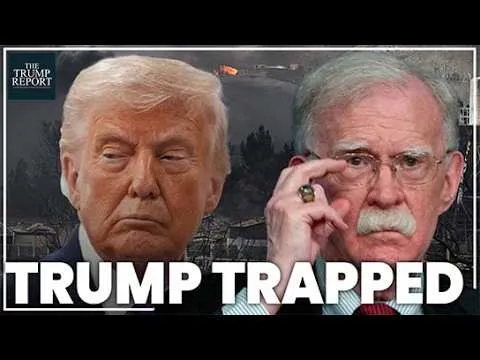
Trump’s Iran Strategy Fails: Bolton Exposes Lack of Planning
The current geopolitical landscape surrounding Iran is fraught with tension and uncertainty, a situation that, according to former National Security Advisor John Bolton, could have been significantly mitigated with more foresight and strategic planning from the Trump administration. In a recent interview on The Trump Report, Bolton detailed his concerns, highlighting a perceived lack of a coherent strategy in dealing with Iran, particularly concerning the Strait of Hormuz and the broader objective of regime change.
Demands on Allies and Contradictory Stances
The immediate catalyst for the discussion was President Trump’s call for NATO allies, including the UK, France, Germany, Japan, and Australia, to contribute naval assets to secure the Strait of Hormuz. Bolton characterized this demand as contradictory, given Trump’s history of alienating these same allies, including criticizing NATO and expressing disinterest in their involvement in past conflicts. “Oh, it’s absolutely contradictory. But that doesn’t slow Trump down. It doesn’t matter. What matters to Trump is what matters to Trump,” Bolton stated, emphasizing a transactional and self-centered approach to foreign policy.
Bolton argued that a more effective approach would have involved proactive consultation and coalition-building. “Normally, before you go to war, you create your coalition of the willing in advance… So, this coalition consists of Israel and the United States. But I think that there could have been a very strong case to be made to NATO,” he explained. Instead, Trump’s public demands put allies in an awkward position, appearing to capitulate to pressure rather than engaging in genuine cooperation.
Regime Change: An Unarticulated Objective?
A central theme of Bolton’s critique is the ambiguity surrounding Trump’s ultimate objective in Iran. While Bolton himself is a strong proponent of regime change, he expressed doubt that it was a clearly defined or well-communicated goal of the Trump administration. “If that is Trump’s objective, and nobody really knows, but I think it’s Trump’s objective, I certainly support it. But he made a lot of mistakes before the war. Not preparing the ground with the American people, not making the case for regime change, not making the case to Congress, not consulting allies, not consulting the Iranian opposition,” Bolton elaborated.
He pointed to the fact that the risk of Iran closing the Strait of Hormuz was a known concern, even as far back as 2018-2019 when he was in office. “Trump was fully aware of many of the risks associated with regime change and I was never able to be successful in persuading him to adopt it. So why now somehow seven years later, it’s the thought of regime change suddenly flashes across his mind and he doesn’t consider any of the difficulties or obstacles that need to be overcome?” Bolton questioned, attributing this to a lack of strategic thinking and a reliance on “neuron flashes” rather than deliberate policy development.
The Strategic Implications of Unpreparedness
The consequences of this perceived strategic deficit are evident in the current situation. Bolton highlighted the administration’s apparent surprise at Iran’s capabilities, such as deploying naval mines and utilizing drone technology, despite ample warnings. “The Wall Street Journal reported that Dan Kaine, the chairman of the Joint Chiefs of Staff, that he briefed President Trump several times that an American attack could prompt Iran to close the Strait of Hormuz. Trump acknowledged the risk and told his team that Iran would likely capitulate before closing the Strait and if Iran tried, the US military could handle it,” Bolton recounted. He found it “stunning” if the military were not providing such warnings, underscoring a disconnect between intelligence and presidential decision-making.
The lack of preparedness extends to the broader military and economic implications. Bolton noted that even destroying Iran’s mine-laying ships did not address the threat from fast boats or drones capable of dropping mines. Furthermore, he pointed out the irony that tankers, with their double hulls, are better equipped to withstand mine damage than military destroyers.
Transactional Diplomacy and Global Ramifications
Bolton’s analysis extended to the transactional nature of Trump’s foreign policy, which he believes fundamentally misunderstands the concept of alliances. He suggested that allies might view the current situation as a quid pro quo, where their assistance in the Strait of Hormuz could be linked to continued US support for Ukraine. “If I were the Europeans, I’d say we’re in with you on opening the Strait of Hormuz if you agree to continue helping Ukraine with military intelligence and things like that to try and deal with Trump on his level,” Bolton advised, while lamenting that such essential relationships shouldn’t be reduced to transactions.
The ripple effects of the Iran situation are also being felt in other geopolitical arenas. Bolton drew a parallel to China’s increased military pressure around Taiwan, suggesting it could be a tactical move to exploit perceived U.S. distraction. He also raised concerns about the economic benefits to Russia from rising oil prices, a consequence of the instability in the Strait of Hormuz. “An increase in the global price of oil does benefit Russia. We should not have removed the sanctions from them. This is a time to bear down on the sanctions against Russia even more,” Bolton urged, advocating for a global program to combat sanctioned oil transport.
Why This Matters
The core of Bolton’s critique underscores a critical failure in American foreign policy: the absence of a long-term, coherent strategy. The current crisis in the Strait of Hormuz, and the broader tensions with Iran, are presented not as inevitable outcomes, but as predictable consequences of a leadership that prioritizes short-term, transactional gains over sustained diplomatic engagement and strategic preparation. This approach not only jeopardizes regional stability but also strains crucial alliances and potentially emboldens adversaries like China and Russia. The implications are far-reaching, affecting global energy markets, international security, and the credibility of U.S. leadership on the world stage.
Historical Context and Future Outlook
Bolton’s remarks draw on his extensive experience in national security, including his time as ambassador to the UN and National Security Advisor. His perspective reflects a traditionalist view of foreign policy, emphasizing the importance of alliances, coalition-building, and clear strategic objectives. He contrasts this with what he perceives as Trump’s impulsive and ad-hoc decision-making. The historical context includes the long-standing adversarial relationship between the U.S. and Iran, marked by events like the 1979 revolution, the Iran nuclear deal, and previous U.S. administrations’ approaches to the region.
Looking ahead, Bolton suggests that failure to achieve regime change in Iran could lead to a worsening of the situation, with the regime emboldened by its perceived ability to disrupt global markets. He stresses that if the U.S. is not prepared to see a strategy through to completion, it should not initiate such actions. The current situation demands a re-evaluation of strategic priorities, a recommitment to alliances, and a more robust approach to defense spending and preparedness, not just for Iran, but for other potential flashpoints like Taiwan. The underlying message is that effective foreign policy requires sustained effort, careful planning, and a deep understanding of the complex global dynamics at play, elements that Bolton argues have been conspicuously absent in the current administration’s approach to Iran.
Source: Trump's 'paying the price' for having no strategy in Iran | John Bolton (YouTube)

Related Articles


Israel Escalates Iran Strikes, Warns of Wider War
Israel has launched significant strikes inside Iran following continued missile fire, warning of further escalation. The conflict risks wider regional instability and economic disruption, especially concerning the Strait of Hormuz.

Trump’s Iran War Plans Criticized Amid Border Funding Standoff
Lawmakers and analysts are criticizing the Trump administration's handling of the Iran conflict and its approach to border funding, arguing that a lack of clear planning and a focus on political battles are making the U.S. less safe. Concerns are particularly high regarding the FBI's priorities and the potential impact of these issues on national security.

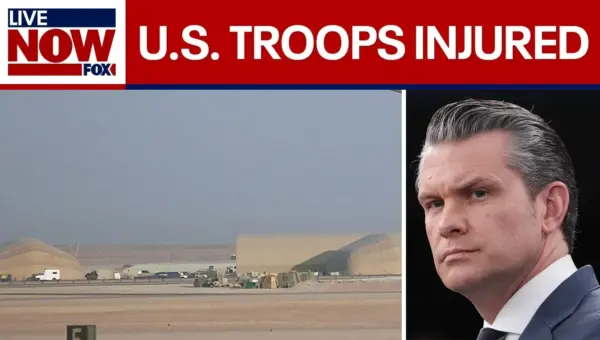
US Troops Wounded in Saudi Base Attack by Iran
An Iranian missile attack on Prince Sultan Air Base in Saudi Arabia wounded multiple U.S. service members and damaged aircraft. The incident highlights the ongoing risks in the Middle East and the limitations of air defense systems. Analysts discuss the strategic implications, economic pressures, and the isolation of Iran amidst the conflict.