Trump’s Iran Rhetoric Sparks Debate on War Tactics
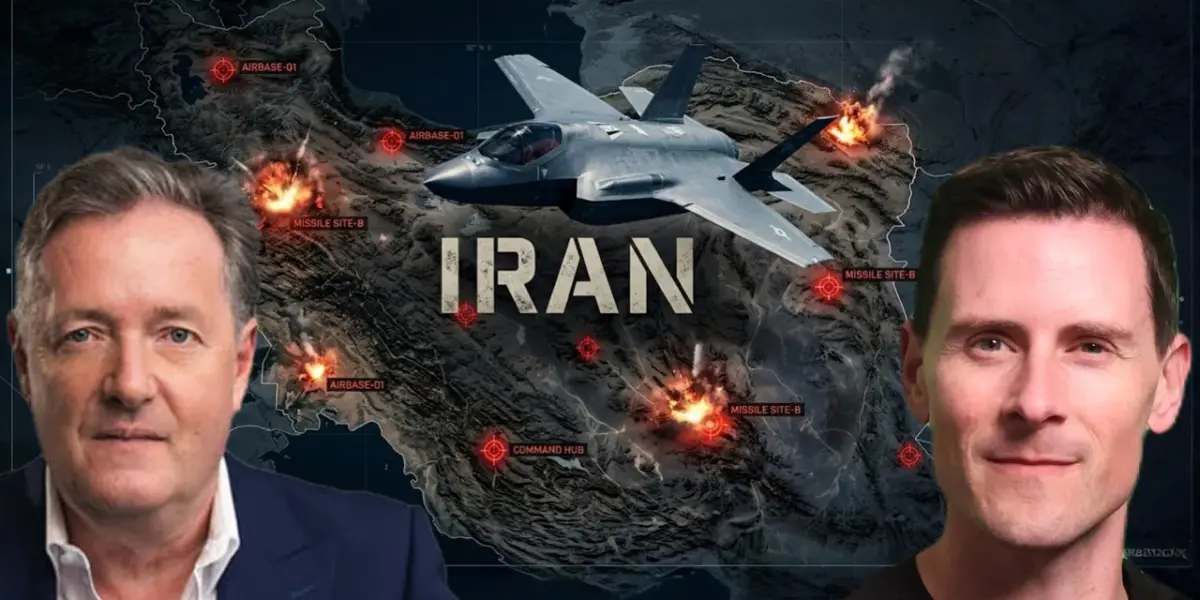
A debate has erupted over former President Donald Trump's rhetoric concerning Iran, with former Air Force pilot Ryan and commentator Piers Morgan clashing over its military effectiveness and ethical implications. The discussion highlights the tension between aggressive posturing and established rules of warfare.

Trump’s Iran Rhetoric Sparks Debate on War Tactics
Former President Donald Trump’s recent statements regarding Iran have ignited a significant debate among military analysts and commentators. The discussion centers on the effectiveness and implications of his public pronouncements, particularly concerning potential military actions against the Islamic Revolutionary Guard Corps (IRGC).
Rhetoric vs. Reality in Iran Standoff
The core of the controversy lies in Trump’s use of strong language, including the phrase “a whole civilization will die tonight.” While supporters argue this is a tactic to confuse and deter Iran, critics contend it violates the laws of war and risks escalating tensions unnecessarily. Ryan, a former U.S. Air Force combat pilot, suggested that such statements, while potentially controversial, can be part of a broader strategy of deception in warfare. “The art of war is you keep them guessing,” he explained. “You don’t want to tell the Iranian regime when this war is going to end. You don’t want to tell them what’s coming next.”
However, Piers Morgan strongly disagreed, highlighting that Trump’s initial broad threat was later contradicted by a more specific focus on the IRGC. “He used the words, ‘A whole civilization will die tonight.’ You might want you might have wanted him to say what you’ve just articulated, and if he’d said that, there wouldn’t be the outrage there is. But he didn’t say that.” Morgan also raised concerns about the impact of such mixed messages on service members, stating, “to have a commander-in-chief sending such mixed messages all the time in real time publicly, right? I mean, this is not good for anyone serving in the United States.”
Targeting Legitimate Military Assets
The discussion also touched upon specific military targets. Ryan pointed out that certain strikes, like those on PARS energy plant and Sharif University, could be considered legitimate. He explained that PARS reportedly powers the IRGC’s ballistic missile program, making it a valid target. Sharif University, he added, functions as a data center for designing missiles and drones. “So that makes it a legitimate target,” he stated, referring to the energy plant.
“The moment you lose that, the moment you abandon all pretense at morality or being a superior moral force and you just decide to fight evil with evil and you fight people threatening to annihilate you by annihilating the entire country, I’ve got you lose me.”
This perspective was challenged by the idea that such tactics could blur the lines between combatants and civilians, potentially leading to war crimes. Retired Lieutenant Colonel Rachel Van Lindingham was quoted as saying that threatening to bomb civilian infrastructure like bridges and power plants is a war crime, as it terrorizes the civilian population through rhetoric, which violates the law of war.
The ‘Art of War’ and Public Perception
Ryan defended the use of deception as a long-standing military tactic. He drew parallels to Sun Tzu’s “The Art of War,” emphasizing that confusing the enemy is a crucial element of successful operations. This strategy, he argued, is difficult for the public to grasp but necessary when dealing with regimes considered to be terrorists. “You have to sometimes fight fire with fire,” he asserted.
Morgan, however, expressed deep reservations about this approach, particularly when it comes to the perceived moral standing of the U.S. military. He stated, “There’s supposed to be a moral code. I’m sure you abided by it when you served.” He voiced concern that fighting “evil with evil” could erode the very principles that make the American military a respected force. He felt that the approach risked losing moral authority.
Geopolitical Ramifications and ‘Reality Show’ Warfare
The broader geopolitical implications were also discussed. The conversation highlighted the IRGC’s role as a state sponsor of terrorism and the potential threat of Iran developing nuclear weapons. There was concern about Iran’s willingness to escalate, with some suggesting they are ideologically committed to their current path, even at great cost. Ryan suggested that even if initial threats are not met, military action could pivot to systematically dismantling the IRGC’s funding capabilities, citing a strike on Kar Island as an example of hitting military infrastructure without targeting oil facilities.
Morgan drew a comparison between Trump’s conduct and his background in reality television, such as “The Apprentice.” He argued that treating war like a game or a reality show is deeply problematic. “War is not a game. It’s not a reality show,” he insisted. “And when you add all the memes that the White House has been putting out and the Hollywood style video stuff and so on. None of it sits easily with me because there is nothing worse in the world than war.” He believed this approach was disrespectful and wished for a more solemn conduct of military affairs.
Ryan countered that warfare today is also a propaganda war, and that President Trump is actively engaging in the media aspect to counter the IRGC’s own propaganda efforts. The debate ultimately concluded with the acknowledgment that the situation is ongoing and will unfold as events progress.
Source: HEATED CLASH Between Piers Morgan & Max Afterburner on Trump's Iran Post (YouTube)

Related Articles


Strait of Hormuz Tensions Rise: Allies Urged to Step Up
European allies are urged to increase their efforts in securing the Strait of Hormuz, a vital oil transit route. Concerns persist over Iran's nuclear program and regional activities, posing a threat to global stability.


Trump Exploits Iran’s Factional Chaos for Deal
The Trump administration is reportedly exploiting deep divisions within the Iranian regime to gain leverage in ongoing peace talks. By fueling infighting among various factions, the US aims to secure a more favorable deal or weaken its adversaries through internal conflict. This strategy also extends to pressuring China economically by disrupting its access to discounted oil.
Iran’s Stark Choice: Surrender or Face Destruction
A senior analyst states Iran must choose between total surrender or annihilation. Khosro Isfahani highlights conflicting media reports and urges awareness amidst potential conflict. This stark choice has significant global implications.