Trump’s Iran Regime Change: Legal or Not?
The legality of President Trump's pursuit of regime change in Iran is under scrutiny. International law, particularly the UN Charter, strictly prohibits the use of force against another state's territorial integrity or political independence, with limited exceptions for UN Security Council authorization or self-defense.


Trump’s Iran Regime Change: Legal or Not?
President Donald Trump has repeatedly expressed a desire for regime change in Iran, even encouraging Iranian citizens to rise up against their government. However, the legality of a nation initiating war solely to topple another country’s government is a complex issue under international law, particularly the United Nations Charter.
UN Charter and the Prohibition of Force
The UN Charter is explicit in its stance against the use of force. Article 2(4) states that all member states shall refrain in their international relations from the threat or use of force against the territorial integrity or political independence of any state. This principle forms the bedrock of international law, prohibiting unilateral regime change as a legitimate cause for war. There is no recognized international legal doctrine that permits a country to unilaterally invade another nation with the express purpose of overthrowing its government.
Exceptions to the Prohibition of Force
Despite the general prohibition, the UN Charter outlines two specific circumstances under which the use of force is legally permissible:
- UN Security Council Authorization: Under Chapter VII of the UN Charter, the UN Security Council can authorize collective security actions to protect populations. This requires a resolution agreed upon by all member states of the Security Council. A historical example of this is the first Gulf War in 1990, where the UN Security Council passed a resolution authorizing member states to use force to liberate Kuwait after Iraq’s invasion.
- Self-Defense: A state may lawfully use force in self-defense. This was the justification used by the United States in 2001 following the 9/11 terrorist attacks. President George W. Bush ordered the invasion of Afghanistan, arguing it was necessary to dismantle terrorist networks and prevent future attacks, framing the action as a lawful act of self-defense.
Debates Around Regime Change and International Law
There has been ongoing debate regarding whether Security Council resolutions could authorize the removal of regimes that pose fundamental threats to their own citizens. The US invasion of Afghanistan, which led to a change in government in Kabul until the Taliban’s return in 2021, is often cited in these discussions. However, the experiences of interventions in Libya, Iraq, and Afghanistan have also highlighted the significant risks and potential negative consequences associated with attempted regime changes.
Shifting Rationale for Potential US Action Against Iran
In the context of Iran, President Trump has presented evolving justifications for potential military action. Initially, the rationale focused on Iran’s nuclear and missile programs, which Trump characterized as an imminent threat to the United States and its allies. More recently, Trump has also pointed to Iran’s development of missiles that could potentially reach the US, framing these actions as self-defense. However, experts have challenged the immediacy of such a threat, noting the lack of evidence suggesting an imminent attack that would leave no choice but to act.
Furthermore, Trump has previously threatened military action over Iran’s violent suppression of protesters. This shifting array of justifications, while ostensibly pointing towards different objectives, has been interpreted by some as a consistent underlying goal of regime change. The prospect of the US engaging in military conflict without a clear and legally sound basis could represent a significant shift in international relations and the established norms of international law.
Looking Ahead
As tensions remain high between the US and Iran, the international community will be closely watching the legal justifications and actions taken by the Trump administration. The potential for military engagement without a clear mandate from the UN Security Council or a demonstrable act of self-defense raises critical questions about the future of international law and the principles governing the use of force between nations.
Source: Is it legal for Trump to pursue regime change in Iran? | DW News (YouTube)

Related Articles
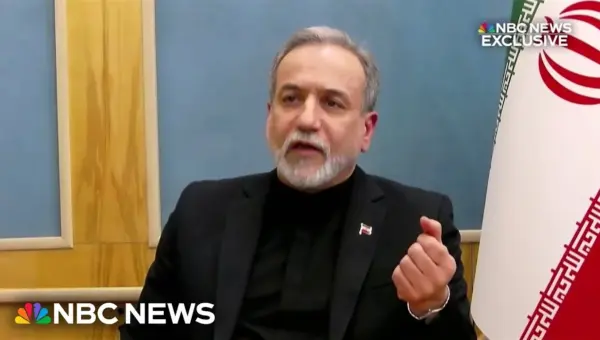
Iran Denies Seeking Ceasefire or Talks With U.S.
Iran's Foreign Minister has declared that the nation is not seeking a ceasefire or engaging in negotiations with the United States, citing past U.S. actions as a reason for mistrust. The top diplomat also addressed concerns over the Strait of Hormuz, stating that while not currently closed, Iran will "consider every scenario" if the war continues.
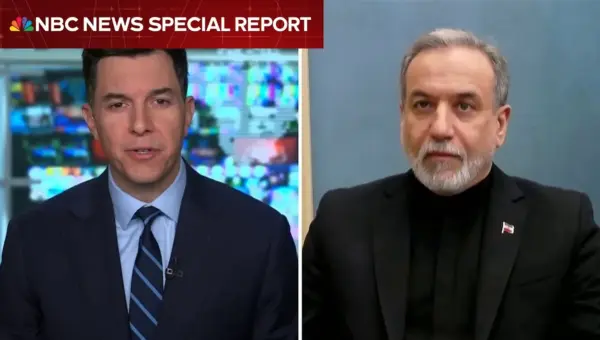
Iran FM: US War Aims Failed, No Ceasefire Talks
Iran's Foreign Minister declared the U.S. war aims have failed and ruled out ceasefire talks, citing past U.S. aggression during negotiations. He asserted Iran's ability to resist as its form of victory and confirmed readiness for a potential U.S. ground invasion.

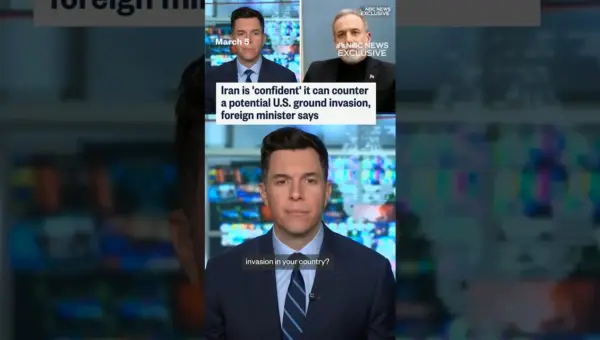
Iran Confident in Countering US Ground Invasion, Top Diplomat States
Iran's Foreign Minister has stated the country is prepared to confront and repel a potential U.S. ground invasion, calling it a "big disaster" for American forces. The minister highlighted upgraded missile capabilities and stated soldiers are ready for any scenario, emphasizing lessons learned from past conflicts.