Trump’s Iran Policy Echoes Past US Mistakes
Author Tim Barnicle argues that the current U.S. approach to Iran, particularly under President Trump, echoes the mistakes of past interventions, tracing a 'complete straight line' from the 1953 coup to the present conflict. The lack of a clear exit strategy and the reactive nature of U.S. policy raise concerns about regional stability.

Trump’s Iran Policy Echoes Past US Mistakes
In a stark warning against repeating historical blunders, author Tim Barnicle argues that the current U.S. approach to Iran, particularly under President Trump, mirrors a pattern of intervention with unclear long-term consequences, reminiscent of past U.S. actions in the region and drawing parallels to the foundational diplomatic crisis of 1979.
A ‘Complete Straight Line’ from 1953 to 2026
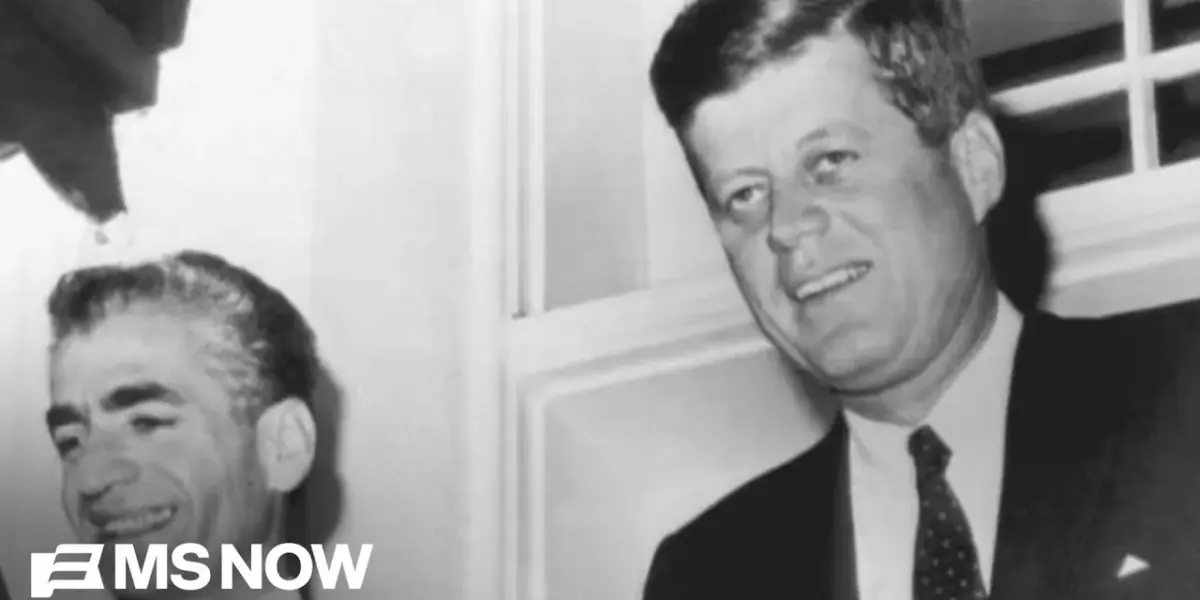
Tim Barnicle, author of the Substack piece “The Road Back to Tehran,” draws a direct historical through-line connecting U.S. involvement in Iran, beginning with the CIA-backed 1953 coup (Operation Ajax) that overthrew Prime Minister Mohammad Mosaddegh and installed the Shah, through the 1979 Iranian Revolution, and extending to the present-day conflict in 2026.
“From 1953 when there was the coup to 1979 when there was the revolution kind of partially caused by that coup all the way to 2026 and this war starting in Iran there’s a complete straight line,” Barnicle stated, emphasizing the enduring impact of U.S. foreign policy decisions.
The 1953 operation, orchestrated by Kermit Roosevelt Jr., installed the Shah, who subsequently became a pro-Western, pro-American autocrat. During his reign, Iran supplied the U.S. with 40% of its oil, a move that fostered resentment within Iran. Furthermore, under President Eisenhower’s “Atoms for Peace” program, Iran received its first nuclear reactor, an early development that Barnicle suggests planted seeds for future complexities.
The Iran Hostage Crisis and its Lingering Shadow
Barnicle also highlighted the profound impact of the 1979 Iran hostage crisis, where 50 Americans were held captive at the U.S. Embassy in Tehran. President Jimmy Carter, at the time, recognized the far-reaching consequences of the crisis, stating, “The foundation of civilized diplomacy is at stake. The integrity of international law is at stake. The credibility of the United Nations is at stake. And at stake ultimately is the maintenance of peace in the region.”
The failed rescue attempt, which resulted in the deaths of eight U.S. service members, is acknowledged by Carter himself as a significant factor in his 1980 election loss to Ronald Reagan. This event underscores the potential for foreign policy missteps to have devastating domestic repercussions.
Trump’s Approach: Intervention Without a Clear Exit
Barnicle critiques President Trump’s current foreign policy, particularly his administration’s actions leading to a change in Iranian leadership in early 2026. He argues that these actions lack a clear strategy for what comes next, drawing a parallel to the aftermath of the U.S. intervention in Iraq.
“More so than in 1953, the decision this week to force a change in Iran’s leadership has no clear answer to what comes next as Americans learned in Iraq, removing a murderous autocrat does not alone provide a stable future and often results in the opposite,” Barnicle wrote.
The author noted that six Americans have already been killed in the ongoing conflict, with President Trump acknowledging the likelihood of further casualties. Barnicle characterized Trump’s approach as reactive and self-centered, stating, “It is not about one of the… their facilities were obliterated in June and now they are back up. What is happening is that is an opportunity for Donald Trump, an opportunity for B.B. Netanyahu.” He contrasted this with Trump’s own words from a May speech in Riyadh, where he stated that “so-called regime builders wrecked more than they built.”
Eisenhower’s Pragmatism vs. Modern Interventionism
The discussion also delved into the contrasting foreign policy styles of past presidents, particularly Dwight D. Eisenhower. Historian John Meacham, who has extensively studied Eisenhower, noted the former president’s aversion to “hot wars” and his logical, fact-based approach to foreign policy.
Meacham explained that Eisenhower, while engaging in covert actions like the one in Iran and Guatemala, was fundamentally pragmatic and focused on securing U.S. national interests, such as oil, without embarking on open-ended military commitments. “He did not go in with grand and inflexible plans. And he also surely never went in someplace without knowing how to get out,” Meacham observed, highlighting the absence of a clear exit strategy in current U.S. policy.
Barnicle echoed this sentiment, suggesting that President Trump’s decision-making process appears more akin to an episode of “The Apprentice” than a carefully considered geopolitical strategy. He pointed to Trump’s recent assertion that he must be involved in selecting Iran’s next leader as evidence of this transactional and personal approach.
Lessons Unheeded?
The conversation underscored a recurring theme in U.S. foreign policy: the tendency to repeat historical mistakes. Barnicle cited examples like the attempted purchase of Greenland in 1868 and interventions in Venezuela and Panama, suggesting that history offers repeated lessons about the complexities of regime change and nation-building.
The article concludes with a somber outlook, as Pentagon officials prepare for a war in Iran that could last until September or longer, with no clear end in sight. The lack of a defined exit strategy and the seemingly reactive nature of current U.S. policy raise serious questions about the long-term stability and peace in the region.
What’s Next?
As the conflict in Iran unfolds, the world will be watching to see if the U.S. can deviate from its historical pattern of intervention with unintended consequences. The effectiveness of President Trump’s strategy, the potential for de-escalation, and the ultimate impact on regional stability remain critical questions for the coming months and years.
Source: 'A complete straight line' in Iran from 1953 to 1979 to 2026: Tim Barnicle (YouTube)

Related Articles
Epstein Files Reveal Disturbing Allegations Against Trump
Newly unsealed FBI interview files reveal a woman's disturbing allegations against Donald Trump, involving an alleged encounter when she was a minor. The testimony, detailed within the context of the Jeffrey Epstein case, raises questions about powerful figures and predatory behavior.
Ex-MI6 Chief: UK Faces Iran Threats, Starmer Lacks Churchill’s Conviction
Former MI6 chief Sir Richard Dearlove discusses the threat of Iranian intelligence operations on UK soil following recent arrests. He also draws a stark comparison between current political leadership and historical figures, suggesting a lack of conviction in figures like Keir Starmer.


Karoline Leavitt’s War Spin Crumbles Under Scrutiny
Karoline Leavitt faces mounting pressure to spin escalating US-Israel military actions against Iran, struggling with shifting justifications and contradictory claims about threats and preparedness. The analysis delves into the administration's messaging, historical precedents, and the implications for 'America First' policy.