Trump’s Iran Leadership Claims Spark Global Concern
Donald Trump's claim to influence Iran's next leadership has drawn sharp criticism, with experts like Michael Stevens of RUSI emphasizing that such foreign interference is historically unwelcome in Iran. U.S. officials project confidence in ongoing military operations, but analysts express concerns about the conflict's potential duration and Iran's resilience.

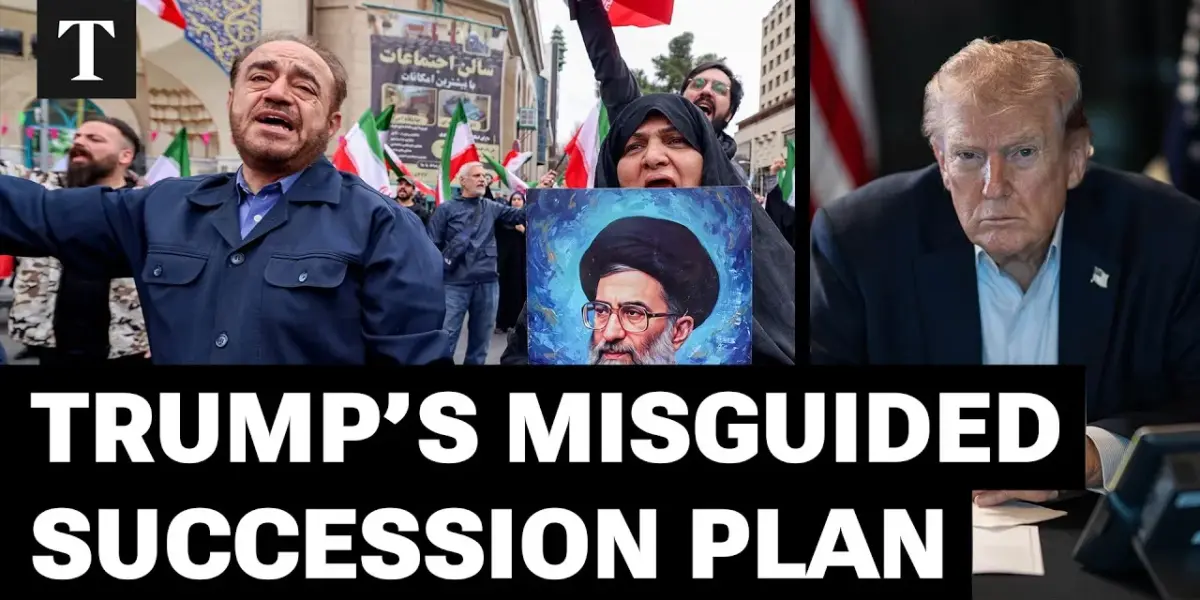
Trump Vows Role in Choosing Iran’s Next Leader Amidst Regional Tensions
In a provocative statement that has sent ripples across the international community, former U.S. President Donald Trump has declared his intention to play a role in selecting Iran’s next leader. This assertion, made following U.S. strikes against Iran and amid ongoing regional instability, has been met with skepticism and concern from analysts and even some international allies, who emphasize that the decision of who governs Iran should rest solely with the Iranian people.
Uncertainty Over U.S. War Aims
Michael Stevens, a Senior Associate Fellow in International Security at RUSI, highlighted the significant ambiguity surrounding the United States’ objectives in the current conflict with Iran. “It’s very unclear what the war aims are,” Stevens stated, noting a pattern of inconsistency from the American side regarding timelines, the extent of regime change desired, and the approach to engaging with the Iranian regime. He questioned the definition of success for the U.S. under these circumstances, particularly in light of Trump’s latest pronouncements.
Stevens elaborated on the potential repercussions of external interference in Iran’s internal political processes. “I don’t think it would go down too well if America came in or Israel came in and decided for the Iranians who should govern them,” he explained. This sentiment is echoed by historical grievances within Iran, stemming from past foreign interventions, such as the 1953 coup orchestrated by the U.S. and the UK. “These sorts of historical injuries, if you like, play very hard on their soul and on their political culture,” Stevens added. He cautioned that such statements, while perhaps not fully considered by Trump, are unlikely to resonate positively within Iran, especially among those who desire a legitimate end to the current regime.
“Most of the world would sit there and say that the Iranians should pick a leader for Iran and that’s for them to decide.”
Michael Stevens, Senior Associate Fellow, RUSI
UK’s Response and Preparedness Under Scrutiny
The discussion also touched upon the United Kingdom’s response to the escalating conflict and criticisms regarding its preparedness. Stevens, drawing on his experience within the British government, acknowledged that robust plans for various scenarios exist. However, he expressed disappointment with the initial messaging surrounding the strikes, which he felt appeared confused and created a lack of confidence, especially given the potential threat to British citizens and interests.
Despite the challenges, Stevens affirmed that the UK has legitimate interests to defend, including its military bases and citizens in the region. He noted recent positive steps, such as the deployment of additional aircraft and helicopters, aimed at enhancing defensive capabilities. However, he also pointed out that the deployment of naval assets was primarily linked to operations concerning Ukraine, underscoring the complex geopolitical landscape and the strain on resources.
U.S. Military Confidence and Long-Term Commitment
Meanwhile, in Florida, U.S. Secretary of War Pete Hegseth expressed strong confidence in the ongoing military operations, dubbed ‘Operation Epic Fury.’ Speaking alongside Admiral Brad Cooper, Commander of U.S. Central Command, Hegseth described the initial strikes as “devastating” and “precise,” claiming significant success in neutralizing Iranian naval capabilities and missile sites, and establishing air and sea dominance.
Hegseth emphasized the unwavering American resolve, stating, “There’s no shortage of American will here.” He highlighted the commitment to honoring fallen soldiers by rededicating efforts to the mission and asserted that the U.S. possesses ample munitions to sustain the campaign for as long as necessary. “Our stockpiles of defensive and offensive weapons allow us to sustain this campaign as long as we need to,” he declared.
Analyst Concerns Over Conflict Duration and Resilience
Despite the optimistic pronouncements from the U.S. military leadership, Michael Stevens voiced concerns about the potential duration and intensity of the conflict. He noted that while the initial tempo of strikes has been high, Iran has demonstrated resilience, adapting its tactics by moving towards more dispersed and autonomous operational structures, making them harder to locate and target effectively.
Stevens suggested that while the initial days of the operation may have been impressive, the analytical community generally anticipates a conflict lasting several weeks, rather than a swift resolution. He expressed particular concern regarding the availability and effectiveness of missile interceptors, questioning the sustainability of the high-intensity offensive over a prolonged medium-term engagement.
Looking Ahead
The coming weeks will be critical in observing whether the U.S. can sustain its current operational tempo and achieve its stated objectives in Iran. Attention will also focus on the diplomatic fallout from Trump’s interventionist rhetoric and its impact on regional stability. Furthermore, the effectiveness of Iran’s asymmetric warfare tactics in countering conventional military might will be a key factor to monitor, alongside the international community’s response to the escalating tensions.
Source: Iranians Won’t Welcome Trump’s Interference In Leadership Succession | RUSI (YouTube)

Related Articles
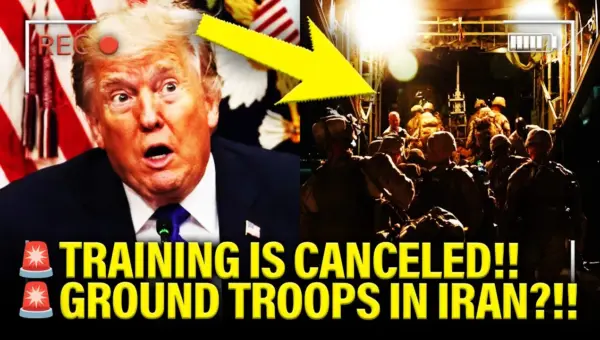
US War on Iran: Escalation Risks and Global Fallout
As the US war against Iran escalates, alarming reports suggest potential ground troop deployment and the involvement of Russia and China. This analysis delves into the geopolitical risks, economic fallout, and questionable intelligence surrounding the conflict.


Newsom Claims Trump Hides Damaging Files: What’s Inside?
California Governor Gavin Newsom claims former President Trump is actively suppressing documents because they contain damaging information about his personal involvement in 'grifts' and 'economic opportunities.' Newsom posits that Trump fears the 'immovable' impact of these revelations.

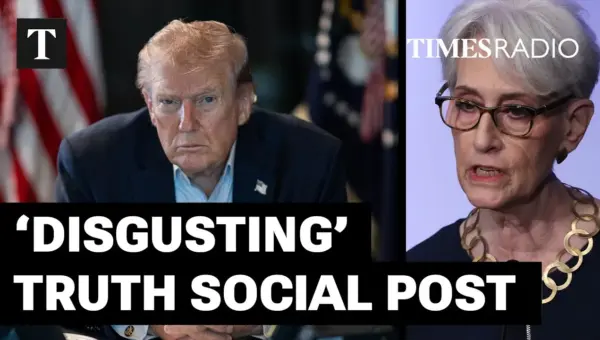
US Official Slams White House Iran War Video as ‘Disgusting’
A top US official, Ambassador Wendy Sherman, has condemned a White House social media video on the Iran conflict as "disgusting." Sherman criticized the video's aggressive tone and highlighted the significant economic and human costs of the escalating tensions.