Trump’s Iran Gamble Backfires, Giving Tehran Economic Leverage
Donald Trump's public statements about Iran's actions in the Strait of Hormuz may have inadvertently given Tehran significant economic leverage. Iran's ability to disrupt global oil shipments allows it to exert pressure, a tactic that appears to have caught U.S. strategy off guard.

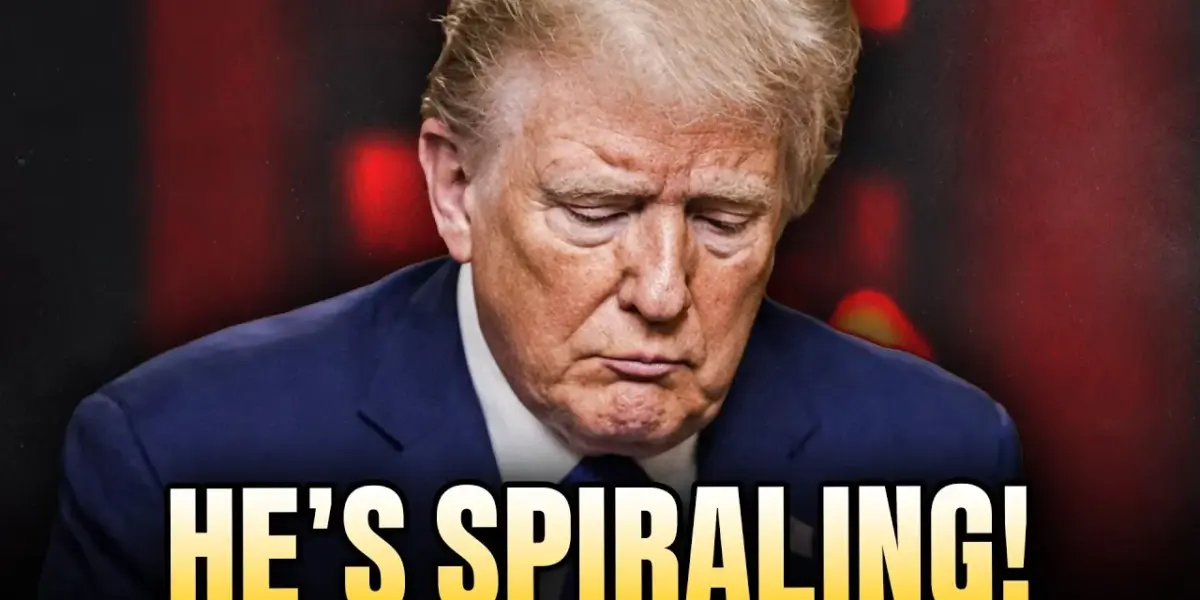
Trump’s Iran Strategy Crumbles, Giving Tehran Economic Power
Donald Trump’s approach to Iran has been a consistent source of tension, but recent events reveal a strategic misstep that has unintentionally handed significant economic power to Iran. While the United States possesses a formidable military, Iran holds a crucial advantage through its control over the Strait of Hormuz, a vital shipping lane. This choke point allows Iran to exert economic pressure on the global stage, a fact that seems to have been underestimated by the former president.
Iran’s strategy hinges on its ability to disrupt global trade through the Strait of Hormuz. This waterway is essential for the transport of oil and other goods. Any blockage or threat to this passage can send shockwaves through the world economy, leading to higher prices for fuel and other necessities. Iran understands that while it may not win a direct military conflict with the U.S. or its allies, it can inflict economic pain that impacts nations worldwide.
The message Iran has received over the past three weeks is that they realize they have what I would call asymmetric economic leverage over the rest of the world. That’s through the Strait of Hormuz choke point. They know that people, not just in the US, but around the world do not want higher gas prices. They don’t want higher airline prices.
This insight comes from Josh Lipsky, senior director at the Atlantic Council’s geoeconomic center. He points out that Iran’s leverage is not military might, but its capacity to disrupt global supply chains. This economic pressure is a potent tool, especially when global leaders are sensitive to rising energy costs and their impact on consumers.
The Social Media Blunder
A key factor in Iran gaining the upper hand appears to be Donald Trump’s public pronouncements. Instead of maintaining a strong, unwavering stance, Trump frequently used social media to express his frustrations and anger regarding Iran. This public display of emotion, critics argue, signaled to Iran the effectiveness of their tactics and the level of distress they were causing. A skilled negotiator or military strategist would ideally keep their adversary guessing, projecting strength and resolve.
By openly complaining about the Strait of Hormuz and appearing agitated, Trump may have inadvertently revealed the exact pressure points he wanted to avoid. Iran could interpret these outbursts as a sign that their strategy was working, making them less likely to back down. This is the opposite of what a nation would want when dealing with an adversary; they want their enemy to believe their actions have no effect.
Economic Warfare vs. Military Might
While the United States boasts superior military capabilities, Iran’s strength lies in its ability to wage economic warfare. This asymmetric approach allows a less powerful nation to challenge a superpower by targeting its economic vulnerabilities. The Strait of Hormuz serves as Iran’s primary weapon in this economic conflict. By threatening to close or disrupt passage through this narrow waterway, Iran can compel other nations, including the U.S., to reconsider their actions.
The situation highlights a critical difference in how nations can exert influence. Military power is direct and destructive, but economic leverage can be more insidious and far-reaching. Iran’s gamble is that the global economic pain they can inflict will be enough to force concessions from the U.S. and its allies. This strategy is particularly effective when coupled with domestic political pressures in the U.S. related to inflation and energy prices.
The Negotiation Conundrum
The transcript suggests that recent diplomatic efforts have been complicated by this dynamic. When Trump announced he would not bomb Iranian infrastructure after certain talks, it raised questions about what Iran offered in return. According to the analysis, Iran was not close to developing nuclear weapons, which implies that the U.S. may have made concessions. The U.S. reportedly agreed to halt potential military actions in exchange for Iran reopening the Strait of Hormuz.
This scenario, where the U.S. feels compelled to de-escalate military threats due to economic pressure, is seen as a strategic disadvantage. It suggests that Iran’s economic leverage has forced the U.S. into a defensive position. The core issue, as presented, is that Trump’s emotional reactions and public statements may have weakened the U.S. negotiating position, giving Iran an advantage they might not have otherwise possessed.
Historical Context and Geopolitical Implications
The Strait of Hormuz has long been a focal point of geopolitical tension in the Middle East. Its strategic importance cannot be overstated, as a significant portion of the world’s oil supply passes through its waters. Throughout history, control or disruption of this strait has been a powerful tool for regional powers seeking to influence global affairs.
The current situation echoes past instances where economic sanctions and trade disruptions have been used as primary weapons in international disputes. Iran’s strategy of leveraging its geographical advantage to counter military superiority is a tactic seen in various conflicts, where a weaker party seeks to level the playing field through non-traditional means. The effectiveness of this approach depends heavily on the global community’s tolerance for economic disruption.
Why This Matters
This situation is important because it underscores the complex interplay between military strength, economic power, and public diplomacy. It demonstrates how a nation’s communication strategy, particularly through social media, can have profound geopolitical consequences. The ability of Iran to wield significant economic influence through a single choke point highlights the vulnerabilities inherent in globalized trade and energy markets.
Furthermore, it raises questions about the effectiveness of traditional military strategies when faced with asymmetric economic warfare. The implications extend to how future international conflicts might be waged, with economic disruption becoming an increasingly potent weapon. The reliance on critical trade routes means that any instability in these areas can have ripple effects felt by consumers worldwide, influencing political decisions and international relations.
Future Outlook
The future outlook suggests that Iran will likely continue to exploit its economic leverage through the Strait of Hormuz. As long as global energy markets remain sensitive to supply disruptions, Iran will possess a powerful bargaining chip. The U.S. and its allies will face the challenge of finding ways to mitigate this economic pressure without resorting to costly military escalations.
This may involve increased diplomatic efforts, exploring alternative energy routes, or developing strategies to counter economic coercion. The situation also highlights the need for careful consideration of public statements by leaders, as they can inadvertently empower adversaries. The ongoing dynamic between Iran’s economic leverage and the global response will likely shape regional stability and international energy policy for years to come.
Source: Trump SPIRALING After His Plans Backfire (YouTube)

Related Articles
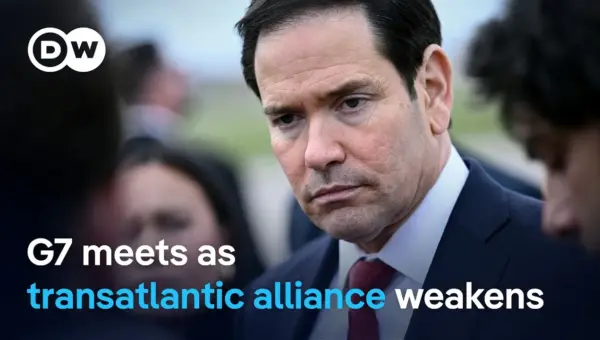
G7 Allies Clash Over Iran War Strategy, Urge Focus on Russia
G7 foreign ministers met in Paris, revealing deep divisions over the U.S. war with Iran. European allies urged the U.S. to pressure Russia, linking its actions to the conflict and fearing support for Ukraine will wane.

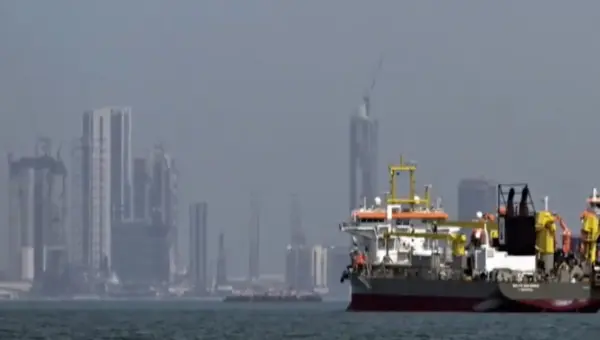
Iran Blocks China Ships, Exposing Beijing’s Weak Grip
Iran's recent decision to block Chinese ships at the Strait of Hormuz is exposing the limits of Beijing's influence in the Middle East. This action is causing delays and cancellations for Chinese manufacturers, turning a perceived geopolitical win into an economic strain.
Rubio: US Can Achieve Iran War Goals Without Troops
Senator Marco Rubio outlined a strategy to counter Iran without deploying U.S. ground troops, focusing on weakening the regime and enhancing maritime security. He also criticized Cuba's economic system and expressed concerns about West Bank violence.