Trump’s Iran Deal: Peace or Surrender’s Price?
Former President Trump claims a new ceasefire with Iran is a major victory, promising peace and prosperity. Critics, however, label it a 'complete surrender' that grants Iran key demands, including control over the Strait of Hormuz and uranium enrichment. The starkly different interpretations reveal a deep divide over the deal's true impact.

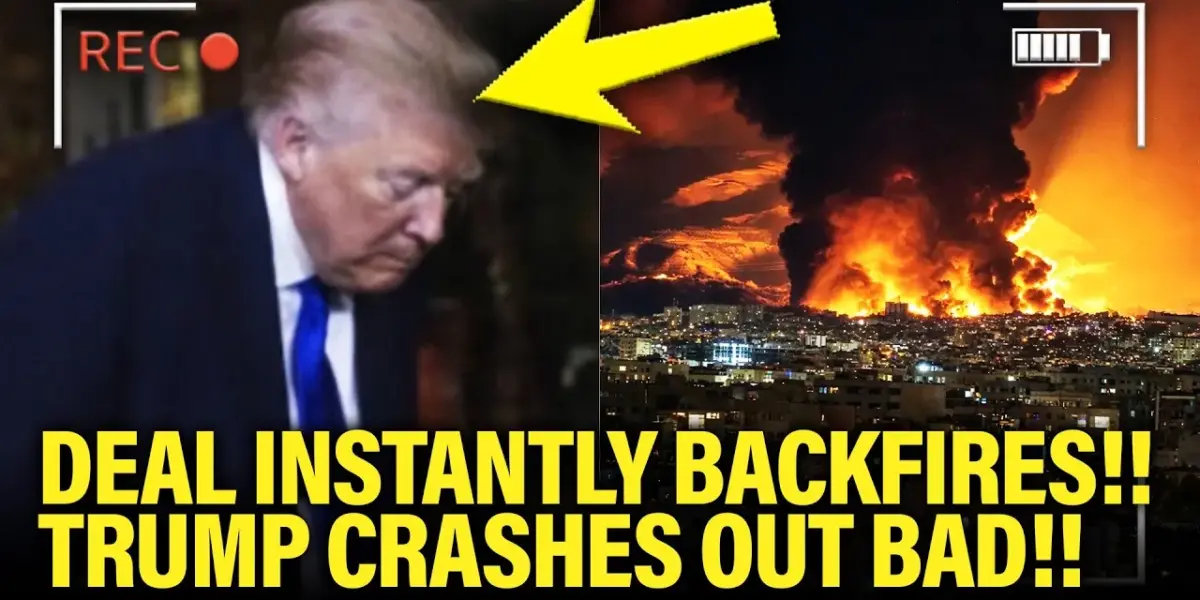
Trump Claims Victory, Critics See Capitulation in Iran Deal
Former President Donald Trump has announced a significant ceasefire agreement with Iran, a move he’s touting as a major win for global peace and American prosperity. However, critics are strongly pushing back, calling the deal a complete surrender that grants Iran many of its key demands. The differing interpretations highlight a deep division over the terms and consequences of this agreement.
Trump’s Narrative: A Golden Age Dawns
In a phone call with the AFP news agency, Trump declared “total and complete victory” in the Iran conflict following a two-week ceasefire. He suggested China played a role in persuading Iran to agree, stating that the country’s enriched uranium stockpile would be “perfectly taken care of.” Later, on his social media platform, he painted a picture of “a big day for world peace” where “big money will be made” and the U.S. would “just hang around in order to make sure that everything goes well.” Trump even envisioned a “golden age of the Middle East.” He claimed the U.S. Navy would be in the Strait of Hormuz, helping with traffic and ensuring smooth operations.
Trump’s administration presented a 10-point plan that, according to his statements, forms the basis of this agreement. This plan, as described, includes several points that have drawn significant criticism:
- Iran retaining control over the Strait of Hormuz and charging a $2 million toll for passing ships, with escorts by the Iranian Navy.
- Iran being allowed to continue enriching uranium for its nuclear program.
- The lifting of all primary and secondary sanctions against Iran.
- The termination of all UN Security Council and Board of Governors resolutions against Iran.
- Compensation to Iran for war damages.
- The withdrawal of all U.S. combat forces from the region.
- A cessation of conflict in surrounding areas like Lebanon, Yemen, and Iraq.
Trump insists this plan is “very, very workable.” However, the details presented directly contradict his public statements about U.S. naval presence and Iran’s uranium enrichment capabilities.
The Counter-Argument: A “Complete Surrender”
Critics argue that Trump’s portrayal of the deal is dangerously misleading. They point out that Iran’s navy would escort ships through the Strait of Hormuz, and ships would pay Iran a toll, a scenario far from the U.S. Navy controlling the vital waterway. The agreement to allow uranium enrichment, a key concern for international security, is also highlighted as a major concession. The idea that China persuaded Iran is dismissed, with the claim that Trump was desperate to secure any deal by a self-imposed deadline.
“Iran’s 10-point plan, Trump surrender. Did they meet in the middle? No. You know where they met with Iran’s 10-point plan on Trump and US surrender.”
The celebrations reported on the streets of Iran are seen as evidence of the deal’s favorable terms for the Iranian regime, not for the United States. Critics describe the agreement as a massive loss, giving Iran essentially everything it had been demanding.
Media’s Role and Public Perception
The analysis suggests that certain media outlets, specifically mentioning Fox News, are actively promoting Trump’s narrative to their viewers. This is framed as “state regime propaganda” aimed at convincing the public that a significant loss is, in fact, a victory. Pundits on these networks are quoted as saying Trump “hit a home run” and that Democrats “had Trump in a box” but he “got the last laugh.” This framing is contrasted sharply with the reported terms of the deal, which critics believe represent a “complete opposite” of previous U.S. policy and positions.
The comparison to historical events, like Henry V’s speeches, is used by some to suggest Trump’s rhetoric is a deliberate tactic. However, others see this as a dangerous misinterpretation, especially when discussing threats of “annihilation” or “wiping out civilization.” The nuance between threatening a regime and threatening an entire people is crucial, and critics argue Trump’s language is often used in bad faith or is misunderstood.
Historical Context and Precedent
The Iran nuclear deal (Joint Comprehensive Plan of Action or JCPOA) under the Obama administration aimed to prevent Iran from developing nuclear weapons in exchange for sanctions relief. Trump withdrew the U.S. from this deal in 2018, reimposing harsh sanctions. This new ceasefire agreement appears to reverse many of the pressures Trump sought to apply, leading to the current debate about whether this is a strategic de-escalation or a capitulation.
The idea of empowering opposition groups in other countries, as suggested by some commentators referencing Reagan’s policies, also brings up historical parallels. However, the effectiveness and ethical implications of such strategies are complex and have varied outcomes.
Economic Implications and Future Outlook
A significant point of contention is the economic benefit Trump claims will arise from the deal. Critics calculate that Iran could gain upwards of $100 billion annually from tolls on ships transiting the Strait of Hormuz alone. This revenue could drastically increase Iran’s GDP, a scenario described as an “amazing deal for Iran.” The idea that Trump engineered a GDP increase for another country by “declaring war” is presented as a cynical interpretation of the deal’s financial outcomes.
The long-term stability of the ceasefire is also in question. The analysis suggests that regional players like Saudi Arabia and the UAE might actively work to undermine the deal, fearing Iran’s growing influence. The possibility of renewed conflict if Iran’s actions, like naval escorts in the Strait, are not aligned with U.S. expectations remains a significant risk.
Why This Matters
This agreement, and the starkly different ways it is being presented, has profound implications for U.S. foreign policy, regional stability, and international security. If the critical assessment is accurate, it suggests a significant shift in U.S. priorities and a potential empowerment of a regime that has been a source of global concern. The debate also highlights the challenges of clear communication in international diplomacy and the role of media in shaping public understanding of complex geopolitical events. The public’s ability to discern the actual terms of such agreements from the political spin is crucial for informed civic engagement.
Looking Ahead
The coming weeks and months will be critical in determining the true nature of this Iran deal. Whether it leads to a lasting peace and a “golden age” in the Middle East, as Trump suggests, or represents a dangerous concession that emboldens Iran, remains to be seen. The world will be watching closely to see if the ceasefire holds, if Iran’s uranium enrichment continues unchecked, and if the Strait of Hormuz becomes a toll booth for global trade under Iranian control. The narrative war over this deal is already intense, and the real-world consequences will likely unfold over a much longer period.
Source: Trump CRASHES OUT as IRAN DEAL INSTANTLY BACKFIRES!!!! (YouTube)

Related Articles

Middle East Tensions Flare Despite Ceasefire Deal
A recent ceasefire deal between the U.S. and Iran is already showing cracks, with ongoing attacks reported and vastly different interpretations of the agreement by both sides. Key flashpoints like the Strait of Hormuz and the conflict in Lebanon continue to fuel tensions.

US Threatens Iran with Devastation Amidst Strategic Uncertainty
The United States has issued dire threats to Iran regarding the Strait of Hormuz, sparking debate over the strategy's effectiveness and its human cost. Experts question the logic of potentially devastating Iranian infrastructure, which could harm civilians more than the regime. The escalating tensions carry significant economic and geopolitical risks for global stability.
Trump Blinks on Iran: US Public Opinion Forces Ceasefire
President Trump has agreed to a ceasefire with Iran, a move analysts attribute to strong domestic opposition and a desire to avoid further foreign conflicts. The decision reflects a broader reassessment of U.S. global strategy and the growing influence of China.