Trump’s Iran Ceasefire: Peace Deal or Perilous Gamble?
Donald Trump has declared a temporary ceasefire with Iran a victory for world peace, but critics argue the deal is fragile and has resolved few issues. Reports indicate ongoing confusion over control of the Strait of Hormuz and Iran's nuclear program, while economic impacts like rising gas prices persist. Calls for accountability and concerns about the U.S. global standing are growing.


Trump Claims Peace, Critics See Escalation
In the wake of a temporary ceasefire agreement with Iran, Donald Trump has declared it a “big day for world peace.” However, critics argue that the deal, brokered after a conflict Trump initiated, has achieved little and may have worsened the situation. The agreement comes just hours after Trump threatened to destroy Iran’s entire civilization, a statement that has drawn widespread condemnation.
A Fragile Truce and Lingering Threats
Defense Secretary Pete Hexath praised Trump for showing “mercy” by not following through on threats to cripple Iran’s economy. Hexath stated that Iran accepted the ceasefire under “overwhelming pressure,” believing a deal was better than the alternative. Trump himself indicated the U.S. would assist with traffic in the Strait of Hormuz, expecting “big money” to be made and Iran to begin reconstruction. Yet, The New York Times reports the ceasefire resolved none of the core issues that led to the war. Iran’s nuclear program, including nearly 1,000 pounds of bomb-grade material, remains intact. Furthermore, Iran reportedly still controls the Strait of Hormuz, a vital global shipping lane.
Confusion Over Strait of Hormuz Control
The Wall Street Journal reports that Iran has told mediators it will limit ships passing through the Strait of Hormuz to about a dozen per day, charging tolls. Ships will need to coordinate with the Islamic Revolutionary Guard Corps, a group designated as terrorist by the U.S. and EU. When questioned about Iran charging tolls, Trump suggested a joint venture, calling it a “beautiful thing” for security. However, confusion abounds. Iranian state media reported Iran closed the Strait again in retaliation for Israeli attacks on Lebanon, which killed at least 182 people. Iranian officials claim Lebanon was part of the deal, a claim disputed by the U.S. and Israel. White House press secretary called Iran’s public statements “completely unacceptable,” insisting the Strait must be reopened immediately. Data from Kepler, a ship-tracking firm, shows no oil or gas tankers have used the Strait since the ceasefire, with only a few dry cargo ships passing. According to maritime data, the last vessel crossed mid-morning Wednesday, suggesting the Strait remains largely unusable.
Iran’s Peace Plan: A Mismatch?
Adding to the uncertainty is Iran’s 10-point peace plan, which Trump called a “workable basis” for negotiation. The New York Times reports Iran’s version of the proposal, released after the ceasefire, calls for U.S. troops to leave the region, reasserts Iran’s control over the Strait of Hormuz, and maintains Iran’s right to nuclear enrichment. These demands are seen as difficult, if not impossible, for the U.S. to accept. A White House official stated that Iran’s points do not match what Trump was referring to. Trump, when asked about the plan, stated, “You don’t know what the points are. I know what they are,” adding that many points are “very good” and “fully negotiated.” However, Iran’s parliament speaker accused the U.S. and Israel of violating points related to enrichment rights. Defense Secretary Hexath reiterated that Iran will not have nuclear capabilities, and the U.S. expects Iran to hand over its nuclear material or face further action.
Economic Fallout and Political Recriminations
The war, which killed 13 U.S. service members and thousands of civilians, has had a significant economic impact. Bloomberg notes that the core challenges remain unresolved, and the potential reopening of the Strait of Hormuz at best restores the status quo. Senator Chuck Schumer criticized Trump’s war, stating it cost $44 billion and resulted in higher gas prices, leaving the U.S. worse off. Economist Paul Krugman suggested the U.S. has lost moral credibility due to Trump’s threats of war crimes. Congresswoman Maline Dean of Pennsylvania argued that the world and America are in a weaker position due to the president’s “erratic nature.” She believes Iran has not lost much and may even profit more from oil sales due to sanctions relief. Dean expressed concern that children worldwide are terrified of America, questioning if this is the legacy Trump desires.
Calls for Accountability and Future Uncertainty
Amidst the confusion and criticism, House Democrats are pushing for accountability. Congresswoman Melanie Stanbury of New Mexico has called for invoking the 25th Amendment, impeachment, and passing a War Powers Resolution to limit the president’s authority. She urged Republican colleagues and cabinet members to “do the right thing.” Democrats are also threatening contempt proceedings against former Attorney General Pam Bondi for failing to comply with a subpoena related to the Epstein files. As the ceasefire holds tenuously, the U.S. faces ongoing economic consequences, including rising gas prices. Experts suggest energy markets may remain on a structurally higher floor due to governments restocking in anticipation of renewed conflict. The economic fallout from the Strait of Hormuz closure is just beginning, with potential long-term impacts on supply chains and consumer prices.
Looking Ahead
The coming weeks will be crucial in determining the fate of this ceasefire and its broader implications. Key questions remain about Iran’s adherence to the agreement, the U.S. response to any violations, and the long-term economic stability of global energy markets. The political ramifications within the United States, including calls for impeachment and the invocation of the 25th Amendment, will also continue to unfold.
Source: The Last Word with Lawrence O'Donnell – April 8 | Audio Only (YouTube)

Related Articles

US Navy Clears Strait of Hormuz Mines Amid Tensions
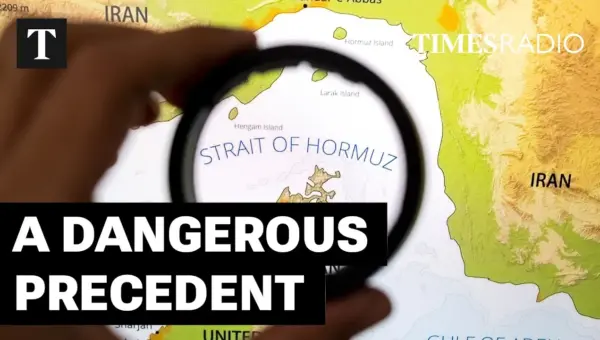
The U.S. Navy has begun clearing sea mines in the Strait of Hormuz, a crucial global shipping lane, as commercial traffic remains critically low. Experts warn that Iran potentially controlling the strait could set a dangerous precedent for global trade, leading to a "free-for-all" in vital waterways worldwide.


Middle East Must Lead Iran Response, US Steps Back
Radio host Glenn Beck argues that Middle Eastern nations, not the US, must take the lead in addressing regional security threats like Iran. He believes former President Trump's policies are reshaping global order, encouraging allies to become more self-reliant. This signals a potential shift away from traditional US global leadership.

US Warships Clear Strait of Hormuz Amid Mine Threats
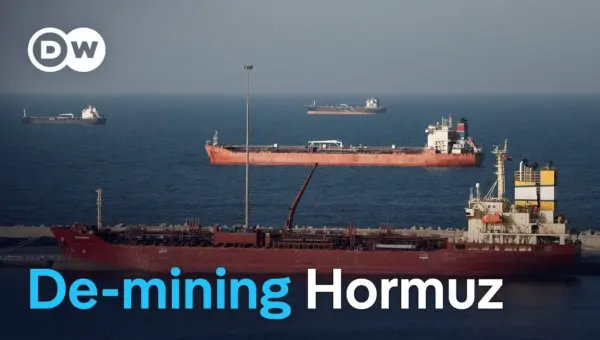
US warships are reportedly sweeping the Strait of Hormuz for mines amid escalating tensions with Iran. While the US claims progress, experts note a lack of dedicated mine-clearing vessels in the region and question the current mine threat. The situation's resolution may depend on ongoing peace negotiations.