Trump’s Iran Ceasefire Deal Crumbles Within Hours
President Trump's announced ceasefire with Iran crumbled within 24 hours, revealing unresolved core issues like the Strait of Hormuz and Iran's nuclear program. Despite administration claims of victory, the deal's rapid collapse highlights significant diplomatic challenges and a stark contrast to previous approaches to military action.

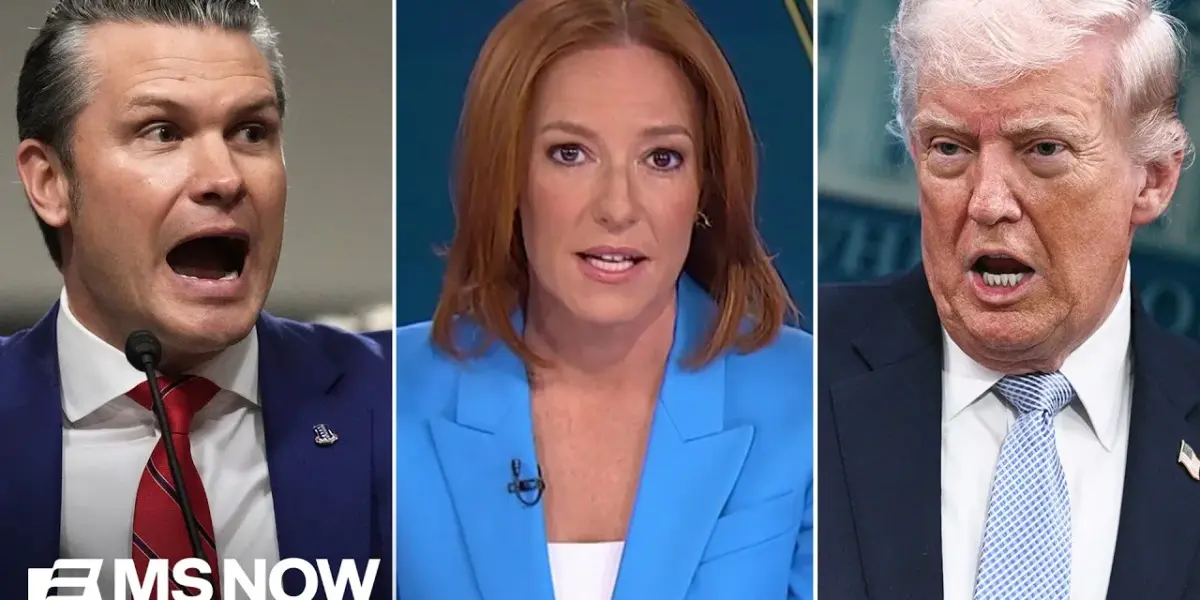
Trump’s Iran Ceasefire Deal Crumbles Within Hours
Within 24 hours of announcing a significant ceasefire with Iran, President Donald Trump’s deal began to unravel, highlighting the administration’s struggles in de-escalating tensions. The agreement, touted as a major diplomatic achievement, quickly showed cracks as fundamental disagreements on key issues remained unresolved.
Key Terms Unsettled, Deal Falters
The core of the problem lay in the lack of agreement on basic parameters before the ceasefire was announced. Major sticking points included the reopening of the Strait of Hormuz, Iran’s continued control over it, and whether the ceasefire extended to Lebanon. Crucially, Iran’s right to enrich uranium for its nuclear program was also apparently not settled.
These unresolved issues led to the rapid collapse of the agreement. Iran’s news agency reported the Strait of Hormuz had been reclosed due to continued strikes in Lebanon. This followed a dramatic drop in traffic through the vital waterway, with only three ships reportedly making it through, a stark contrast to the 135 ships that sailed through daily before the recent conflict.
Iran Accuses U.S. of Violating Terms
Adding to the confusion, Iran accused the United States of violating the ceasefire agreement. The Speaker of Iran’s Parliament stated that bilateral ceasefires or negotiations were unreasonable under the circumstances. This accusation came as Iran reportedly continued to fire missiles at U.S. allies in the Gulf region.
Vice President J.D. Vance, the administration’s top negotiator, faced questions about the Strait of Hormuz remaining closed and Iran’s accusations of U.S. violations. Vance expressed optimism about the Strait reopening and suggested that Iran might misunderstand the terms of the deal, even questioning the Iranian Speaker’s grasp of English.
“We’ve already seen an increase in traffic today. Hopefully, we’ll see an increase in traffic tomorrow. We actually think that we are seeing signs that the Straits is starting to reopen.”
– J.D. Vance, U.S. Vice President
However, reports indicated that only a few ships, some with ties to Iran, passed through, and Iran publicly maintained the Strait was closed, continuing to charge passage fees. Vance’s explanation for Iran’s accusations of U.S. violations, suggesting a language barrier, was met with skepticism, especially given his role as the lead negotiator.
Administration Claims Victory Amidst Collapse
Despite the evident collapse of the ceasefire, members of the Trump administration and its allies have claimed a significant victory. Some reports suggest the administration is attempting to frame the situation as a success, even using phrases like “total incomplete victory”.
This narrative stands in contrast to the stated objectives of the operation, which included dismantling major nuclear facilities, ending uranium enrichment, and halting the production of long-range missiles. These goals appear to remain unmet.
Contrasting Approaches to Diplomacy
The current situation is highlighted by a perceived lack of strong internal dissent within the administration regarding military action. Reports suggest that Vice President Vance, who reportedly opposed the war privately, did not push back forcefully against President Trump’s decisions.
This is a stark contrast to the first Trump administration, where advisors like Secretary of State Mike Pompeo and Joint Chiefs Chairman Mark Milley reportedly engaged in robust debates against military action in Iran. These discussions, documented by journalists, involved detailed arguments about the potential downsides and risks, with a focus on de-escalation and finding a safe resolution.
In contrast, the current approach seems to involve fewer internal challenges to the President’s decisions. The urgency to de-escalate and find a peaceful resolution appears to be less pronounced, with many reportedly going along with the administration’s course of action.
Looking Ahead
The rapid disintegration of the ceasefire deal raises serious questions about the future of U.S.-Iran relations and the effectiveness of the administration’s foreign policy strategy. The coming days will be crucial in determining whether diplomatic channels can be reopened and if a more stable de-escalation can be achieved, or if the conflict will continue to escalate.
Source: Iran deal, already falling apart, highlights failures of Trump's war (YouTube)

Related Articles
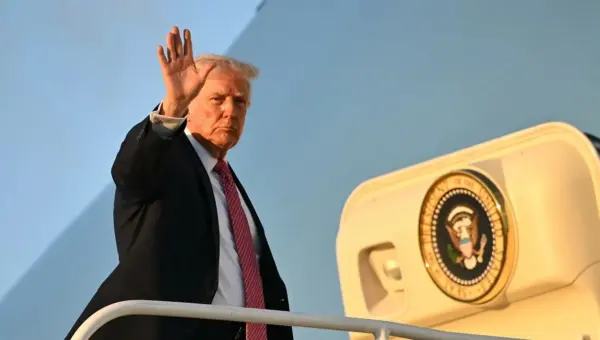
Trump’s Return: A Political Chess Move?
Former President Donald Trump's recent departure from Miami to Washington D.C. after his arraignment is more than just travel. It signals a potential strategic move to rally supporters and control the political narrative amidst ongoing legal challenges.

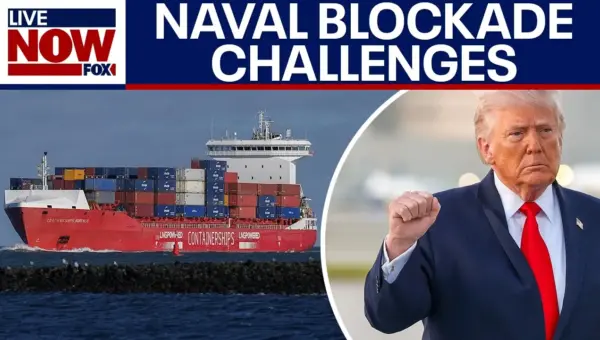
Trump Orders Iran Strait of Hormuz Blockade
President Trump has ordered an immediate U.S. Navy blockade of the Strait of Hormuz following failed negotiations with Iran. The move aims to halt all maritime traffic, but experts warn of significant risks, including potential confrontations with other nations and economic repercussions. The situation remains volatile as both sides may have used a recent ceasefire to resupply and prepare for further conflict.

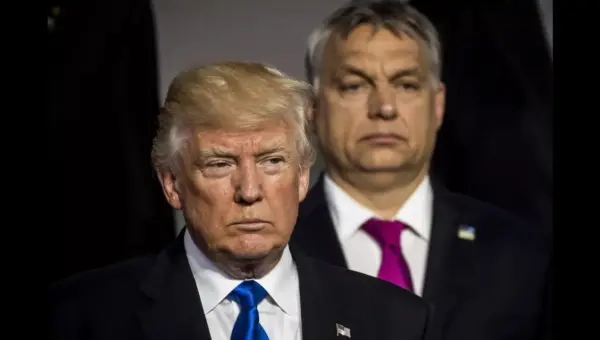
Orban’s Defeat Deals Blow to Trump’s Global Standing
Viktor Orban's significant election loss in Hungary is seen as a major blow to Donald Trump and JD Vance's global influence. The outcome challenges the momentum of the far-right and offers hope for democratic movements worldwide, with potential lessons for the U.S. Democrats.