Trump’s Iran Attack: Legal or Illegal War? Experts Weigh In
Experts are questioning the legality of the US-led offensive in Iran, noting that true 'legal gold standard' wars, authorized by UN Security Council resolutions, are exceptionally rare. The conflict's objectives, potential for internal unrest in Iran, and the differing strategies between the US and Israel are under intense scrutiny as the situation develops.

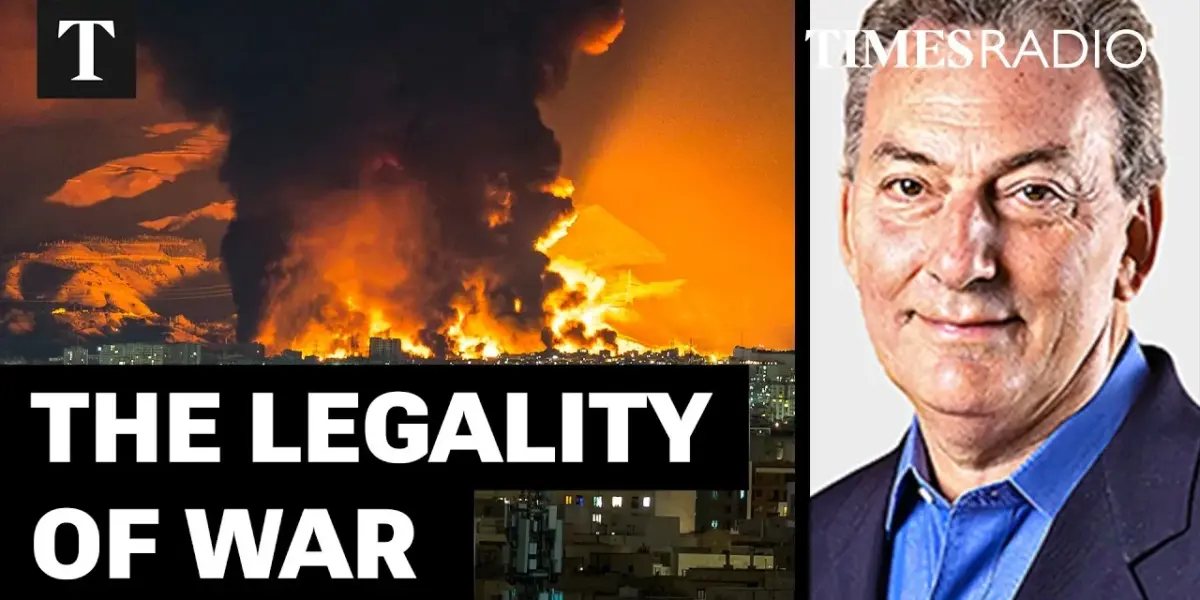
Legal Gray Areas Emerge in Trump’s Iran Offensive
In the wake of Donald Trump’s decision to launch an offensive against Iran, a critical question has surfaced: Is the military action legal? The conflict, which has seen significant strikes on Iranian oil infrastructure and a renewed focus on the nation’s leadership, has ignited debates about the international laws of war and the justifications for armed conflict. While the United States has publicly stated its objectives, the legality of the operation, particularly its adherence to established international frameworks, remains a subject of intense scrutiny.
The Gold Standard of War: UN Security Council Resolutions
Mark Urban, a seasoned foreign policy and defense correspondent, explained that the “legal gold standard” for going to war is exceedingly rare. He identified only three historical instances that have met this high bar: the Korean War in 1950, the liberation of Kuwait in 1991, and the Anglo-French intervention in Libya in 2011. These conflicts were authorized by Chapter 7 resolutions of the United Nations Security Council, which allow for “all necessary means.” Urban noted that such resolutions are complex and difficult to obtain, often making political expediency a more common, albeit less legally sound, path to military action.
“There have only been three wars in history that have met the legal gold standard, which is this enabling all necessary means chapter 7 resolution of the United Nations Security Council. Bit of a mouthful, but that is the sort of fully legal way of going to war.”
Political Expediency vs. Legal Justification
The difficulty in achieving a UN Security Council resolution means that nations often resort to other justifications, or simply proceed without explicit international legal backing. Urban suggested that the common assertion of a conflict being “illegal” by political figures, such as Keir Starmer in the UK, may sometimes be a way to imbue opposition to a war with moral weight, rather than a strict legal assessment. He posited that the stringent requirements for legally sanctioned warfare often lead to such declarations being used as a rhetorical tool when there is simply strong political or moral disagreement with a military action.
Assessing the Impact on Iran’s Leadership and Stability
The offensive’s primary objective, according to Trump’s administration, was to provoke regime change in Iran. However, the recent succession of a new, continuity supreme leader, described by some as a “nepo baby supreme leader,” raises questions about the success of this gamble. Urban cautioned that it is too early to definitively assess the failure or success of this strategy. He explained that the regime’s internal security apparatus, including paramilitary organizations, is a key target. As these organs of state security become increasingly targeted, the potential for internal unrest and protest could grow. He elaborated:
“The more the targeting switches to the internal control apparatus, then I think the more potential difficulties they could have. You know, if if we reach a stage where in a midsized Iranian city the state security people are afraid to go out on the street because they’ll either be killed or their headquarters has been blown up, all that kind of thing. Then the possibilities for unrest of course begin to grow and protest.”
Israel’s Role and Diverging Strategies
A significant development has been the apparent divergence in strategy between the US and Israel, with Israel reportedly targeting Iran’s oil infrastructure. While the US publicly acknowledged these strikes, it signals a potential tension in aims and methods. Netanyahu’s initial justification for military action focused on Iran’s missile program, a threat that had reportedly been addressed previously. However, recent intelligence suggests a potential Iranian effort to reconstitute its nuclear program, though the quality of this intelligence remains unclear. Urban highlighted the sensitivity around these differing approaches:
“The Americans have definitely sort of publicly outed the Israelis for hitting those oil installations around Tehran at the weekend. And that does show I think some tension about not just the aims but the methods and the tactics that might have to be used.”
The targeting of oil infrastructure is a particularly sensitive issue, as Iran itself has previously targeted the oil facilities of Saudi Arabia and the UAE. This reciprocal action raises concerns about further escalation and the definition of legitimate targets in the ongoing conflict.
The Fragility of Infrastructure and Escalation Risks
Despite robust air defense systems in countries like the UAE, the vulnerability of oil infrastructure to drone and missile attacks remains a critical concern. Urban pointed out that even a low-cost drone can inflict massive damage on multi-billion dollar facilities, leading to significant environmental and economic consequences. The potential for such attacks to disrupt global energy supplies, particularly to Europe, underscores the volatile nature of the conflict. The involvement of British helicopters in the Gulf states suggests an effort to bolster defenses against these threats.
Future Scenarios: Escalation and the Nuclear Question
Looking ahead, several scenarios could unfold. One interpretation of Trump’s rhetoric suggests a deliberate strategy to project strength and avoid appearing desperate to end the conflict. Alternatively, political pressures could lead to escalatory steps, including physical control of key oil facilities or attacks on Iran’s power grid. A more concerning possibility is Iran’s potential rush to develop nuclear weapons in the face of perceived existential threats. Urban outlined the immense challenges and risks associated with physically securing Iran’s underground nuclear facilities, such as the one in Isfahan, which could involve significant casualties and the uncertainty of whether the material would even be present.
The Broader Implications for International Law
The conflict in Iran provides stark lessons on the practical application and interpretation of international law. Urban argued that framing opposition to the war in terms of its “terrible idea” and unlikelihood of success, rather than solely its “illegality,” might be more effective. He reiterated that the stringent legal requirements for war, as defined by UN Security Council resolutions, are rarely met. The debate over the legality of the current action in Iran highlights the challenges of applying existing international legal frameworks in contemporary geopolitical conflicts and the tendency for legal arguments to be used for political ends.
British Bases: A Strategic Asset
The role of British bases, such as RAF Fairford, as launchpads for US military operations is significant. These bases offer strategic advantages due to their long runways and established infrastructure, facilitating long-range bomber operations. While workarounds exist, their utilization can be crucial for logistical support and operational reach. The potential for Iranian strikes on such bases, even with less sophisticated weaponry like drones, presents a new layer of security considerations for host nations, as demonstrated by recent drone attacks on Russian bomber bases.
What’s Next?
As the conflict evolves, attention will remain focused on the internal stability of Iran, the strategic alignment between the US and its allies, and the potential for further escalation. The international community will be watching closely to see how these dynamics play out and whether a path towards de-escalation or a more prolonged and potentially destabilizing engagement emerges. The definition and adherence to international law in warfare will continue to be a central, albeit often contested, element of this unfolding crisis.
Source: Is Trump's Attack In Iran Illegal? Mark Urban Explains What Makes A War Legal (YouTube)

Related Articles

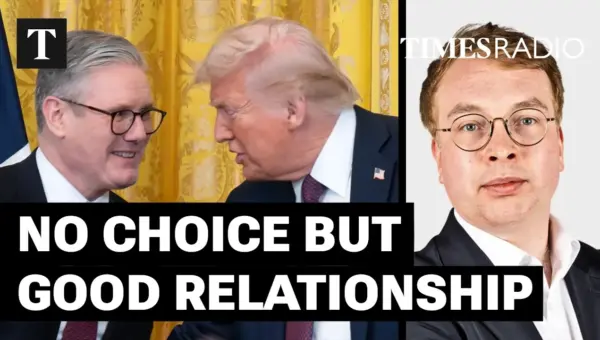
UK PM Must Court Trump Despite Party Backlash
British Prime Minister Keir Starmer faces a difficult balancing act, needing to maintain a crucial relationship with the US President despite domestic criticism. Rising global tensions and economic instability add further pressure, complicating the government's agenda and public finances.
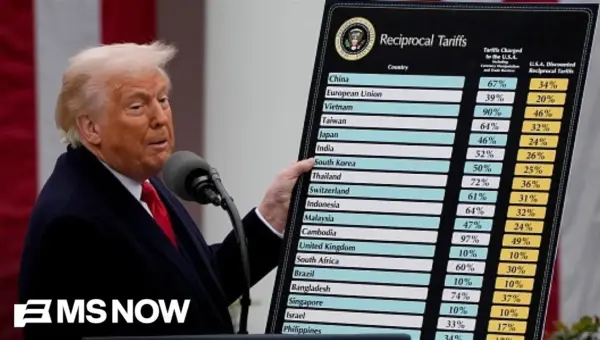
Trump’s Economy Sputters: Job Losses, War Fears Shake Markets
The U.S. economy is facing a significant downturn with 92,000 jobs lost in February and the unemployment rate rising to 4.4%. Simultaneously, the escalating war in Iran is roiling energy markets, pushing oil prices up and stocks down, raising concerns about global economic stability.


GOP Faces Voter Anger Over Economy Ahead of Trump Rally
House Republicans are meeting amid growing voter anger over the economy, with former President Trump set to address the party. Analysts suggest economic anxieties could benefit Democrats, especially as polls show dissatisfaction with rising costs and market volatility.