Trump’s Independent Voter Deficit Signals Deepening Political Divide
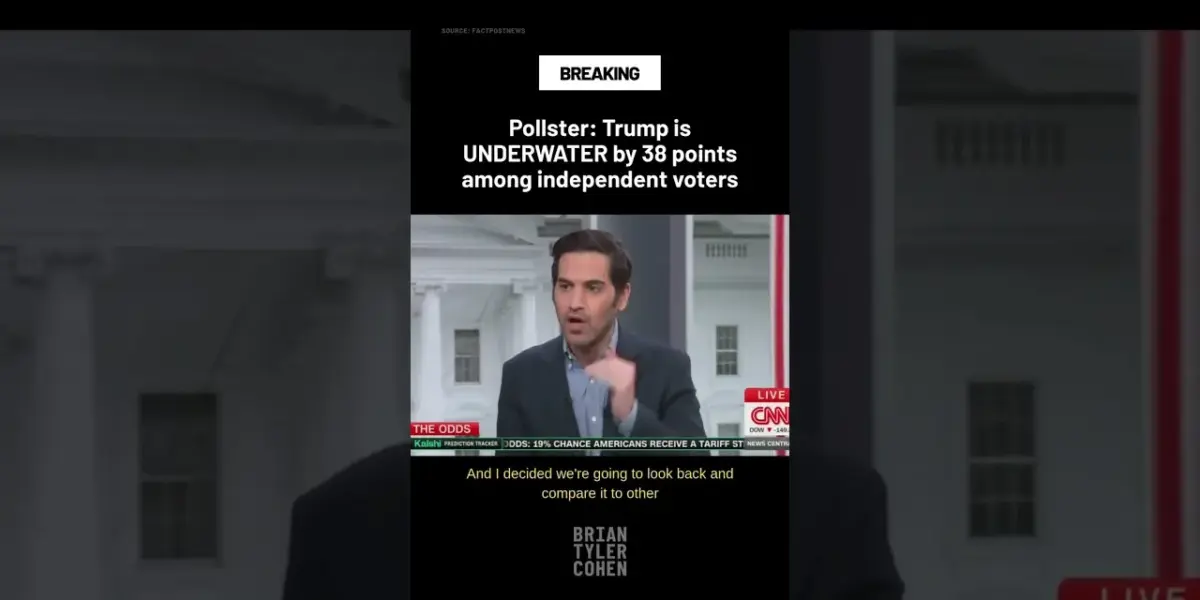
New polling data reveals Donald Trump is significantly trailing among independent voters, a crucial demographic in American politics. This deficit, larger than that faced by previous presidents, signals a deepening political divide and raises questions about future electoral viability.

Trump’s Independent Voter Deficit Signals Deepening Political Divide
In the intricate tapestry of American politics, independent voters have long been heralded as the crucial swing demographic, the arbiters of electoral outcomes. Yet, recent polling data, as highlighted by political analysts, reveals a startling and potentially decisive trend: Donald Trump is experiencing a significant deficit among this pivotal group. The numbers suggest a chasm widening between the former president and the center of the electorate, a phenomenon that warrants a closer examination of its historical context and future implications.
The Stark Reality: 38 Points Underwater
The core of the concern, as articulated by pollsters, is the sheer magnitude of Trump’s struggles with independent voters. At a staggering 38 points “underwater” – a term signifying that a candidate is significantly less popular than unpopular among a given group – Trump’s standing is not merely a minor dip but a profound alienation. This figure is not just a headline; it represents a substantial portion of the electorate that typically holds the balance of power in close elections.
Historical Comparisons: A Troubling Pattern
To contextualize this alarming statistic, analysts have drawn comparisons to previous presidencies at similar junctures. The data paints a grim picture for Trump:
- Barack Obama: At this point in his second term, Obama was also facing challenges with independent voters, but Trump’s deficit is reportedly 20 points worse than Obama’s standing.
- George W. Bush: Similarly, Trump’s current position is described as significantly worse than that of George W. Bush, whose second term, while ultimately marred by significant crises, did not exhibit such a pronounced early alienation of independent voters. The transcript notes that Bush’s second term faced challenges like Hurricane Katrina, the Iraq War, and the Great Recession, suggesting that even a president whose term ended in widespread disapproval was not as underwater with independents at this stage.
These comparisons are not intended to endorse or criticize any particular president but to underscore the severity of Trump’s current standing. The fact that Trump is performing worse than presidents who faced considerable headwinds and ultimately saw their approval ratings plummet is a critical indicator of the depth of his current challenge.
The Independent Voter: A Shifting Landscape
Historically, independent voters have been characterized by their perceived pragmatism and willingness to cross party lines. They are often seen as less ideologically rigid than staunch party loyalists, making them susceptible to persuasive arguments and shifts in the political climate. However, the increasing polarization of American politics may be altering the very nature of this group. It is possible that “independent” has become less a reflection of ideological flexibility and more an expression of dissatisfaction with both major parties, or perhaps a label adopted by voters who are highly attuned to specific issues or candidate personalities.
Why This Matters
The alienation of independent voters carries profound implications for the future of the Republican party and the broader political landscape. If Trump cannot win over a significant portion of this crucial demographic, his path to electoral victory becomes significantly narrower. This data suggests that the Republican base, while loyal, may not be sufficient to carry a general election without broader appeal. The consequences extend beyond a single election cycle:
- Electoral Viability: A sustained inability to connect with independents could lead to a prolonged period of Republican electoral disadvantage in general elections.
- Party Realignment: This disconnect might signal a need for the Republican party to reassess its messaging, platform, and candidate selection to appeal to a wider audience.
- Political Polarization: Conversely, if the independent vote is becoming less relevant or more fractured, it could further entrench partisan divides, making consensus and compromise even more elusive.
Implications, Trends, and Future Outlook
The current polling data on Trump’s standing with independent voters is more than just a snapshot; it’s a potential indicator of evolving political trends. The significant deficit suggests that the populist appeal that propelled Trump in 2016 may be facing diminishing returns, or at least is failing to resonate with a critical segment of the electorate that has become disillusioned or remains unconvinced.
One trend to watch is whether this dissatisfaction with Trump among independents is transferable to other Republican candidates. If the party continues to nominate candidates who struggle to attract independent support, it risks becoming a party that can win primaries but struggles in general elections. The future outlook for the Republican party may depend on its ability to either moderate its image, broaden its appeal, or find new ways to energize its base without alienating the center.
For the Democratic party, while this data offers a potential advantage, it also presents a challenge. The party must still motivate its base and persuade a sufficient number of independents to secure victory. The deep divisions highlighted by Trump’s struggles with this group suggest that any future political landscape will likely be characterized by continued polarization and a constant battle for the hearts and minds of voters who do not identify strictly with either major party.
Conclusion
The statistic of Donald Trump being 38 points underwater with independent voters is a stark warning. It signifies a profound disconnect with a group historically vital to electoral success. While past presidential campaigns offer context, the current political environment is unique. The ability of any candidate, particularly one with a strong partisan following, to overcome such a deficit will be a defining narrative of the upcoming electoral cycles. The challenge for Trump, and indeed for the Republican party, is to bridge this gap. Failure to do so could mean a significant uphill battle in their quest for national power, underscoring the enduring, yet perhaps increasingly complex, importance of the independent voter.
Source: Pollster: Trump is UNDERWATER by 38 points among independent voters (YouTube)

Related Articles
Noem’s Ouster Exposes Trump’s Chaos and Corrupt Contracts
Kirstjen Nielsen's ouster from DHS, marked by a Trump social media decree, exposes the administration's chaotic style, questionable contract awards, and a penchant for propaganda. The analysis delves into controversies surrounding Nielsen's past, the dubious $220 million ad campaign, and the implications for U.S. foreign policy.

Trump’s ‘America First’ Iran Policy Echoes Past Mistakes
A critical analysis of Donald Trump's 'America First' foreign policy, particularly regarding Iran, suggests a repetition of past mistakes that may have undermined U.S. interests. The discussion on MS NOW highlighted concerns about the policy's effectiveness and its impact on international relations.

Trump’s War in Iran: Missteps, Casualties, and Bizarre Distractions
Twelve days into the conflict with Iran, the war initiated by Donald Trump and Benjamin Netanyahu is marked by significant civilian casualties, a lack of clear strategy, and controversial responses to military missteps. Reports indicate a U.S. missile strike on an Iranian school, initially blamed on Iran by Trump, has been attributed to a targeting error by the Department of Defense. Meanwhile, the administration faces criticism for its handling of Iranian retaliation and the war's low public approval ratings.