Trump’s Hormuz Gambit: Iran’s Oil Lifeline Severed
President Trump's announcement of a blockade on the Strait of Hormuz aims to cut off Iran's oil revenue. Analyst Rod Martin views this as a strategic move to neutralize Iran's long-standing threat to global oil markets. The action could lead to lower oil prices globally and significant pressure on the Iranian regime, potentially forcing it to abandon its nuclear ambitions.

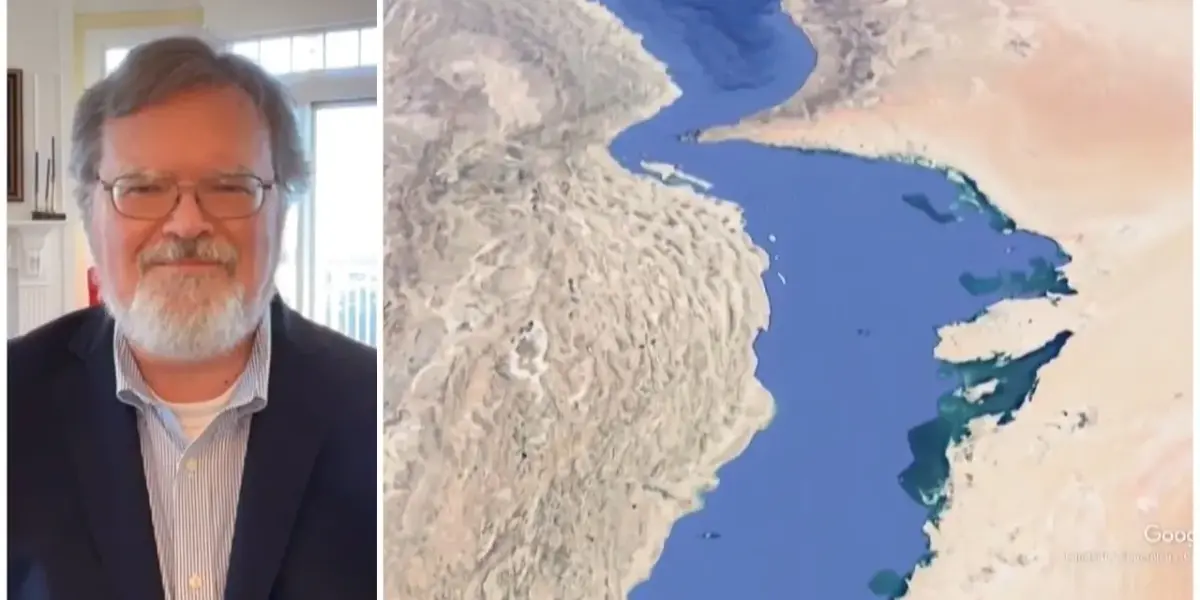
Trump’s Hormuz Gambit: Iran’s Oil Lifeline Severed
President Trump’s announcement that the U.S. intends to blockade the Strait of Hormuz signals a major shift in how America deals with Iran. This move aims to cut off Iran’s oil revenue, a key source of funding for its government. Political analyst Rod Martin believes this is a smart strategy, arguing that Iran has long used the threat of blocking the strait to influence global oil markets. Now, by demonstrating U.S. control, that threat loses its power.
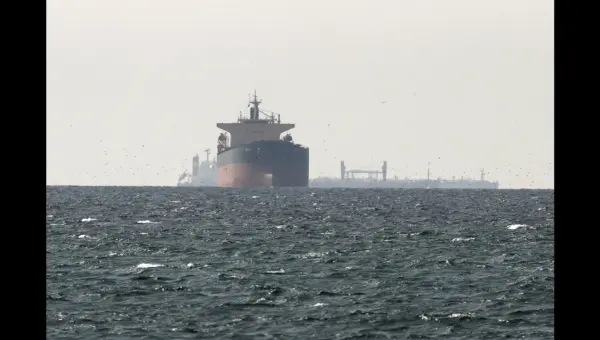
The Strait of Hormuz is a vital waterway. About 20% of the world’s oil passes through it every day. For decades, Iran has hinted it could shut down this passage. This created fear and uncertainty, which drove up oil prices. However, Martin points out that the U.S. Navy can easily counter this threat. By escorting ships, the U.S. can ensure the strait remains open. The recent transit of destroyers through the strait shows this capability is real.
This U.S. action has several key effects on Iran. First, it pushes Iran’s neighbors to build pipelines. These pipelines would help them bypass the Strait of Hormuz. Second, it encourages regional countries to support U.S. efforts against Iran. Most importantly, it cuts off Iran’s oil exports to China. China buys a large portion of Iran’s oil, and most of it must travel through the strait. Without this revenue, Iran faces serious financial problems.
The Stakes for Iran and Global Oil
The U.S. has made it clear that it will keep the strait open on its own terms. This means allies will be able to pass freely, while adversaries like Iran will be blocked. This strategy puts significant pressure on the Iranian regime. Martin suggests that Iran must either make peace on U.S. terms or face internal change. He described U.S. terms as ‘unconditional surrender’ for Iran. Alternatively, he hopes for a ‘free Iran’ where the people overthrow the current government.
The analyst also touched on the potential for a popular uprising in Iran. He noted the regime’s harsh treatment of its citizens, including the execution of young women. He believes that if the current government falls, it would bring peace and prosperity to the region and the world. While the path to this outcome is uncertain, U.S. actions might help. The use of drones against specific Iranian officials, for example, replaces the need for large-scale military invasions seen in past conflicts. This suggests a new era of warfare driven by advanced technology.
Impact on Oil Prices and the U.S. Economy
Regarding global oil prices, Martin expects short-term challenges. Prices are likely to remain high for now. However, he noted a personal observation: he is currently paying less for gas than he did under the previous administration. The real impact of a Strait of Hormuz blockade would be felt most in East Asia and Europe, as both regions heavily rely on oil from the Persian Gulf.
In the longer term, the situation could lead to lower oil prices globally. As the threat to the Strait of Hormuz diminishes, the ‘risk premium’ built into oil prices since the 1980s could disappear. This could potentially cause oil prices to drop significantly, perhaps $10 to $20 below pre-conflict levels. The U.S. is also increasing its own oil and gas exports. A large convoy of tankers is rerouting oil from the Persian Gulf around Africa to Texas. This benefits the U.S. economy, investors, and oil workers, while potentially hurting the Middle East, Russia, and China.
Failed Nuclear Talks and Iran’s Nuclear Ambitions
The blockade announcement followed failed talks between the U.S. and Iran in Pakistan. Vice President JD Vance stated that the U.S. requires a clear commitment from Iran that it will not pursue nuclear weapons. Despite past destruction of some nuclear facilities, the U.S. seeks a long-term guarantee. Iran has not yet provided this assurance.
Martin was not surprised by the talks’ failure. He believes Iran’s leadership, known as the ’12ers,’ has beliefs tied to bringing about a messianic figure, potentially through global destruction, including nuclear fire. He finds it unacceptable for such a group to possess nuclear weapons. Iran’s recent development of intermediate-range ballistic missiles, capable of reaching Europe, and its satellite launches, suggest it is close to developing intercontinental ballistic missiles (ICBMs) that could reach the U.S.
Martin dismissed Iran’s claims of not seeking nuclear weapons as disingenuous. He pointed out that enriching uranium to 60% is far beyond what is needed for peaceful nuclear power. The U.S. had previously offered Iran fuel for nuclear power plants, but Iran seems to desire nuclear weapons for intimidation rather than energy. Unlike China or Russia, Iran might not be deterred by the threat of mutual assured destruction. Therefore, the U.S. cannot allow Iran to obtain nuclear weapons.
Future Outlook and China’s Role
Looking ahead, President Trump expects Iran to return to negotiations and abandon its nuclear ambitions. Martin believes this is more likely if the U.S. applies strong pressure. He compared Trump’s language about ending Iran’s civilization to Harry Truman’s threats to Japan in 1945. The target is the current Islamic regime, which is seen as oppressive and violent. Martin predicts Iran will face intense pressure, leading to either concessions on its nuclear program or the downfall of the regime. He also suggested that if the regime does not yield, the Iranian people might rise up against it.
The U.S. is also threatening China with 50% tariffs if it provides military aid to Iran. This could severely damage China’s economy. China has been a major buyer of discounted, sanctioned Iranian oil, paying below market prices. A sudden shift to market prices, which are already elevated, would be a significant economic shock. Adding 50% tariffs on top of this could plunge China into a recession. Martin expects China to back down from supporting Iran militarily, despite potential bluster. He anticipates a positive U.S.-China summit in May where a reasonable deal could be reached.
Why This Matters
This situation is critical because it involves global energy security, international relations, and the potential for nuclear proliferation. The Strait of Hormuz is a global choke point for oil, and any disruption has far-reaching economic consequences. The U.S. strategy directly challenges Iran’s regional influence and its pursuit of nuclear weapons. It also signals a new approach to foreign policy, one that uses economic pressure and military deterrence aggressively. The outcome could reshape the geopolitical balance in the Middle East and impact global energy markets for years to come. The potential for internal change within Iran, driven by external pressure, is also a significant factor to watch.
Source: 'Hard to Be Happier': Analyst Reacts to Trump Hormuz Blockade Announcement (YouTube)

Related Articles

President’s War Threats Spark Global Health and Economic Crisis
President Trump's threats against Iran, including targeting its civilization and infrastructure, have drawn accusations of genocide and war crimes. This rhetoric, coupled with concerns about his cognitive health, has sparked a global economic crisis, driving up oil prices and threatening widespread shortages. Medical professionals are raising alarms about his fitness for office, while the nation faces the economic fallout of a conflict initiated without clear authorization.
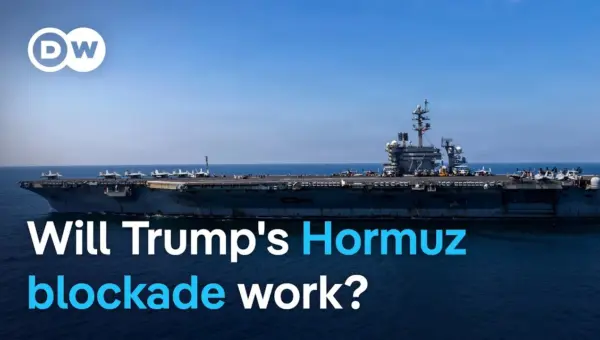
US Blocks Hormuz Blockade: Experts Warn of Oil Crisis
The U.S. Navy has initiated a blockade of the Strait of Hormuz, a vital global oil chokepoint, in response to Iran's actions. Experts like Ben Friedman of Defense Priorities are skeptical, warning the move could worsen the global oil shortage and might not achieve its intended goals. The strategy faces operational challenges and potential diplomatic pushback.
Trump Orders Strait of Hormuz Blockade After Talks Fail
President Trump has ordered a US Navy blockade of the Strait of Hormuz after peace talks with Iran failed. The move aims to prevent Iran from developing nuclear weapons and stops ships paying illegal tolls. This escalates regional tensions significantly.