Trump’s High Gas Price Gambit: A Political Stumble?
Former President Donald Trump's claim that high oil prices are beneficial is being met with skepticism, as critics argue it ignores the economic reality faced by everyday Americans. This, coupled with shifts on affordability issues and the potential for increased congressional oversight, paints a complex political picture.

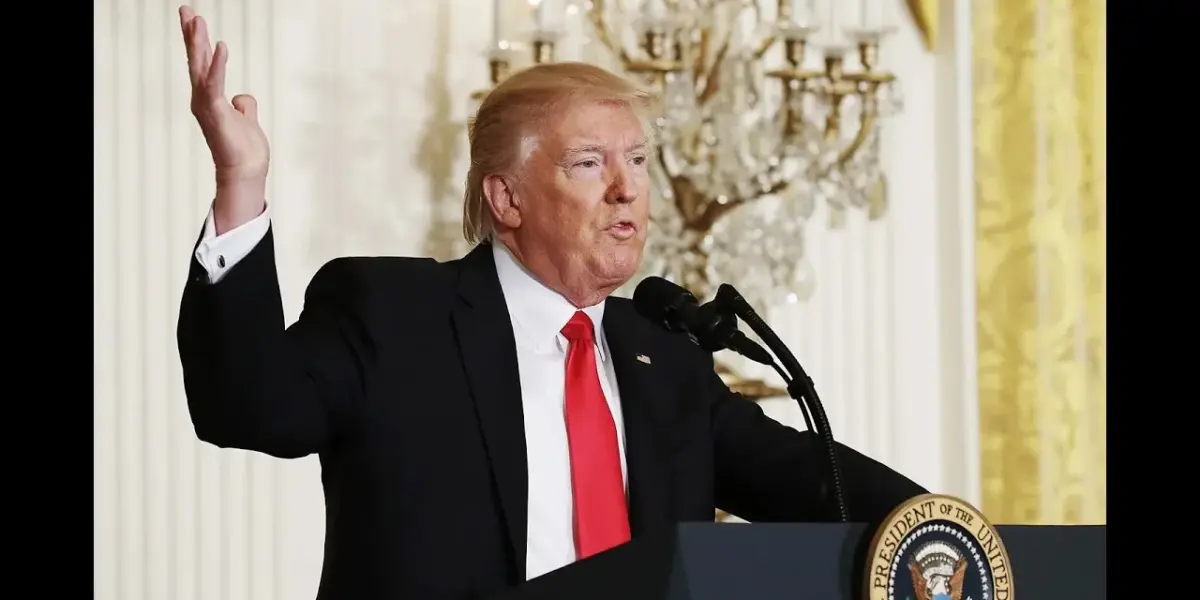
Trump’s High Gas Price Gambit: A Political Stumble?
In a move that has stunned political observers and likely confounded many everyday Americans, former President Donald Trump has reportedly asserted that high oil and gas prices are, in fact, beneficial to the United States. This assertion, made in conjunction with his stated priority of preventing Iran from acquiring nuclear weapons, appears to directly contradict the lived experience of most citizens and the traditional understanding of economic policy. The sentiment was echoed in a recent discussion with Congressman Jared Mosquitz, who expressed strong skepticism regarding the political viability and practical implications of this new talking point.
Defying Gravity at the Gas Pump
Congressman Mosquitz characterized Trump’s stance as an attempt to “defy gravity,” suggesting it’s a theory that even the most audacious political maneuvering cannot overcome basic economic realities. “Everybody knows that when they go to the gas pump, they’re going to see what they’re paying, right? That is where all the talking points and all the propaganda and all the spin, all the marketing, all the sales that Trump tries to do, all of that dies at the gas pump because math is still math,” Mosquitz stated. He emphasized that consumers directly feel the pinch of higher prices, rendering abstract economic theories or political spin ineffective.
The congressman further elaborated on the disconnect between Trump’s rhetoric and the public’s reality. He questioned the “we” that Trump refers to when discussing increased profits from oil production, suggesting it primarily benefits “oil and gas companies” and “donors,” rather than the average American household. “The American people aren’t in the Wii,” Mosquitz asserted, highlighting that those bearing the brunt of rising costs are precisely those who will vote in upcoming elections. This, he warned, could lead to a “tsunami at the ballot box” for Republicans, especially when coupled with increased grocery and housing costs.
Exploiting Affordability, Then Denying It
A particularly striking aspect of this situation, as highlighted in the discussion, is Trump’s apparent pivot on the issue of affordability. During his previous campaigns, Trump heavily exploited concerns about rising costs to galvanize voters. Now, faced with similar economic pressures, he seems to be downplaying or even reframing these issues. “Donald Trump is underwater on the two issues that the polls say he got elected on. One was the economy and two is immigration. He’s ruined both of those things,” Mosquitz declared. He accused Trump of bringing the country back to the very economic conditions he once criticized, while simultaneously attempting to convince the public that “everything’s fine.”
This perceived contradiction extends to other key areas. The discussion touched upon housing affordability, where a bipartisan bill, the “21st Century Road to Housing Act,” spearheaded by Senators Elizabeth Warren and Tim Scott, is working its way through the Senate. However, Trump has reportedly urged House Speaker Mike Johnson to prioritize a “Save America Act” focused on voter suppression, reportedly telling Johnson, “No one gives a bleep about housing.” This is seen as a direct reversal of his campaign focus on the costs of rent and housing.
“Everybody knows that when they go to the gas pump, they’re going to see what they’re paying, right? That is where all the talking points and all the propaganda and all the spin… all of that dies at the gas pump because math is still math.” – Congressman Jared Mosquitz
The Dismissal of Kirstjen Nielsen and the Specter of Oversight
The conversation also delved into the recent reassignment of Kirstjen Nielsen, the former Secretary of Homeland Security, to a less prominent role as “head shield at the Shield of the Americas.” Mosquitz expressed strong criticism of Nielsen’s tenure, stating, “She’s absolutely destroyed that agency. She’s really hurt FEMA.” He alleged systemic damage that could take years to repair and pointed to potential corruption, including internal lobbyists allegedly making millions. He specifically mentioned Cory Lewandowski’s reported comments about presidential pardons, suggesting that while state crimes might be beyond a pardon, the upcoming congressional oversight could uncover significant wrongdoing.
The prospect of Democratic control of congressional committees, particularly the House, was framed as a significant shift towards accountability. “When we get that gavel back where Robert Garcia gets the gavel and Jamie Raskin gets the gavel, man, those hearings are going to be much television,” Mosquitz predicted. He believes that with Democrats in power, issues such as the Jeffrey Epstein files and financial dealings involving figures like Howard Lutnik and Pam Bondi will be thoroughly investigated. The focus on the “Save Act,” according to Mosquitz, is a direct attempt by Trump to “save himself” by “disenfranchis[ing] Americans from voting,” thereby preventing the kind of oversight that could occur if Republicans lose their majority.
Why This Matters
This analysis highlights a critical tension between political rhetoric and economic reality, particularly concerning everyday costs for American families. Trump’s assertion that high gas prices are beneficial challenges a fundamental understanding of consumer welfare and could alienate voters who are directly impacted by such increases. Furthermore, the apparent shift away from core campaign issues like affordability, as seen in the housing debate, raises questions about the consistency and sincerity of his political platform. The discussion also underscores the potential for increased governmental accountability and transparency should Democrats regain control of congressional oversight committees, promising a closer examination of the Trump administration’s actions and potential improprieties.
Implications, Trends, and Future Outlook
The trend observed is a potential disconnect between the Trump campaign’s messaging and the tangible economic experiences of voters. If high energy and living costs persist, and if Trump’s narrative about their benefits fails to resonate, it could significantly impact electoral outcomes. The focus on voter suppression legislation, framed as a means of self-preservation, suggests a strategy of preemptively mitigating potential electoral losses. The future outlook points to a highly charged political environment where economic anxieties, accountability for past actions, and legislative power struggles will likely dominate. The effectiveness of Trump’s unconventional economic messaging and the public’s receptiveness to it will be a key determinant in upcoming elections.
Historical Context and Background
Historically, presidents have often been held accountable for the state of the economy, with voters frequently using gas prices, inflation, and employment figures as key indicators. Campaigns often revolve around promises of economic improvement, with candidates criticizing the incumbent’s handling of these issues. Trump himself successfully leveraged economic anxieties during his 2016 campaign. The current situation represents a potential inversion of this dynamic, where an incumbent (or former president seeking to regain power) is seemingly embracing or downplaying economic conditions that typically lead to public dissatisfaction. The reference to the Iran nuclear deal also provides context, as Trump’s withdrawal from the agreement was a significant foreign policy decision with potential ripple effects on global energy markets and geopolitical stability.
Source: Trump presidency UNRAVELS with insane update (YouTube)

Related Articles
Germany’s Anti-AfD Firewall Crumbles Amidst Shifting Politics
Germany's political 'firewall' against the far-right AfD party is showing significant cracks due to rising AfD popularity and recent instances of cooperation. Historically rooted in Germany's experience with Nazism, the firewall aimed to prevent extremist parties from gaining power. However, shifts in the AfD's rhetoric and increased AfD strength, especially in eastern Germany, are challenging this long-standing political norm.
Polls Spell Doom: Republicans Face Voter Backlash
New polling data reveals a sharp decline in public confidence regarding the economic impact of Republican policies, particularly under Donald Trump. A significant majority now feel financially worse off, a trend that is especially pronounced among independent voters. This economic discontent poses a major challenge for the Republican party heading into future elections.
Trump Delays Iran Strike Deadline Amidst Shifting Diplomacy
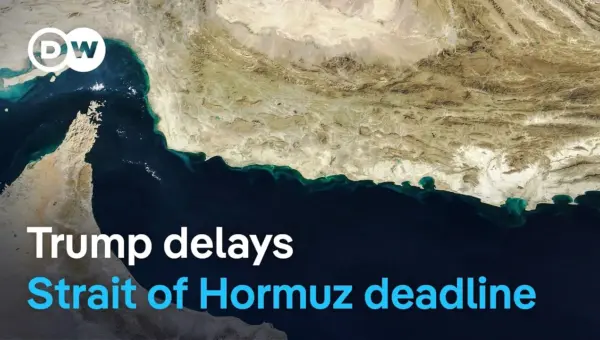
President Donald Trump has extended his deadline for potential strikes on Iranian energy plants to April 6th, amid reports of U.S.-Iran diplomatic talks mediated by Pakistan. This move comes as Israel continues its strikes on Iran and the U.S. deploys additional military assets to the region. Analysts point to mixed signals, economic pressures, and strategic miscalculations as key factors shaping the evolving situation.