Trump’s Handling of Economy, Inflation Worsens Politically
President Trump's approval ratings on inflation and the cost of living are declining, mirroring the political challenges faced before the 2018 midterms. While immigration presents a mixed picture, economic concerns are increasingly weighing on his party's prospects.

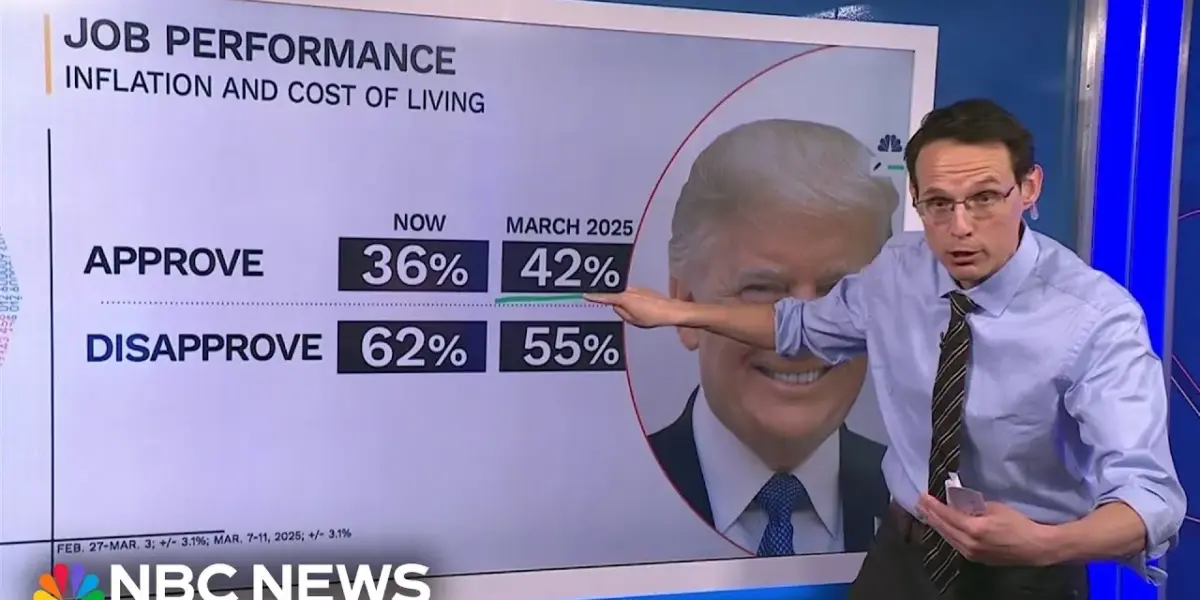
Kornacki: Trump Faces Mounting Political Pressure on Economy
As the midterm election cycle intensifies, President Trump’s political standing appears to be weakening, particularly concerning his handling of the economy and inflation, according to new polling data analyzed by NBC’s Chief Data Analyst Steve Kornacki. The latest figures reveal a troubling trend for the President and the Republican party, with approval ratings on key economic issues declining significantly over the past year.
Approval Ratings Mirror Troubling 2018 Midterms
The new poll indicates President Trump’s overall approval rating stands at 44%, a figure consistent with his standing throughout his second term. However, Kornacki highlights that this is precisely where his approval rating was at this point in his first term, which preceded the 2018 midterm elections. That election cycle saw a significant “blue wave” as Democrats regained control of the House of Representatives, flipping 40 seats. Kornacki suggests this historical parallel serves as a stark warning sign for Republicans heading into the upcoming midterms.
Inflation Woes Plague Trump’s Approval
A critical factor contributing to the President’s political challenges is the economy, with inflation and the rising cost of living emerging as significant liabilities. Only 36% of voters approve of Trump’s handling of inflation. This issue has been a persistent problem throughout his tenure, but its political impact is reportedly worsening. A year ago, at the start of his second term, his approval on inflation stood at 42%. This represents a six-point drop, with disapproval now exceeding 60%.
Immigration: A Complex Political Landscape
The poll also delves into the complex issue of immigration, which has been a subject of recent controversy and high-profile incidents. While President Trump’s approval rating on the broader topic of immigration is relatively low at 44%, the data reveals a more nuanced picture when voters are asked specifically about border security. On this narrower question, Trump’s performance receives positive reviews, with a 53% approval rating. This divergence suggests that nearly one in ten voters hold conflicting opinions, viewing Trump negatively on immigration in general but positively on border security specifically.
Generic Ballot Shows Democratic Advantage, But Nuances Remain
Looking at the party landscape, the generic ballot shows a six-point advantage for Democrats. While this indicates a lead for the opposition party, Kornacki points out that this is less pronounced than the double-digit advantage Democrats held at this stage in 2018. Several factors differentiate the current political climate from the lead-up to the 2018 midterms.
Voter Intensity and Party Image Discrepancies
One key difference is the heightened intensity of Democratic voter interest in the midterms compared to 2018. The current gap between Democratic and Republican voter motivation is larger, suggesting Democrats are mobilizing their base more effectively. However, beyond their core supporters, voters express reservations about the Democratic party. The overall image of both parties is not positive, with Republicans underwater at 37% positive approval. Democrats fare worse, with only 30% positive and 52% negative ratings, a stark contrast to 2018 when Democrats held a more favorable image than Republicans.
Key Issues: Democracy, Border Security, and Economy
When voters are asked about the major issues on their minds, significant differences emerge in how they rate the two parties’ ability to handle them. Threats to democracy are cited as the top issue by Democratic voters, who give the Democratic party an 11-point advantage in handling this concern. On border security and immigration, voters favor the Republican party, reflecting Republican voters’ prioritization of these issues. The economy, historically a strong point for Republicans over the past eight years, is now tied. A critical question for the coming months is whether Democrats can open up an advantage on this front or if Republicans can reclaim it as their central strength.
Looking Ahead: Economic Sentiment and Midterm Outcomes
The upcoming months will be crucial in determining the political impact of economic sentiment. President Trump’s administration faces the challenge of improving public perception on inflation and the cost of living, issues that have historically been potent motivators for voters. The diverging views on immigration and border security, coupled with the overall party images and voter intensity, suggest a complex and potentially volatile midterm election landscape. All eyes will be on whether the President can shift the narrative on the economy or if voter concerns about inflation will ultimately dictate the electoral outcome.
Source: Kornacki: Trump’s handling of inflation and cost of living ‘getting worse politically’ (YouTube)

Related Articles

Iran’s “Unconditional Surrender” Demand: A Strategic Folly
President Trump's demand for Iran's unconditional surrender is a strategic miscalculation, ignoring the regime's decentralized structure and popular dissent. Historical precedents show air power alone rarely achieves such goals, leaving the US with unappealing options for a prolonged conflict.

Supreme Court’s Delay Tactics Could Derail Trump’s Election Ambitions
The Supreme Court's prolonged deliberation on a key voting rights case may have inadvertently thwarted Donald Trump's strategy to reshape congressional maps for electoral advantage. The calendar's constraints and potential voter backlash add further complexity.


Kharg Island: Trump’s Secret Weapon to Cripple Iran’s Economy?
Kharg Island, Iran's primary oil export hub, could be a key target for U.S. pressure, potentially crippling the nation's economy. Despite historical considerations and immense strategic value, seizing the island presents significant military risks and the possibility of sabotage by a desperate Iranian regime.