Trump’s Global Gambit Ignites Worldwide Chaos
A deep dive into escalating global conflicts and strained alliances, this analysis connects a series of international incidents to Donald Trump's foreign policy decisions. It explores the implications for global stability and the potential reshaping of the world order.

Trump’s Global Gambit Ignites Worldwide Chaos
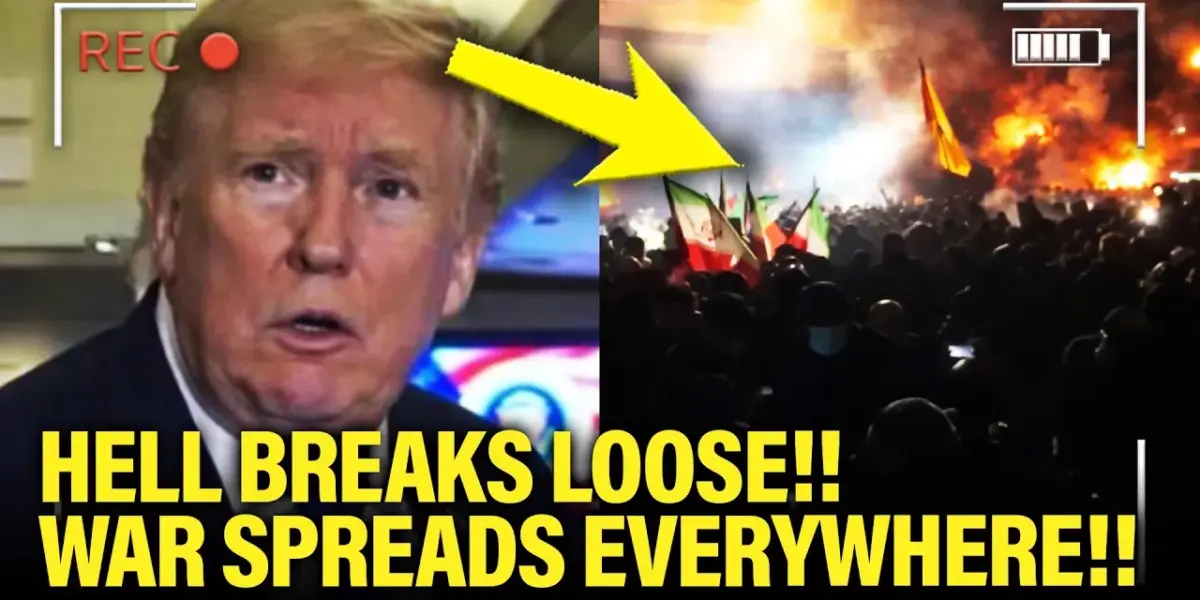
The world stage appears to be in a state of escalating turmoil, with a series of interconnected events suggesting a significant shift in global dynamics, largely attributed to the foreign policy decisions and actions under Donald Trump’s administration. From the Middle East to Asia and even the Caribbean, the ripple effects of these policies are manifesting as increased conflict, strained alliances, and a palpable sense of instability.
The Middle East Erupts
At the epicenter of the current crisis lies Iraq, where “massive clashes” have been reported outside the United States embassy in Baghdad. The transcript details an incident where an ammunition depot was struck by Iran, resulting in a significant explosion. This is not an isolated event; attacks have extended to international military installations, including a UK Air Force base in Cyprus and a French military base in Abu Dhabi. The conflict has drawn in regional actors, with Hezbollah in Lebanon and the Houthis in Yemen joining Iran in actions aimed at disrupting vital global shipping lanes, particularly the Strait of Hormuz. This choke point is critical for the transport of 20% to 25% of global liquefied natural gas and crude oil, leading to a significant increase in shipping costs and a palpable sense of panic, as evidenced by residents fleeing southern Lebanon due to potential escalations with Hezbollah.
Israel has responded with strikes on Hezbollah targets across Lebanon, including in Beirut, resulting in significant damage to high-rise buildings. Meanwhile, protests have erupted in various locations, including Karachi, Pakistan, where demonstrators targeted the U.S. consulate. The situation devolved tragically when U.S. Marine security forces opened fire on protesters, resulting in dozens of deaths. Similar unrest was observed in Bahrain, with clashes between Shiite protesters and security forces following pro-Iranian demonstrations.
Asia’s Shifting Sands
The geopolitical landscape in Asia is also undergoing a dramatic transformation. China, under Xi Jinping, has leveraged the situation to its advantage, reportedly outmaneuvering Donald Trump. A key point of contention has been Taiwan. Xi Jinping has allegedly conditioned any meeting with Trump on the U.S. exercising “extreme caution” regarding arms sales to Taiwan, emphasizing that Taiwan’s separation from China is unacceptable. This pressure has led to the Trump administration reportedly blocking billions of dollars in promised funding to Taiwan, a move seen by critics as a betrayal of the island nation and a concession to Beijing.
Adding to the regional instability, Afghanistan and Pakistan are reportedly at war, with Pakistan declaring war on Afghanistan and accusing it of being an Indian colony, suggesting a proxy conflict between Pakistan and India. Furthermore, North Korea, under Kim Jong-un, has declared its nuclear status permanent and irreversible, vowing to enhance its nuclear capabilities while signaling conditional openness to dialogue, contingent on the U.S. recognizing its nuclear power status and withdrawing its “hostile policy.” This presents a direct challenge to U.S. foreign policy in the region.
A Fractured Transatlantic Alliance
The crisis has also exposed significant rifts between the United States and its traditional European allies. Reports indicated that France’s aircraft carrier, the Charles de Gaulle, would assist the U.S. in the Middle East, but France later issued a statement denying this, suggesting a more limited defensive posture. This apparent reticence from European nations, who are reportedly seeking their own assurances from Iran, highlights a growing divergence in strategic priorities and a weakening of the transatlantic alliance. The U.S. abstention on a UN vote for lasting peace in Ukraine further underscores this fracturing, drawing criticism even from figures within Trump’s own administration, such as former envoy Keith Kellogg.
The Specter of a Wider Conflict and Shifting Global Order
The transcript explicitly posits that Donald Trump’s actions have led to a global conflagration, with “all hell breaking loose across the world.” The narrative suggests a deliberate strategy by Trump, potentially influenced by figures like Lindsey Graham, to provoke further conflict, with calls for military action against Cuba being explicitly mentioned. An administration official is quoted as saying, “The president feels like, I’m on a roll. Look at what we did in Venezuela. Look at what we’ve done in Iran. I want Cuba next.” This aggressive stance is coupled with an acknowledgment that more American soldiers are expected to die, a sentiment Trump reportedly views with a detached “it is what it is” attitude.
The underlying theme is the erosion of American global leadership and the rise of a multipolar world order, a concept referred to as the “new world order” or “multi-polar world order.” This vision, where the U.S. is no longer the undisputed leader, is allegedly being shaped by agreements between Trump, Putin, and Xi Jinping, dividing the world into spheres of influence. China and Russia, in this context, are seen as moving closer together and allied with Iran, actively condemning U.S. military actions in Iran as violations of sovereignty and the UN Charter.
The implications for global security are profound. The U.S. is reportedly depleting its munitions stockpiles due to the ongoing conflicts, raising concerns about its capacity to defend allies like Taiwan or project power in Asia. The extended deployment of naval assets like the USS Gerald R. Ford, with low morale reported, further exacerbates these concerns. The administration’s strategy in Iran is characterized as an attempt to replicate the “Venezuela template,” aiming to install a more amenable regime, even if it remains within the existing Islamic Republic structure.
Why This Matters
The current global situation, as depicted, signifies a critical juncture in international relations. The alleged shift away from established alliances and toward a transactional, power-based global order has far-reaching consequences. If the U.S. is perceived as less reliable or is actively withdrawing from its leadership role, it creates vacuums that can be filled by more assertive, potentially adversarial powers. The economic repercussions of disrupted trade routes, such as the Strait of Hormuz, can have a global impact, affecting energy prices and supply chains. The escalation of regional conflicts also increases the risk of wider confrontations, drawing in more actors and leading to greater human suffering. The willingness to accept increased casualties and the apparent disregard for traditional diplomatic norms suggest a dangerous precedent being set for future international engagement.
Implications, Trends, and Future Outlook
The trend indicated is a move towards a more fragmented and volatile world. The weakening of international institutions, such as the UN, and the erosion of multilateralism are significant. The rise of nationalism and unilateral action, coupled with the formation of new, fluid alliances (e.g., Russia, China, and Iran), suggests a return to a more competitive geopolitical landscape. The future outlook is one of heightened uncertainty, with a greater potential for miscalculation and escalation. The economic consequences of protracted conflicts and disrupted trade could lead to global recessionary pressures. The effectiveness of international diplomacy is being severely tested, and the established norms of international law and order are under significant strain.
Historical Context and Background
The current geopolitical tensions can be viewed through the lens of historical power shifts and the dynamics of great power competition. The post-World War II era was characterized by American hegemony and the establishment of international institutions designed to promote peace and stability. However, throughout history, periods of unipolarity have often been followed by multipolar ones, marked by increased competition and conflict. The current situation echoes some of the anxieties of the interwar period, with rising authoritarian powers challenging the existing international order. The specific focus on the Strait of Hormuz also recalls historical geopolitical flashpoints related to energy security and control of vital waterways. The reference to a potential “new world order” or “multi-polar world order” reflects historical debates about the structure of international power and the future of global governance.
Source: All HELL BREAKS LOOSE as Trump BURNS DOWN WORLD!!! (YouTube)

Related Articles
Friedman Warns of ‘Indiscipline’ in Iran Policy
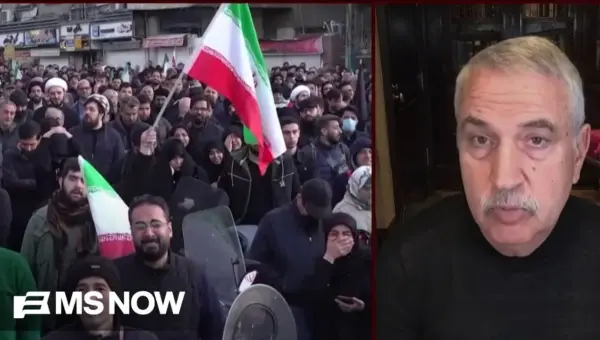
Thomas Friedman criticizes the U.S. administration's "indiscipline" in its Iran policy, warning of potential chaos. He highlights the historical significance of 1979 and contrasts potential positive outcomes in Iran with the administration's perceived lack of strategic planning. Friedman also suggests Iran's current strategy aims to destabilize global markets.
Experts Warn of ‘Feral Beast’ Threat to American Institutions
Prominent commentators on MSNBC's "The Best People" warned of significant damage to America's public good, with one panelist calling former President Trump a "feral beast." The discussion focused on rebuilding institutions and addressing societal grievances in the wake of perceived destruction.

Donbas: Russia’s Obsession, Ukraine’s Stand, and the Path to Peace
As the Russia-Ukraine war nears its fourth year, the intense fighting in Ukraine's eastern Donbas region has become a focal point. Russia's persistent demand for control over the Donetsk Oblast is met with Ukraine's unwavering defense of its sovereignty, raising questions about the possibility of peace through territorial concession and the broader implications for global security.