Trump’s Frailty Exposed Amidst Defense Chaos and War Concerns
Recent events reveal mounting concerns over Donald Trump's physical and cognitive health, intertwined with a troubling lack of clarity in defense decision-making. Testimonies suggest a reliance on 'decision matrices' rather than direct presidential guidance, raising alarms about national security.

Trump’s Frailty Exposed Amidst Defense Chaos and War Concerns
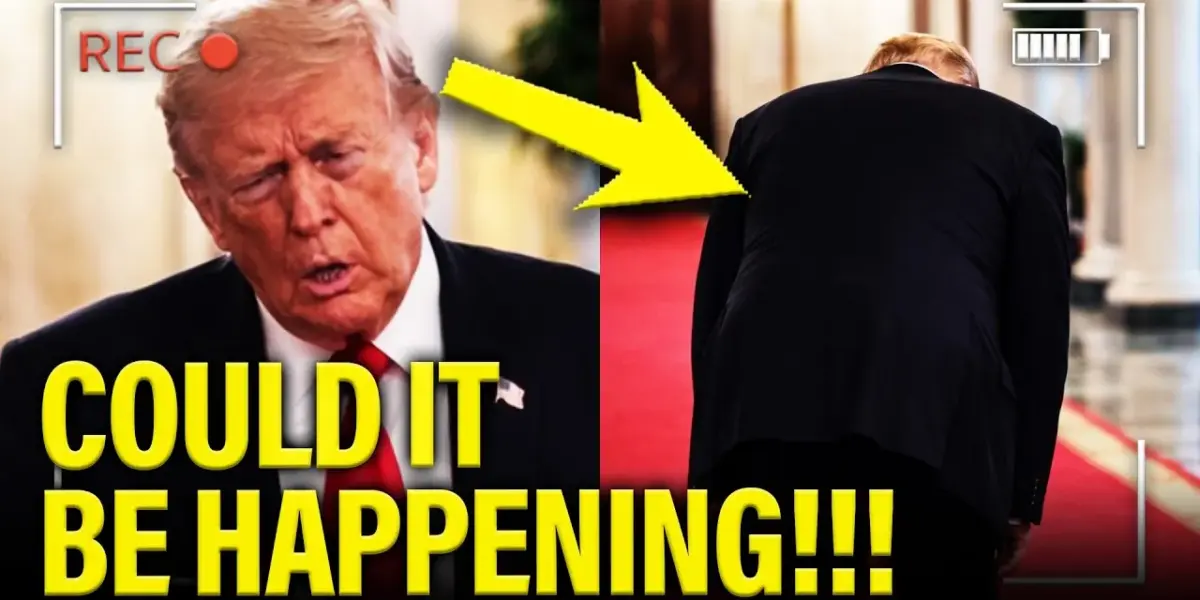
Recent events have cast a stark spotlight on the physical and cognitive well-being of former President Donald Trump, raising serious questions about his fitness for office and the stability of critical decision-making processes within the defense establishment. Emerging details suggest a man grappling with visible physical ailments and a detachment from the operational realities of national security, all while the specter of global conflict looms large.
Physical Deterioration and Unsettling Remarks
Eyewitness accounts and public appearances have fueled concerns about Trump’s physical state. Reports of him wearing makeup to conceal rashes and discoloration on his neck and hands, coupled with descriptions of a “foul smell” emanating from him during a public event, paint a concerning picture. These observations are amplified by his recent public statements, which have veered into the bizarre. During a meeting with the Miami soccer team, Trump reportedly commented on the players’ appearance, stating, “I don’t like good-looking men,” an assertion that left many bewildered.
Further compounding these concerns were his public pronouncements regarding his family’s origins. While meeting with the Chancellor of Germany, Friedrich Merz, Trump incorrectly stated that his father was born in Germany, when in fact, his father was born in New York City. This seemingly basic factual error, alongside pronouncements about “golden ballrooms” and seeking validation for his “performance,” has led to widespread speculation about cognitive decline. Whether this stems from dementia, dementia-like symptoms, or another condition, the public is witnessing what appears to be a significant deterioration.
Defense Department’s Decision-Making Vacuum
Perhaps more alarming than Trump’s personal condition is the apparent void in his decision-making authority concerning the Department of Defense. Testimony from Elbridge Colby, the Under Secretary of Defense for Strategy, during hearings before the House of Representatives and the Senate, revealed a startling lack of clarity regarding Trump’s directives. When questioned by lawmakers from both parties about Trump’s specific orders, plans, or views on defense matters, Colby repeatedly deferred to “decision-making frameworks” and “decision matrices.” This response suggests that critical decisions, including the controversial pause on arms shipments to Ukraine, were not directly driven by presidential intent but rather by internal departmental processes attempting to interpret or extrapolate meaning from Trump’s often ambiguous pronouncements.
Lawmakers expressed frustration, with one questioning, “What about you carrying out Donald Trump’s view? What? What’s Donald Trump’s order? What’s Donald Trump’s plan? What did Donald Trump ask you to do?” Colby’s repeated reliance on “decision matrices” and his inability to articulate direct presidential guidance left many with the impression that Trump was “out of the loop” or lacked a clear understanding of the actions being taken under his name.
The Department of Defense’s own self-referential use of the term “Department of War” further adds to the disquiet. The reliance on artificial intelligence and complex decision-making tools to decipher presidential intent highlights a systemic issue, where the clarity and directness expected from the executive branch appear to be absent.
Historical Context and Precedents
The current situation echoes past concerns about presidential clarity and the functioning of government under stress. Throughout history, leaders’ cognitive and physical health have been subjects of intense scrutiny, particularly when national security is at stake. However, the current evidence, as presented in recent testimonies and public appearances, suggests a more pronounced and publicly visible decline than typically observed. The lack of direct presidential guidance in defense matters, coupled with the use of “decision matrices” to interpret intent, represents a significant departure from established norms of executive leadership.
Implications and Future Outlook
The implications of this apparent disconnect are profound. If critical defense decisions are being made in a vacuum, relying on interpretations of a leader’s unclear directives, the United States risks making strategic missteps with potentially catastrophic consequences. The uncertainty surrounding the pause in arms to Ukraine, for instance, could have emboldened adversaries and undermined the confidence of allies. Furthermore, the public display of physical and cognitive struggles by a potential presidential candidate raises serious questions about the judgment and stability that would be brought to the highest office in the land, especially in times of international crisis.
The trend toward delegating complex decision-making to bureaucratic frameworks, while sometimes necessary, becomes deeply problematic when it appears to be a substitute for clear executive leadership. This can lead to a diffusion of responsibility, making it difficult to hold anyone accountable for critical failures. The reliance on AI and “decision matrices” in the Department of Defense, as described by Colby, could be seen as an attempt to professionalize and depoliticize decision-making, but it also risks creating a system that is opaque and unresponsive to the direct will of the commander-in-chief.
Why This Matters
The stakes could not be higher. At a time when global tensions are elevated, and the United States plays a pivotal role in maintaining international stability, a clear, decisive, and cognitively sound leader is paramount. The current situation suggests a concerning gap between the perceived needs of national security and the apparent capabilities of a leading presidential candidate. The public has a right to expect transparency and clarity regarding the health and decision-making processes of those who aspire to lead the nation, especially when those processes involve the deployment of resources and the potential commitment of troops in harm’s way.
A Troubling Trend
The evidence presented, from physical observations to the testimony of defense officials, points to a troubling trend. The use of movie clips like “Gladiator,” “Transformers,” and “Star Wars” on official accounts, alongside pronouncements about drapes and ballrooms during discussions of war, suggests a disconnect from the gravity of the issues at hand. The repeated insistence on the election being “rigged and stolen,” even when discussing unrelated matters, further indicates a fixation on past grievances rather than present challenges. The recent prayer service for Trump by religious extremists, while intended to show support, also highlights the unusual nature of his public engagements.
Ultimately, the events detailed underscore a critical juncture for American voters. The choice ahead involves not only policy differences but also fundamental questions about leadership, stability, and the very capacity to govern effectively in an increasingly complex and dangerous world. The apparent physical and cognitive challenges, coupled with the systemic issues within the defense establishment, demand a thorough and sober assessment as the nation moves forward.
Source: Trump’s HEALTH Crashes as WAR COULD BE FATAL?!! (YouTube)

Related Articles

Trump’s War Sparks Public Outrage, Questions Nation’s Strength
President Trump's initiation of a war with Iran, lacking public support, has sparked widespread concern and damaged national morale. Critics argue the conflict is weakening the U.S. and is driven by a performative display of strength rather than strategic necessity.

Trump’s Economy Crumbles Under War and Tariffs
New job numbers reveal a devastating loss of 100,000 jobs in February, a sharp contrast to economist expectations and a blow to the administration's economic narrative. Escalating geopolitical tensions and tariffs are cited as major contributors to this downturn, impacting key sectors and financial markets.

US Strikes Iran School: ‘Moral Abomination,’ Calls Analyst
A devastating airstrike on an Iranian girls' elementary school, reportedly by U.S. forces, has killed at least 165 people, mostly children. Analysts are condemning the incident as a "moral abomination and tactically stupid," citing an aggressive military ethos and potentially flawed targeting processes. The war's growing civilian toll is fueling domestic opposition and raising serious questions about U.S. strategy and objectives.