Trump’s Foreign Policy Blunders: A Troubled Legacy
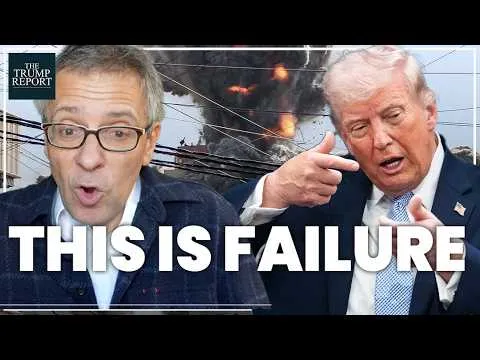
Political scientist Ian Bremmer analyzes Donald Trump's foreign policy, calling his handling of the Iran conflict a "disastrous" mistake. Bremmer argues Trump's unilateral actions weakened U.S. credibility and damaged alliances, despite his claims of victory.

Trump’s Foreign Policy Blunders: A Troubled Legacy
In a recent discussion on The Trump Report, political scientist Ian Bremmer offered a sharp critique of Donald Trump’s foreign policy decisions, particularly regarding a conflict with Iran. Bremmer argued that Trump’s approach has made the U.S. less reliable and has damaged its standing with allies. This analysis delves into the specifics of the Iran conflict, the broader implications of Trump’s “America First” strategy, and what it means for the future of U.S. global leadership.
A War of Choice, A Claim of Victory
The conversation focused on a recently announced ceasefire between the U.S. and Iran, which President Trump declared a “total and complete victory.” Bremmer, however, expressed skepticism about the substance of this victory, calling it a “climb down” and a necessary step for Trump to exit a war he initiated unilaterally. “He really needed to declare victory,” Bremmer stated, noting that Trump’s original war goals, such as regime change or securing enriched uranium, were proving impossible to achieve. The prolonged conflict had also harmed the global economy and benefited U.S. adversaries like Russia.
Bremmer pointed out that while Trump declared victory, the actual war goals were not fully met. Iran’s military capabilities, especially its naval and missile forces, were degraded. However, Iran retained significant ability to retaliate, as seen in strikes on U.S. bases and energy facilities. Crucially, the U.S. did not achieve its goal of controlling the Strait of Hormuz; in fact, Bremmer suggested the U.S. was in a worse position on this front than before the war began. The Iranian people, who were supposedly to be helped, suffered more. Bremmer concluded that, while Trump managed to prevent the war from becoming even worse, the overall endeavor was a failure and “the worst foreign policy mistake that Trump has made as president.”
A Ceasefire, Not Peace
The announced ceasefire, Bremmer clarified, is not a comprehensive peace agreement. While it halted direct U.S. and Iranian military action, other conflicts involving groups like the Houthis in Yemen and Hezbollah in Lebanon remained unresolved. He noted that Israel’s continued bombing of Lebanon, potentially in response to the U.S.-Iran agreement, could lead to further escalation. Bremmer also highlighted that some U.S. allies, like Israel and the UAE, seemed uncomfortable with ending the war, raising questions about potential fragmentation in the Middle East and differing regional interests.
The Uranium Question and Diplomatic Efforts
A key sticking point in any potential long-term resolution is Iran’s uranium enrichment program. While Iran has a 10-point plan that includes accepting its right to enrich uranium for peaceful purposes, Trump has proposed his own plan that explicitly rejects enrichment. Bremmer dismissed the feasibility of a special operations mission to remove Iran’s enriched uranium, calling it too dangerous and difficult. He suggested that if Iran believes such a mission is not feasible, it might create a more stable environment for a long-term ceasefire.
Despite these challenges, Bremmer saw some cause for optimism in the renewed diplomatic engagement. He noted that key figures from Iran’s parliament were willing to engage, and that diplomatic efforts facilitated by Pakistan and Oman were underway. This ongoing process, he argued, was preferable to the devastating war that had been taking place.
China’s Role and Iran’s Position
China, Bremmer acknowledged, has played a constructive role, not wanting the conflict to continue due to its own economic interests as an energy importer. However, he stated that China was not decisive in reaching the agreement, attributing the breakthrough primarily to Trump’s personal decision-making. Bremmer also pushed back against the idea that Iran emerged as a global power from this conflict. He described Iran as a government struggling with internal issues like water shortages and power outages, facing a degraded industrial base, and led by untested officials after the loss of capable leaders. While the war might offer Iran some geopolitical security assurances if the ceasefire holds and it maintains influence over the Strait of Hormuz, Bremmer firmly stated, “I would under no circumstances would I say Iran emerges the winner here.”
Weakened U.S. Credibility
From an American perspective, Bremmer argued, the U.S. has been weakened. “The U.S. is less reliable, less trusted, um not standing with its allies, threatening many of its core allies,” he said. He criticized Trump for disregarding the unpopularity of the war among allies. Bremmer also observed that Trump’s rhetoric often outpaces his actions, a pattern he called the “taco versus fafo scale.” When faced with adversaries like China or Iran, who showed they could inflict significant pain, Trump ultimately backed down, a trait Bremmer found concerning.
Bremmer strongly criticized Trump’s management style, calling him “the most incompetent policy practitioner as president that the Americans have ever seen.” He argued that Trump’s reliance on his own judgment and his aversion to candid advice from his staff lead to disastrous policy choices. This “madman theory” can sometimes work when the U.S. is much more powerful, but in the case of the Iran conflict, it proved “disastrous.” Bremmer also lamented the media’s tendency to focus on Trump’s most inflammatory statements, sometimes missing the full context or nuance.
A Troubled Future for U.S. Leadership
Looking ahead, Bremmer predicted significant challenges for Trump and the Republican party, particularly with upcoming elections. He suggested Trump’s foreign policy missteps, alongside domestic issues, would lead to losses in elections. The long-term damage to U.S. credibility and global influence, Bremmer concluded, is massive. While Trump’s focus on issues like trade and defense spending aligned with some American sentiments, his initiation of an unnecessary and damaging war contradicted his promise of “no new wars.” Bremmer suggested that policies benefiting himself at the expense of the nation could be seen as “treasonous,” a stark contrast to legitimate policy disagreements.
Source: Trump is the ‘most incompetent’ President on policy the US has ever seen | Ian Bremmer (YouTube)

Related Articles
Senate to Vote on War Powers Amid Iran Conflict Fallout
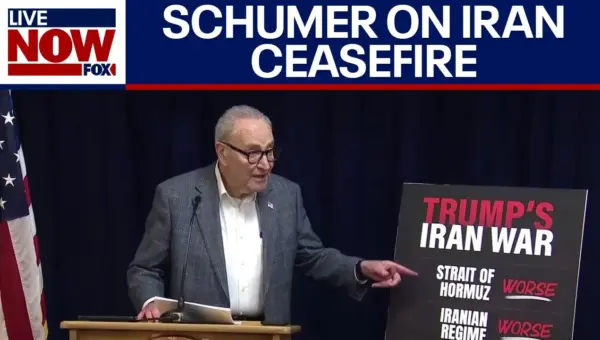
Senate Minority Leader Chuck Schumer announced the Senate will vote next week on a war powers resolution, aiming to curb President Trump's unilateral authority to wage war. Schumer criticized the recent conflict with Iran, stating it has weakened U.S. standing, damaged the economy, and emboldened the Iranian regime.

Trump Seeks Iran ‘Off-Ramp’ Amid Conflicting Victory Claims
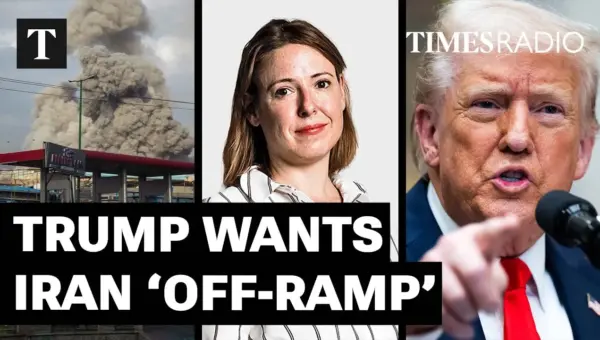
Both the U.S. and Iran are claiming victory following a period of intense conflict, but achieving lasting peace faces significant hurdles. Key issues include Iran's nuclear program and ongoing hostilities in Lebanon, complicating proposed peace talks. President Trump is reportedly anxious for a diplomatic "off-ramp" to de-escalate the situation.

Iran Challenges US Dominance, Reshaping Global Power
A recent ceasefire marks a significant shift, not a victory for the US. Iran has emerged as a stronger global player, challenging American dominance. The conflict damaged US reputation, disrupted global markets, and signaled the end of the US hegemonic era.