Trump’s Erratic Behavior Fuels Health Concerns Amidst Global Crisis
Recent observations of Donald Trump's public behavior, including his social media activity and public engagements, have sparked concerns about his fitness for leadership amidst escalating global crises. This analysis delves into the reported patterns of distraction, potential cognitive issues, and their implications for political discourse.

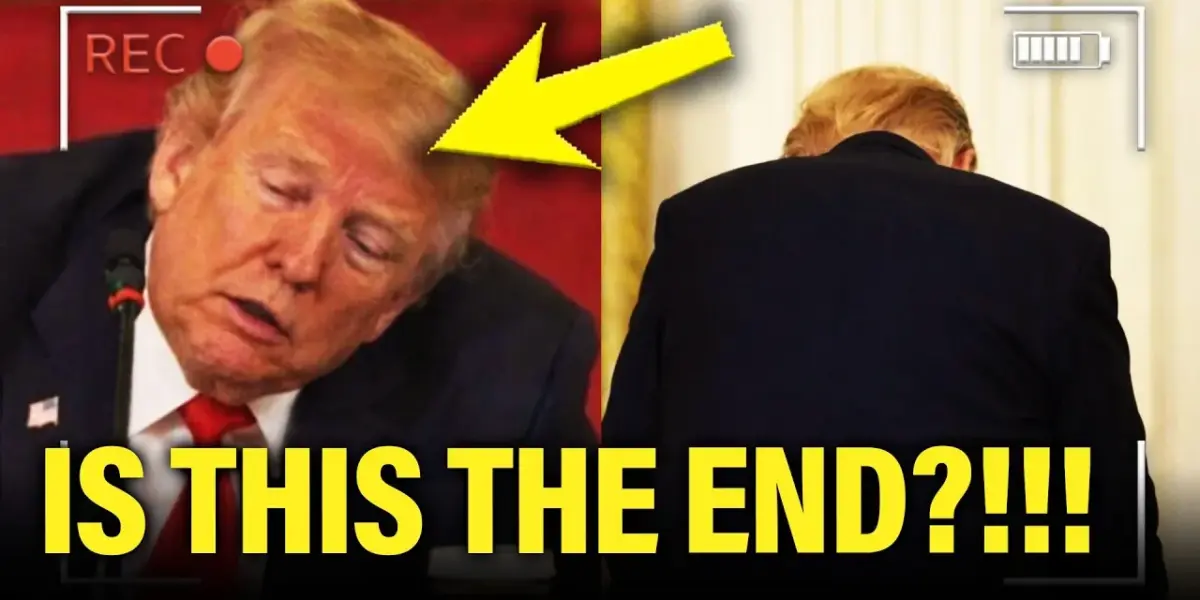
Trump’s Erratic Behavior Fuels Health Concerns Amidst Global Crisis
In times of international turmoil, the physical and mental acuity of a nation’s leader is not merely a matter of personal concern but a critical factor in global stability. Recent events surrounding former President Donald Trump suggest a troubling disconnect between the gravity of escalating international conflicts and the former president’s public engagement. While the transcript highlights a perception of collapsing physical and mental health, this analysis will explore the observed behaviors, their potential interpretations, and the broader implications for political discourse and leadership in crisis situations.
A Pattern of Distraction and Diversion
The transcript details a series of social media activities by Donald Trump that have drawn significant attention. Instead of directly addressing pressing international matters, such as a hypothetical escalating conflict with Iran, Trump reportedly spent considerable time posting content related to comedian Bill Maher, video games like Grand Theft Auto, and professional sports, including Major League Baseball and NFL games. These posts were not isolated incidents but appeared to be a sustained pattern throughout a day, with repeated postings of similar content. The juxtaposition of these seemingly trivial or escapist themes with footage of a war, as described in the transcript, raises questions about the former president’s focus and priorities during a period of heightened geopolitical tension.
Further compounding these observations is Trump’s reported tendency to surround himself with sports figures and teams rather than engaging with the American public on substantive policy issues. The transcript mentions visits from a Major League Soccer team, interactions with Alex Rodriguez, and a press conference involving NCAA basketball and football coaches. While such engagements can be part of a political leader’s outreach, the context provided suggests a diversion from critical issues. The transcript notes Trump’s private remarks about wanting to deploy ground troops to Iran, a stark contrast to his public focus on sports figures and his decision to discuss the issue of college athlete compensation with coaches, a matter that has already been addressed by the Supreme Court.
Interpreting Cognitive Decline
The author of the transcript explicitly labels these behaviors as indicative of “cognitive collapse,” a strong assertion that warrants careful consideration. The observed phenomena – the prolific posting of unrelated content, the focus on sports figures, and the dismissal of critical questions – are presented as evidence of a leader detached from reality. The transcript draws parallels between Trump’s current public persona and his past handling of the COVID-19 pandemic, recalling his assertions that the virus would disappear by April and his desire to reopen the country by Easter. This historical context is used to suggest a recurring pattern of downplaying serious threats and exhibiting an optimistic, perhaps overly confident, outlook that disregards expert advice and factual realities.
The transcript also brings to light allegations from former White House official Christine Nwade, who, after her dismissal, reportedly suggested that Trump’s cognitive state was compromised. The narrative surrounding an ad campaign, its approval, and Trump’s subsequent denial, is presented as an example of this alleged cognitive issue. Nwade’s account, as relayed in the transcript, suggests Trump approved of her appearing in various outfits for promotional material, a claim Trump allegedly denied, leading to her dismissal. The ensuing back-and-forth, including Nwade’s recounting of Trump’s specific instructions regarding her attire and the content of the ads, is framed as further evidence of his erratic decision-making and potential memory lapses.
A Leader’s Relationship with Faith and Mortality
Another significant aspect highlighted in the transcript is Trump’s public discourse on his own perceived unworthiness for heaven. The transcript notes his repeated statements expressing doubt about his ability to reach heaven, even in the presence of large crowds and religious figures. This introspection, coupled with his reported summoning of far-right religious figures to pray for him, is presented as a juxtaposition to his public image and a potential indicator of personal anxieties. The author speculates on the psychological implications of such pronouncements, particularly in the context of leadership during times of crisis. The transcript suggests a leader preoccupied with personal salvation rather than national or international imperatives.
The Peril of Misinformation and Distraction
The transcript also touches upon the spread of misinformation and the blurring of lines between reality and digital entertainment. The mention of Trump posting fake videos of the war in Iran, mixed with content from video games like Grand Theft Auto and Call of Duty, is particularly alarming. This act, if accurate, represents a profound detachment from the gravity of warfare and a potential manipulation of information. The author questions the sanity of a leader engaging in such behavior, especially when real-world consequences are severe. The transcript also points out the problematic nature of a journalist asking a direct question about Russian and Chinese involvement in the Iran conflict, only to be rebuffed with a dismissive remark about the question’s intelligence and a redirection to discuss other, seemingly less critical, matters.
Why This Matters
The observations detailed in the transcript, if accurate, have profound implications for the electorate, the media, and the international community. Firstly, they raise serious questions about the fitness of any candidate, particularly a former president, to lead during times of crisis. The ability to focus, prioritize, and engage with complex issues is paramount. The alleged pattern of distraction, denial, and peculiar social media activity suggests a leader who may be ill-equipped to handle the immense pressures of national and international leadership.
Secondly, the alleged instances of cognitive impairment and erratic decision-making, if substantiated, pose a significant risk. A leader’s judgment directly impacts policy, diplomacy, and military action. The transcript suggests a potential disconnect from reality, a tendency to dismiss inconvenient truths, and a focus on personal narratives over pressing national concerns. This can lead to flawed decision-making with potentially catastrophic consequences.
Thirdly, the role of the media is crucial in reporting such behaviors. The transcript itself is a critique of how certain media outlets report on Trump, but it also highlights the responsibility of journalists to ask difficult questions and hold leaders accountable. The author’s frustration with a reporter’s question being dismissed underscores the challenge of eliciting substantive responses from a figure who may be actively evading them.
Implications, Trends, and Future Outlook
The behaviors described in the transcript, if they are indeed indicative of a broader trend, suggest a worrying normalization of superficiality and distraction in political discourse. The reliance on social media for communication, while offering direct access to constituents, also provides a platform for unfiltered, and potentially unhinged, expressions. The trend of political figures engaging with entertainment media and sports figures is not new, but the context provided here – a supposed leader using these avenues to avoid discussing critical geopolitical events – is particularly concerning.
The future outlook for political leadership during crises hinges on the electorate’s ability to discern substance from spectacle. If voters prioritize charisma and entertainment over sound judgment and stable temperament, then leaders exhibiting the behaviors described may continue to gain traction. The transcript serves as a cautionary tale, urging a deeper examination of candidates’ mental and emotional fitness, especially when the stakes are as high as global peace and national security.
Historical Context and Background
Throughout history, leaders have faced scrutiny regarding their health and mental state, particularly during times of war or economic depression. From Franklin D. Roosevelt’s polio to John F. Kennedy’s chronic pain, the physical and mental well-being of leaders has always been a subject of public and private concern. However, the advent of social media and the 24/7 news cycle has amplified these concerns, making every public utterance and social media post subject to immediate and widespread analysis. The transcript taps into this heightened scrutiny, applying it to Donald Trump’s specific public persona and communication style, drawing parallels to his past actions and statements to build a case for a perceived decline.
The narrative surrounding Trump’s engagement with sports figures and his focus on seemingly trivial matters during times of crisis is not entirely unprecedented in political history. Leaders have often used symbolic gestures or engaged in public relations stunts to project an image of strength or normalcy. However, the sheer volume and nature of the reported activities, as described in the transcript, suggest a departure from conventional political engagement, leading to the interpretations of cognitive distress.
Source: Trump HEALTH FAILS him at MOST DANGEROUS TIME!! (YouTube)

Related Articles
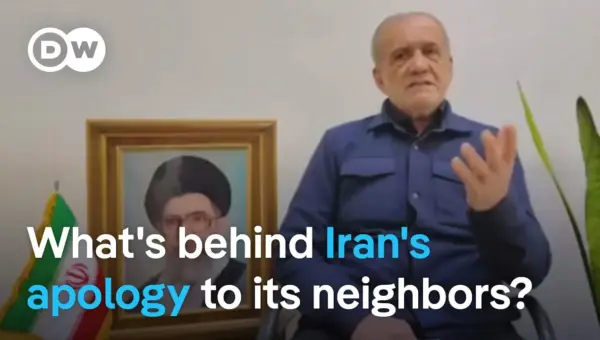
Iran Apologizes to Neighbors Amid Escalating Regional Conflict
Iran's President Masoud Pezeshkian has apologized to Gulf neighbors for recent attacks amid escalating conflict with the US and Israel. Despite the apology, questions linger about Iran's internal command structure and the reliability of its assurances as the region faces heightened instability.


Oil Prices Surge as Strait of Hormuz Blockade Hits China
Disruptions in the Strait of Hormuz have sent oil prices soaring, with traffic down 70% and over 150 ships stalled. Analysts link the blockade to a U.S. strategy to curb China's economic rise, potentially pushing oil prices above $100 per barrel.
US Mideast War Fuels Putin’s European Energy Chokehold
A US-led conflict in the Middle East has closed the Strait of Hormuz, creating an energy crisis that empowers Vladimir Putin to put Europe in a chokehold. Despite claims of decoupling, Europe's continued reliance on Russian LNG, coupled with limited alternatives, leaves it vulnerable to escalating prices and potential de-industrialization.