Trump’s Election Wars: Foreign Threats Mask Domestic Power Grab
Donald Trump's recent pronouncements linking military action against Iran to claims of election interference reveal a concerning strategy. Analysts suggest foreign policy is being weaponized to consolidate domestic power and undermine democratic processes, raising alarms about executive overreach and the future of fair elections.

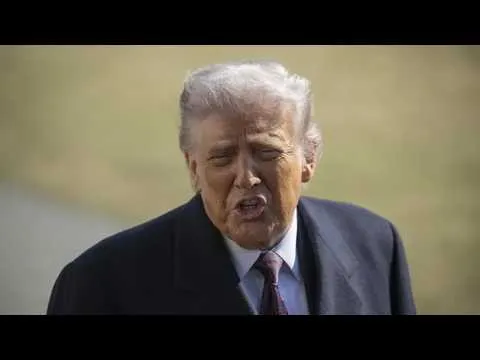
Trump’s Election Wars: Foreign Threats Mask Domestic Power Grab
In a move that has sent ripples of concern through the American political landscape, former President Donald Trump’s recent pronouncements regarding military action against Iran have been inextricably linked to his ongoing efforts to undermine democratic processes at home. This connection, largely overshadowed by the immediate geopolitical implications, suggests a deeply concerning strategy where foreign policy is weaponized to bolster domestic political aims, specifically the control and manipulation of elections.
The sequence of events is stark. Shortly after midnight on a Saturday, Trump announced on his social media platform, Truth Social, that the United States was engaged in military action against Iran. Just two hours later, a second post directly linked this action to his persistent claims of election interference: “Iran tried to interfere in the 2020 and 2024 elections to stop Trump and now faces renewed war with the United States.” This immediate conflation of foreign conflict with domestic electoral grievances is not merely a rhetorical flourish; it signals a deliberate strategy, according to analysts, to frame every policy decision, from economic matters to international relations, through the lens of his singular, unyielding objective: maintaining power and preventing perceived opposition from gaining control.
The Foreign Interference Gambit
This isn’t the first time Trump has sought to leverage claims of foreign interference to justify extraordinary presidential powers. A Washington Post report revealed that pro-Trump activists, reportedly in coordination with the White House, were circulating a draft executive order. This document proposed declaring a national emergency based on alleged Chinese interference in the 2020 election, a move intended to unlock sweeping presidential authority over voting processes. This strategy, according to legal experts, hinges on a fundamental misunderstanding or deliberate misrepresentation of the U.S. electoral system, which is primarily administered at the state level, not through federal executive decree.
The core of Trump’s approach, as observed by those tracking his actions, is to identify foreign adversaries—be it China, Iran, Venezuela, or even deceased figures like Hugo Chavez—as a pretext for asserting federal control over elections. This tactic, it is argued, is strategically employed when Trump occupies the presidency because the courts historically show greater deference to executive actions in matters of national security and foreign policy. This deference, it’s suggested, was exploited in the past, for instance, when the Department of Justice, under Trump, allegedly used national security claims to deport migrants based on questionable connections, a process that took months to unravel.
Historical Precedents and Legal Challenges
The historical context reveals a pattern of Trump’s administration leveraging national security arguments to push the boundaries of executive power. The current strategy, proponents argue, is an extension of this, blending election denialism and voter suppression tactics with claims of foreign threats. The expectation is that these claims will form the basis for future executive orders, attempts to seize ballots, or assertions of emergency powers, all under the guise of national security. Lawyers with experience in challenging such actions are preparing for a legal battle, citing past successes in thwarting executive overreach, including a previous executive order in 2025 that was successfully challenged in court.
The legal strategy against these potential executive actions involves not only challenging the legality of the orders themselves but also combating their downstream effects. This includes addressing election deniers at the local and county levels, state judges in conservative jurisdictions, and Republican officials who may voluntarily implement or create equivalent measures based on Trump’s directives. The sheer volume of ongoing litigation—with firms involved in dozens of cases across numerous states—highlights the pervasive nature of these challenges to the electoral system. The complexity lies in identifying and combating every manifestation of what is termed the “big lie,” from high-level executive orders to smaller, localized efforts that undermine voter access and election integrity.
The Urgency of Legal Response
The speed at which legal challenges are mounted is presented as a critical factor. Legal teams emphasize their commitment to filing lawsuits almost immediately upon the announcement or implementation of such executive orders. The aim is to seek emergency injunctions and temporary restraining orders to prevent chaotic scenarios where election officials in different jurisdictions might adopt conflicting interpretations or implementations of an unlawful order. The legal argument rests on the established principle that presidents lack unilateral authority over election administration, a domain reserved for the states, with Congress holding the power to legislate on the time, place, and manner of elections.
The strategy also involves a commitment to not settling these cases, ensuring that legal precedents are firmly established. The focus remains on defeating these challenges outright in court and recovering legal fees from losing parties. This aggressive, no-settlement approach is intended to deter future attempts at similar overreach and to reinforce the boundaries of presidential power.
Why This Matters
The implications of this strategy are profound. It suggests a potential for the weaponization of foreign policy to achieve domestic political goals, creating a dangerous feedback loop where international crises are manufactured or amplified to justify the erosion of democratic norms and institutions. The reliance on claims of foreign interference, however baseless, serves to rally a base, distract from domestic issues, and provide a legalistic veneer for actions that are fundamentally aimed at consolidating power. This approach threatens to normalize executive overreach and further polarize the electorate, making it harder to address critical national challenges.
Implications, Trends, and Future Outlook
The trend of using foreign interference narratives to justify domestic policy shifts, particularly concerning elections, is a significant development. It reflects a broader pattern of exploiting national security concerns to expand executive power, a tactic that has been observed across various administrations but is being employed with particular intensity and frequency in this context. The future outlook suggests continued legal battles over election administration, with potential for significant disruption if legal challenges are not swift and decisive. The success of these efforts will depend not only on the legal system’s ability to act quickly but also on the willingness of elected officials and institutions to uphold democratic principles and resist pressure to legitimize unlawful actions.
The narrative highlights the critical role of independent media and legal advocacy groups in monitoring and challenging such actions. The emphasis on subscribing to outlets like Democracy Docket underscores the importance of an informed and engaged citizenry in safeguarding democratic processes. Without constant vigilance and robust legal defense, the blurring lines between foreign policy and domestic electoral strategy could lead to an unprecedented concentration of power, undermining the very foundations of American democracy.
Source: BOMBSHELL: Trump’s election rigging plan gets EXPOSED (YouTube)

Related Articles
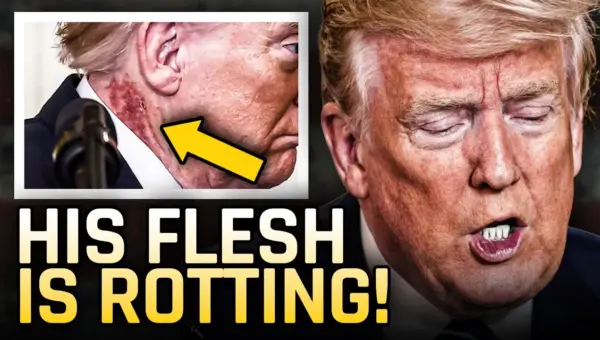
Trump’s Visible Decay: A Nation’s Unanswered Health Questions
Donald Trump's recent public appearance, marked by a prominent neck lesion and persistent hand bruising, has sparked widespread speculation about his health. While the White House offers a vague explanation, the lack of transparency fuels concerns about underlying issues.
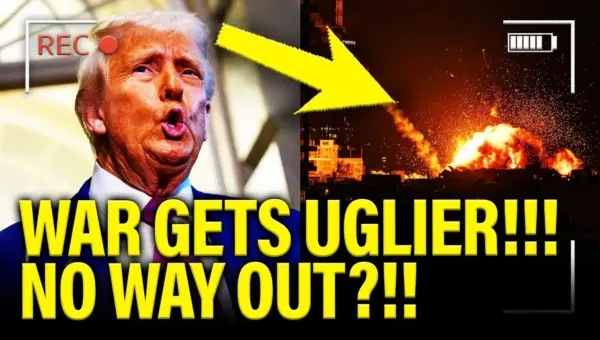
Trump’s Mideast Gamble: War, Evacuation Chaos, and Market Meltdown
Reports indicate escalating conflict in the Middle East, with the U.S. struggling to evacuate its citizens and facing severe market repercussions. The rationale behind recent military actions and their unintended consequences are under scrutiny, highlighting a complex and volatile geopolitical situation.
Trump Warns of ‘Big Scale Hitting’ Against Iran
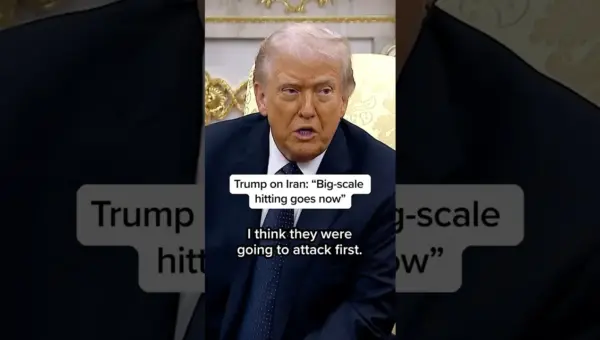
President Donald Trump stated that "big scale hitting goes now" against Iran, signaling a significant escalation amid rising regional tensions. The remarks were made while meeting with German Chancellor Friedrich Merz in the Oval Office, with Trump believing Iran was preparing to attack.