Trump’s Election Rigging Claims Crumble Under Legal Scrutiny
Arizona Secretary of State Adrien Fontes discusses Donald Trump's persistent, unsubstantiated claims of voter fraud in Arizona and other states. The analysis delves into the legal challenges surrounding federal attempts to access sensitive voter data and the broader implications of proposed legislation on voting rights and democratic processes.

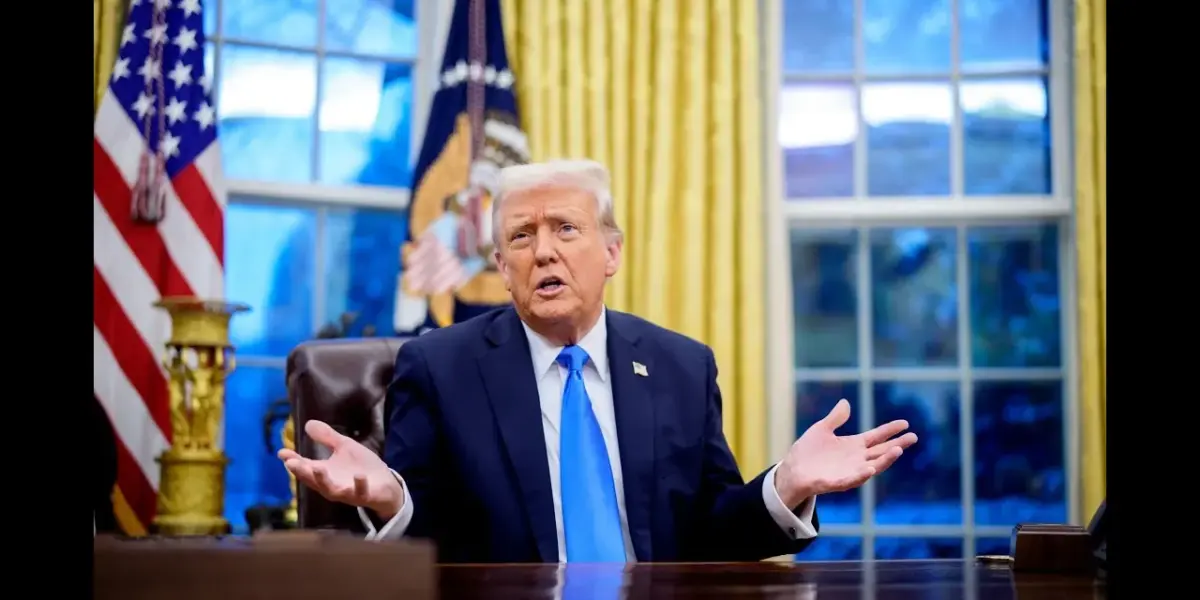
Trump’s Election Rigging Claims Crumble Under Legal Scrutiny
In the ongoing saga of election integrity and political maneuvering, the state of Arizona has once again found itself at the epicenter of Donald Trump’s persistent claims of voter fraud. Despite repeated audits and investigations, including those conducted by Republican-aligned entities like the “Cyber Ninjas,” which confirmed President Biden’s victory in 2020 and even widened his margin of victory in Arizona, the former president continues to seek pretexts to allege widespread fraud. This relentless pursuit, often characterized as a “grift” and a “power grab” by critics, highlights a broader strategy to sow doubt and potentially subvert future electoral processes.
Arizona’s Election Integrity: A Shield Against Falsehoods
Arizona Secretary of State, Adrien Fontes, has been a vocal proponent of the state’s robust election systems. He emphasizes that the 2020 election in Arizona was “clean, fair, accessible, and secure.” Fontes, a former candidate himself who lost his own re-election bid, underscores the importance of trusting the voters and the established processes. His office, along with the State Attorney General’s office, has consistently found no substantiation for claims of widespread fraud. Even a report from the subsequent Attorney General, Chris Maize, after Republican Mark Brnovich, could not validate the allegations made.
Fontes describes Trump’s narrative as “nonsense” and a deliberate distraction from pressing issues such as economic affordability and national security. This pattern of unsubstantiated claims is not isolated to Arizona. The transcript points to a broader strategy, citing instances where Trump has directed attention to Fulton County, Georgia, sought to involve former Director of National Intelligence Tulsi Gabbard in ballot reviews, and even suggested foreign interference from Iran and China in the 2020 election. This approach, critics argue, is akin to “pointing at a map and any place that his hand lands on is responsible for interfering in the election.”
The Underlying Motivation: Subverting Power
The persistent focus on election fraud is deeply tied to Trump’s political aspirations and his perceived need to delegitimize any electoral outcome that does not favor him. As Fontes explains, “The only way he can stay in power is if there’s if the reason he would come out of power is illegitimate.” This fuels an effort to “subvert the 2026 elections,” with the understanding that electoral losses could jeopardize his presidency.
Beyond the immediate political implications, there’s a more profound concern about the erosion of democratic institutions. The transcript notes that the Department of Justice and the FBI are reportedly “chasing ghosts and conspiracy theories and lies,” diverting resources from legitimate investigations. This includes instances where subpoenas have been challenged in court, leading to “illegitimate prosecutions, unfounded investigations, and this abuse of power.” The fight against these tactics, Fontes argues, is essential to prevent the normalization of such actions.
The DOJ’s Push for Voter Data: A “Power Grab”?
A significant point of contention involves the Department of Justice’s (DOJ) efforts to obtain sensitive voter data from states, including Arizona. The DOJ sought access to the private components of voter rolls, which contain information like Social Security numbers and driver’s license details – data that is legally protected. Fontes asserts that this request reveals the federal government’s own data deficiencies and a desire to “find folks like you and folks like me whose data may not be available” to facilitate potential future actions, such as door-to-door inquiries, which are characteristic of authoritarian regimes.
The justification for this push often centers on the alleged threat of non-citizen voters. However, Fontes and other critics point to extensive research, even from conservative organizations like the Heritage Foundation, indicating that instances of non-citizen voting are exceedingly rare, numbering in the dozens over decades and billions of votes cast. This narrative, it is argued, serves as a pretext for a more “nefarious” and “dangerous” agenda aimed at consolidating federal power over electoral processes.
The Save America Act and the Specter of National ID
The proposed “Save America Act” further amplifies these concerns. A key provision suggests that only federal documents like passports would be acceptable forms of identification for voting. This raises alarm bells about the federal government’s ability to control access to essential documents and potentially link this to voter registration data. The implication is that if the federal government controls both the voter rolls and the issuance of identification, it could gain the power to influence who votes, particularly if partisan affiliation is known.
Fontes draws a parallel between these proposals and the historical concerns that led to the Privacy Act of 1974, warning that a national ID system could become a “hook” to access other fundamental rights, including travel, bearing arms, and free speech, and could extend into healthcare, banking, and insurance. While Arizona has its own voter ID laws, Fontes stresses the critical difference: Arizona’s system is state-controlled, not federalized. He expresses deep distrust in the federal government’s ability to handle sensitive data securely, citing past breaches and the “sloppiness and laziness” of its operations.
Military at the Polls: Intimidation Tactics
Adding to the list of concerns is the potential for the Trump administration to deploy military or law enforcement agents to polling stations. The Democratic National Committee (DNC) has filed a lawsuit to investigate any such plans. Fontes clarifies that a president cannot legally declare an emergency to deploy military personnel to oversee state-run elections, as elections are a state-level responsibility. However, he acknowledges the possibility that such legal barriers might be disregarded.
While the prospect is “scary” and “possible,” Fontes expresses doubt about its probability, noting Trump’s lack of widespread popularity and the public’s current sentiment against him. Nevertheless, to counter such threats and ensure election integrity, Fontes urges citizens to engage actively. He calls for Americans to volunteer at polling stations, get trained, and work through party or organizational infrastructure to safeguard the democratic process, emphasizing that “folks working every single day right now planning on and working on the November 2026 elections.”
The Fight for Arizona’s Electoral Future
Fontes is running for re-election as Arizona’s Secretary of State, facing challengers with deep ties to the election denial movement, including endorsements from Donald Trump and groups like Turning Point USA. He frames his campaign as a crucial defense against misinformation and a fight to protect Arizona’s data and electoral integrity. His re-election, he argues, is vital not just for 2026 but for ensuring fair elections in 2028 and a proper census in 2030.
The ongoing efforts to challenge election results and potentially manipulate electoral rules underscore a critical juncture for American democracy. As Fontes concludes, this is about ensuring “the real voice of Arizona’s voters is heard” and moving past “shenanigans.” The battle for fair elections is a continuous one, requiring vigilance and active participation from citizens to uphold the foundational principles of democracy.
Why This Matters
The persistent attempts to delegitimize election results, coupled with proposals to centralize control over voter data and identification, represent a significant threat to democratic norms. The actions discussed, particularly the DOJ’s pursuit of sensitive voter information and the “Save America Act’s” potential implications for national ID and voting rights, suggest a calculated strategy to consolidate federal power and potentially undermine electoral fairness. The historical context of voter suppression tactics and the contemporary focus on unsubstantiated fraud claims paint a picture of a deliberate effort to reshape the electoral landscape. The implications extend beyond election day, touching upon fundamental rights and the very definition of a representative democracy. The future outlook hinges on the public’s awareness and engagement in safeguarding established electoral processes and resisting authoritarian tendencies that seek to erode trust in democratic institutions.
Historical Context and Background
The concerns raised echo historical patterns of voter suppression and challenges to democratic outcomes. The emphasis on voter ID, while ostensibly about security, has often been used to disenfranchise certain demographics. The idea of a national registry or centralized control over identification has long been a subject of debate, with privacy advocates warning of potential misuse. The current context is shaped by the aftermath of the 2020 election, where widespread challenges to the results, despite a lack of evidence, have normalized election denial within certain political factions. This has created a fertile ground for the kinds of strategies discussed, where unsubstantiated claims of fraud are used to justify actions that could fundamentally alter how elections are conducted and secured.
Implications, Trends, and Future Outlook
The trend is clear: a faction of the political spectrum is actively seeking to control the narrative and mechanics of elections. The implication of the DOJ’s actions and the “Save America Act” is a potential federalization of election oversight, moving away from the decentralized, state-led model that has historically characterized American elections. This could lead to a patchwork of regulations or, worse, a centralized system vulnerable to partisan manipulation. The future outlook is one of continued legal battles, public awareness campaigns, and increased citizen involvement in election administration. The outcome will depend on the resilience of democratic institutions, the vigilance of election officials, and the commitment of voters to participate in and protect the electoral process.
Source: Trump gets BAD NEWS amid effort to send military to polls (YouTube)

Related Articles

Jane Fonda Warns of ‘Existential Crisis’ Amid Protests
Jane Fonda has issued a stern warning about widespread attacks on the First Amendment, urging Americans to defend their freedoms. The veteran activist highlighted the growing number of large-scale protests as a sign of public concern and a crucial opportunity to address both democratic erosion and the climate crisis.

Voter ID: Common Sense or Suppression?
A growing debate surrounds voter ID laws, with proponents calling them a common-sense measure against fraud and opponents fearing voter suppression. Many countries and U.S. states already require ID to vote.
Trump’s Name Everywhere: A ‘Stain’ on GOP Legacy?
Former President Donald Trump's efforts to brand national symbols, including a proposed signature on dollar bills, spark debate. Critics view this as an authoritarian attempt to embed his legacy, potentially staining the Republican Party's history and contrasting with democratic ideals of public ownership.