Trump’s Easter Message Sparks Global Outcry
President Trump's profanity-laced Easter message to Iran has ignited a political firestorm, prompting calls for his removal and highlighting deep divisions in U.S. politics. Supporters defend his direct style as realistic, while critics argue it's unbecoming and escalates global tensions.

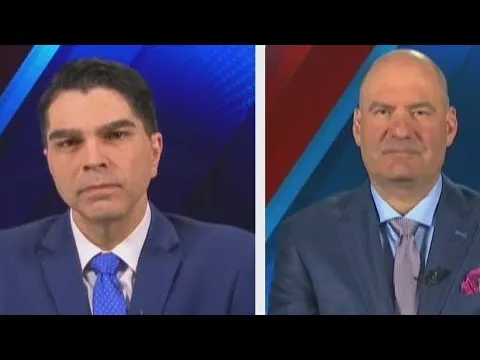
Trump’s Easter Message Sparks Global Outcry and Political Division
President Donald Trump’s social media message over Easter weekend, aimed at the Iranian regime, has ignited a firestorm of criticism and debate. The post, which contained strong profanity, has led to calls for his removal from office and highlighted deep divisions within the American political landscape. This incident underscores the volatile nature of presidential communication and its potential to impact international relations.
The Controversial Easter Message
During the Easter holiday, President Trump posted a message on his social media platform directed at the Iranian regime. The exact wording, which included a vulgarity, was widely reported and immediately drew strong reactions. This direct and unusually coarse communication style from the President has been seen by some as a reflection of his private dealings with foreign adversaries.
The message read, in part, “Open the effing strait. You crazy.” This statement was not just seen as offensive by many, but also as a promise of aggressive action against Iran. Critics argue that such language is inappropriate for the President of the United States, who represents the nation on the world stage. The words used, they contend, have the power to move markets and influence global perceptions.
Calls for the 25th Amendment
Following the Easter message, a significant number of Democrats, and even some conservatives, called for the invocation of the 25th Amendment. This constitutional measure allows for the removal of a president if they are deemed unable to discharge the powers and duties of their office. The seriousness with which these calls were initially treated is reflected in market predictions, with some analyses suggesting a notable chance of the amendment being used against Trump.
Jason, a radio host and political contributor, views these calls as politically motivated and unserious. He points out that many Democrats who are now calling for the 25th Amendment were supportive of Joe Biden during his campaign, despite concerns about his fitness for office. He believes this reaction to Trump’s message is a distraction from legitimate issues Americans are facing at home and abroad.
Defending the President’s Communication Style
Supporters of Trump’s direct communication style argue that such language is not uncommon in high-stakes diplomatic or military discussions. They suggest that the President was simply showing the world how leaders sometimes speak behind closed doors when dealing with hostile regimes like Iran. This perspective frames the message as a sign of strength and authenticity, rather than recklessness.
Chris, a political contributor, believes that the offense taken by Democrats is hypocritical. He recalls numerous instances where Democrats themselves have used strong language, including profanity, in their own political discourse. He argues that their outrage over Trump’s Easter message is performative, designed to score political points rather than reflect genuine concern.
International Relations and Iran
The message also touched upon the sensitive issue of the Strait of Hormuz, a critical chokepoint for global oil shipments. Iran has previously threatened to close the strait, and Trump’s message appears to be a direct response to these threats. The President’s strong stance is seen by some as necessary to deter Iranian aggression and ensure the free flow of international commerce.
However, critics like Chris express concern that Trump’s rhetoric could escalate tensions with Iran, potentially leading to war. They argue that the President’s promise of “total war and total destruction” is dangerous and that the U.S. should be building coalitions rather than acting unilaterally. This approach, they believe, risks alienating allies and could lead to unintended consequences.
Arguments Over Offense and Representation
A key point of contention is whether the President’s words were offensive to Muslims worldwide or if the outrage is manufactured. Jason argues that many Arab nations, including the UAE and Saudi Arabia, are seeking U.S. support against Iran. He questions whether anyone is truly offended by the message itself, suggesting that the backlash is primarily a political tactic.
Chris, on the other hand, insists that as President, Trump must be careful with his words because he represents the entire nation. He believes that the President’s actions have damaged the U.S. economy and its standing in the world. He calls for a return to a more traditional approach, where the U.S. acts as a “beacon of hope and truth and freedom.” He feels Trump’s presidency has been an embarrassment and is breaking down alliances.
The Political Fallout
The debate over Trump’s Easter message highlights a broader struggle for political narratives in the United States. While Democrats are focused on the President’s communication style and perceived unfitness for office, Republicans often frame these criticisms as politically motivated attacks. This dynamic plays out against a backdrop of upcoming elections, where both parties are vying for public support.
Jason predicts a significant political shift, an “earthquake,” in the near future, suggesting that neither party is currently resonating with the public. He believes the current political discourse is broken and that the focus on Trump’s social media posts distracts from more substantive issues. The differing interpretations of the President’s message and its implications reveal the deep ideological chasm within American politics.
Global Impact
The incident surrounding Trump’s Easter message demonstrates how presidential communication, especially on social media, can have immediate and far-reaching global consequences. The strong language used, coupled with the geopolitical context of Iran and the Strait of Hormuz, could influence international markets, regional stability, and diplomatic relations. The fractured response within the U.S. also shows how domestic political battles can play out on the international stage, affecting how allies and adversaries perceive American leadership and its resolve.
Source: Was Trump’s Easter message appropriate for Americans and the world? | Katie Pavlich Tonight (YouTube)

Related Articles

Iran Strikes Saudi Oil Hub, Threatening Global Energy
Iran's successful ballistic missile strike on Saudi Arabia's Jubail petrochemical complex exposes the vulnerability of global energy supplies. The attack threatens millions of barrels of oil and refined products, potentially causing price spikes and economic instability worldwide. This escalation signals a dangerous new phase in regional power dynamics.

25th Amendment Calls: Can JD Vance Act Against Trump?
Searches for the 25th Amendment are spiking as public figures and citizens demand action regarding Donald Trump's behavior. The process hinges on Vice President JD Vance, who must secure support from Congress or the Cabinet to initiate removal. This analysis explores the challenges and potential future actions, including congressional hearings if Democrats regain control.
Fox News Hosts Falter as Trump’s Iran Stance Backfires
Fox News personalities appeared flustered and divided as Donald Trump's aggressive stance on Iran faced rejection and criticism. The segment highlighted conflicting narratives, blame-shifting, and defenses of Trump's image amidst international tensions.