Trump’s Deportation Threat Targets Unemployed Americans
Donald Trump's recent suggestion to deport unemployed American citizens, framed against a backdrop of disputed claims about international practices, sparks a debate on immigration rhetoric and economic policy. The controversial statement raises questions about the definition of citizenship and the government's role in addressing unemployment.

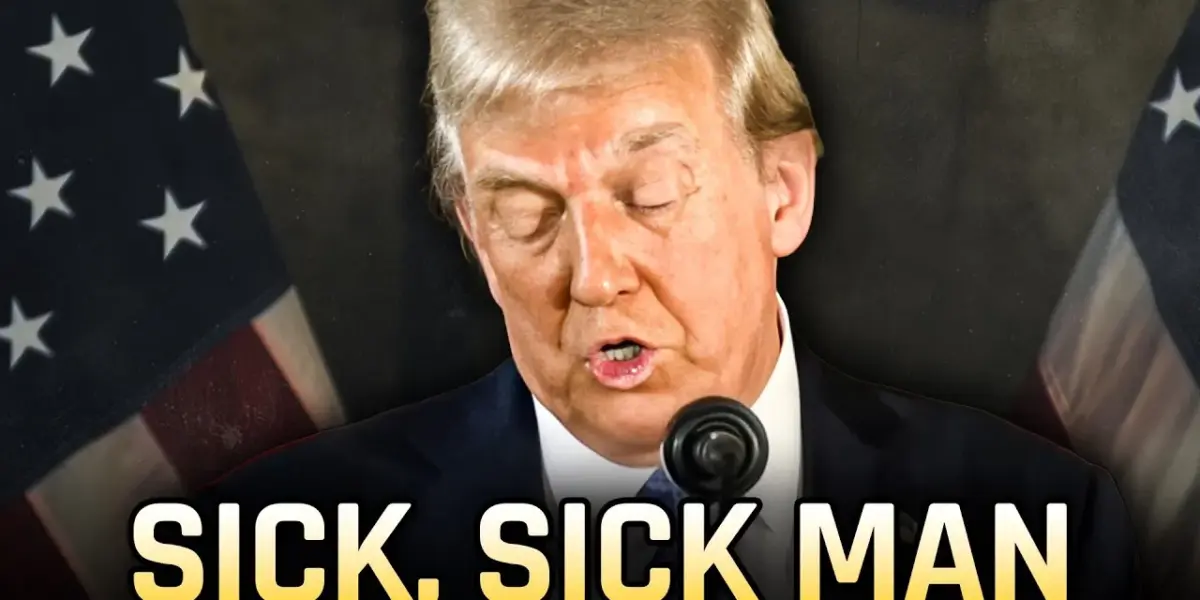
Trump’s Deportation Threat Targets Unemployed Americans
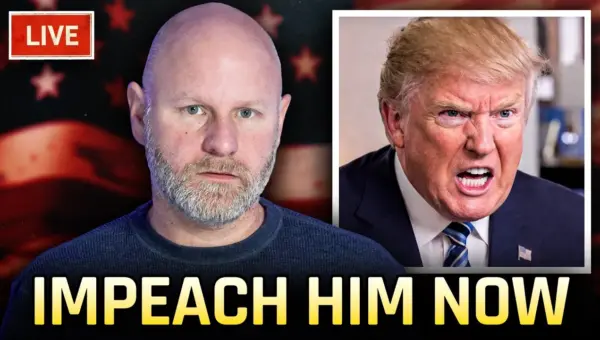
During a recent “Angel Families” event, a gathering often used to highlight victims of crimes committed by undocumented immigrants, former President Donald Trump veered into a striking and controversial statement: he suggested a willingness to deport unemployed American citizens. This remark, made in a context meant to evoke sympathy and concern, has ignited debate about the rhetoric surrounding immigration, employment, and the very definition of American citizenship.
A Controversial Proposition
The core of Trump’s statement, as reported, was not directed at immigrants who have recently arrived and are seeking work, but rather at native-born and naturalized American citizens who are currently unemployed. He allegedly proposed a policy mirroring actions he claims other countries take, which involve deporting their unemployed citizens. “And I would do exactly what they did if the United States would be willing to take all of our criminals and people that don’t work,” he reportedly stated. This hypothetical scenario hinges on a false premise, as the transcript notes that other countries do not, in fact, round up and deport their unemployed citizens to the United States.
The assertion that other nations have open borders and actively deport their unemployed populations to the U.S. is presented as a fabrication. The speaker in the transcript challenges this, stating, “We have never had a totally open border in modern times. I mean, hell, even going back a couple hundred years, we still had, you know, some form of immigration. Uh, but [snorts] no world leader thought we had open borders here in the United States because they didn’t exist.” This historical context underscores the speculative and factually unsupported nature of Trump’s claim about international practices.
Rhetoric Amidst Grief
The timing and setting of this statement have also drawn criticism. The event was attended by grieving families who have lost loved ones, presumably to crimes committed by undocumented immigrants. The transcript points out the apparent disconnect between the somber occasion and Trump’s expansive, and what is described as, “self-aggrandizing” remarks. “Okay? Don’t forget that, right? These people lost loved ones. Their loved ones are dead. and you’re out there self arandizing, saying things that are completely like not even close to being believable and also threatening to deport unemployed Americans,” the transcript states.
Economic Realities and Policy Implications
Beyond the rhetorical controversy, the statement raises questions about economic policy and the realities of unemployment in the United States. The transcript suggests that Trump’s own policies have, in fact, led to an increase in unemployment. It cites figures indicating “more than 1.1 million layoffs in 2025 alone” and describes 2025 as “the worst year for job growth in decades,” with only “181,000 jobs” added for the entire year. This presents a stark contrast to the narrative of deporting the unproductive, implying that such a policy would be counterproductive or even absurd given the domestic economic landscape.
The speaker further questions the practicality and fairness of such a policy by extending the logic to prominent figures, including Trump’s own family. “What about Melania? She’s never created anything of value. Your kids don’t create anything of value. But you think people who don’t work should be rounded up and shipped out of the country.” This rhetorical device aims to highlight the subjective and potentially hypocritical nature of defining who is deemed “unproductive” and deserving of such extreme measures.
Historical Context of Immigration and Employment Rhetoric
The discourse surrounding immigration and employment has a long and complex history in the United States. Throughout different eras, economic downturns and social anxieties have often led to scapegoating of immigrant populations or heightened scrutiny of those perceived as not contributing to the economy. However, the idea of deporting citizens based on their employment status is an unprecedented concept within modern American political discourse. Historically, while policies have aimed to control immigration and encourage employment, they have not extended to the removal of citizens from their own country due to joblessness.
The use of “open borders” as a talking point, particularly in relation to perceived failures in immigration policy, has been a recurring theme in certain political circles. However, the reality of U.S. border policy, even with its challenges, has never truly been “open” in the sense of having no controls or regulations. The assertion that international leaders perceive U.S. borders as completely open is therefore contested.
Potential Political Ramifications
The speaker suggests that such a statement could have significant political repercussions, particularly in upcoming elections. “I can’t wait to see how that plays out for you in the midterms this year. And I hope, as per usual, the Democrats take that clip and put it in ads across the country.” The implication is that the extreme nature of the proposal could alienate voters and serve as a potent campaign issue for opposing parties. The effectiveness of such a strategy would depend on how widely the statement is disseminated and how it resonates with the electorate.
Why This Matters
This incident is significant for several reasons. Firstly, it highlights the escalating and often hyperbolic rhetoric employed in political discourse, particularly concerning immigration and national identity. Threatening to deport citizens based on employment status, even if framed hypothetically or as a reaction to perceived international practices, crosses a conceptual boundary that warrants serious examination. Secondly, it raises critical questions about the role of government in addressing unemployment and the economic well-being of its citizens. Is the focus on punitive measures against the unemployed, or on creating opportunities and support systems? Thirdly, it underscores the importance of factual accuracy in political statements, especially when they involve complex issues like international relations and domestic policy. The alleged misrepresentation of international policies and the contradiction with domestic economic data suggest a potential disconnect between political rhetoric and reality.
Implications, Trends, and Future Outlook
The trend towards increasingly divisive and provocative political language is evident. Statements like this, even if intended to energize a base or provoke a reaction, can further polarize the electorate and normalize extreme policy suggestions. The future outlook suggests that political campaigns may increasingly leverage such controversial statements, forcing voters to confront the underlying ideologies and policy proposals. The long-term implications could include a further erosion of trust in political institutions if such rhetoric is not met with scrutiny and accountability. The debate also forces a re-evaluation of what it means to be a citizen and the social contract between the individual and the state, particularly in times of economic uncertainty.
Ultimately, the proposition of deporting unemployed American citizens, while seemingly outlandish, serves as a stark indicator of the current political climate and the evolving nature of policy discussions. It prompts a broader conversation about economic justice, national identity, and the responsibilities of both citizens and their leaders.
Source: Trump Threatens To DEPORT Unemployed American Citizens (YouTube)

Related Articles

US Launches ‘Operation Epic Fury’ with Over 1,000 Strikes in Iran
The U.S. military has launched 'Operation Epic Fury,' conducting over 1,000 aerial strikes in Iran. Directed by President Trump, the operation aims to neutralize Iran's nuclear program, ballistic missiles, and naval capabilities, marking a significant escalation after decades of hostility.
Epstein Files: Trump Faces Mounting Pressure to Testify
The Epstein files have ignited a political firestorm, with Democrats leveraging Bill Clinton's testimony to pressure Donald Trump into appearing before Congress. Critics question Trump's past deflections and the ongoing withholding of key documents, demanding full transparency.
Trump’s Mar-a-Lago Gala: A Stark Contrast to Iran School Attack
A report detailing former President Trump's Mar-a-Lago gathering during a reported Israeli-backed strike on Iran, which allegedly killed 85 girls at a school, has sparked global outrage and internal dissent within the MAGA movement. This juxtaposition raises critical questions about leadership, accountability, and the human cost of conflict.