Trump’s Court Rage Fuels Election Subversion Fears
Donald Trump's furious attacks on the Supreme Court over the 2020 election are viewed by experts not as a reflection on past events, but as a strategic move to lay the groundwork for future election subversion. The persistent claims of a 'stolen' election and ongoing legislative and legal maneuvers highlight a concerning trend that threatens democratic integrity.

Trump’s Court Rage Fuels Election Subversion Fears
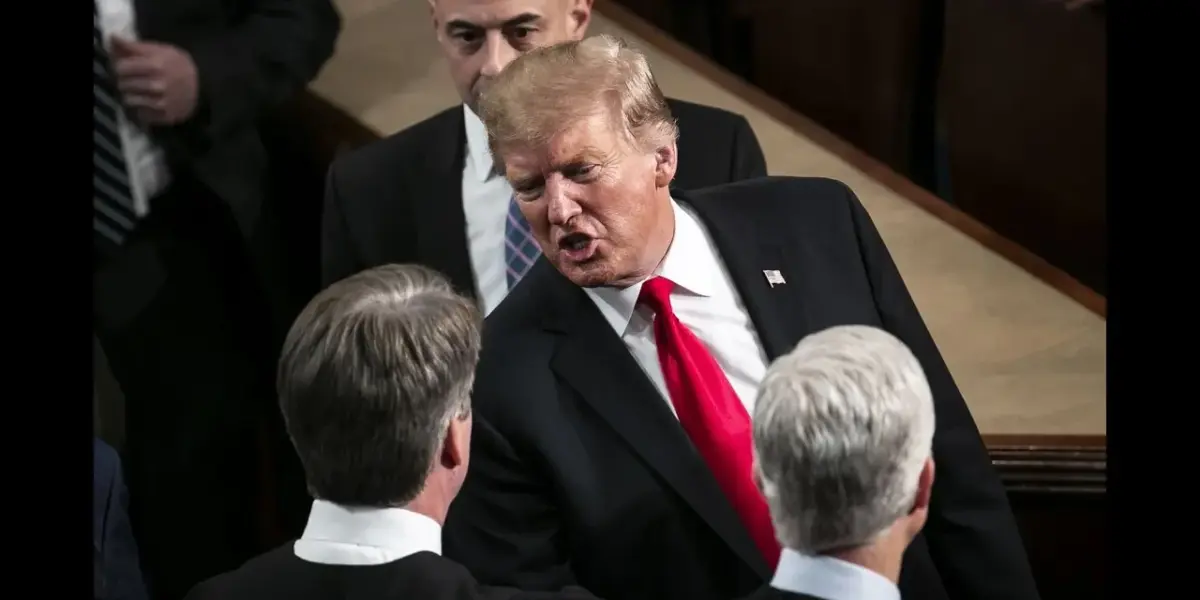
In a recent public outburst, Donald Trump has launched a blistering attack on the Supreme Court, decrying its past decisions regarding the 2020 presidential election. The former president, writing on his Truth Social platform, expressed outrage that the court did not overturn the election results, citing a lack of ‘standing’ as the reason for his perceived defeat. He further asserted that the election was ‘conclusively proven to be stolen’ and lamented the nation’s current state under President Biden, labeling the court as ‘completely inept and embarrassing.’ This torrent of accusations, however, has been met with sharp criticism, with legal experts and commentators labeling his claims as baseless and a misrepresentation of legal and factual realities.
Deconstructing Trump’s Claims
The core of Trump’s grievance appears to be twofold: the Supreme Court’s alleged refusal to address the ‘rigged’ election and the notion that he lacked the ‘standing’ to challenge it. Legal analysts, however, point out significant flaws in this narrative. Firstly, the assertion that the 2020 election was ‘stolen’ lacks any credible evidence. The election results were affirmed by numerous state certifications, recounts, and, crucially, by 64 court cases that heard challenges to the results. Of these, 63 were rejected, a fact that legal experts like Mark Elias, founder of Democracy Docket, emphasize as a definitive rejection of Trump’s claims.
Regarding the issue of ‘standing,’ Trump’s argument that the Supreme Court denied him a victory due to a lack of standing is also misleading. Elias clarifies that Trump did not seek to challenge the results solely in his capacity as president, but rather as a candidate. More significantly, the Supreme Court did not rule that Trump *would have won* but for a lack of standing. In fact, the most prominent case Trump might be referring to, the one filed by the state of Texas seeking to invalidate results in four other states, was not even initiated by Trump himself, though he may have encouraged it. The court’s decisions, Elias argues, were not an act of blind deference but a legal determination based on the merits of the cases presented.
The True Motivation: A Pretext for 2026?
While Trump’s public pronouncements focus on the 2020 election, many observers believe his true objective is to lay the groundwork for future electoral challenges, particularly the 2026 midterms. His persistent claims of a stolen election, amplified by recent accusations of foreign interference from China and Iran, suggest a strategic effort to sow doubt and prepare his base for potential disruptions. This is occurring concurrently with efforts to push the ‘Save America Act’ through Congress, a bill that critics argue aims to restrict voting access.
Political analysts suggest that Trump’s fixation on the 2020 election stems from his current political predicament. Polls indicate his unpopularity, and the Republican party’s prospects in the upcoming elections appear dim. Trump, it is argued, fears a Democratic takeover of Congress, which would inevitably lead to investigations into his past actions and those of his allies. The prospect of a third impeachment, following his previous two, is also seen as a significant motivator for his aggressive posturing.
“Donald Trump knows he is unpopular. He can say that the polls are all fake, but the people around him, they know how to read a poll. And there’s not just one poll that says Donald Trump’s unpopular. Every poll says that Donald Trump is unpopular.”
A Pattern of Subversion: From Texas to the Polls
Trump’s alleged attempts to undermine electoral integrity are not confined to rhetoric. Past actions cited include efforts to manipulate electoral maps in Texas, attempts by his administration to access sensitive voting data through the Department of Justice, and the controversial raids and subpoenas in Fulton County and Maricopa County. These actions, critics argue, are not merely about relitigating 2020 but are ‘dry runs’ for 2026, designed to test and implement strategies to suppress votes and subvert outcomes.
The ‘Save America Act,’ despite its lack of sufficient votes to pass the Senate, is being used as a vehicle for political theater. Republicans, under pressure from Trump, are engaging in what is described as ‘Kabuki theater’ on the Senate floor, spreading disinformation while knowing the bill is unlikely to pass. However, the threat remains, as Trump could resort to executive orders, DOJ lawsuits, or even the deployment of federal paramilitary forces to disrupt elections if legislative efforts fail.
Legal Battles and the Fight for Transparency
Concurrent with these legislative maneuvers, legal battles are underway to ensure transparency and prevent potential abuses. The Democratic National Committee has filed a lawsuit to compel the Trump administration to release information regarding any plans to deploy military or law enforcement agents to polling places. The administration’s refusal to simply state that no such plans exist, instead resisting the disclosure, has raised significant concerns.
The importance of these legal challenges cannot be overstated. As Mark Elias emphasizes, the public has a right to know how their tax dollars are being used and to ensure that the powers of the presidency are not misused to rig elections. Organizations like Democracy Docket are playing a crucial role in tracking and informing the public about the ongoing litigation surrounding election integrity.
Why This Matters
The ongoing rhetoric and actions surrounding the 2020 election and future electoral processes are not merely political squabbles; they represent a fundamental challenge to democratic norms and institutions. Trump’s persistent denial of election results, coupled with his alleged efforts to manipulate electoral processes, erodes public trust in the electoral system. This erosion can have profound consequences, potentially leading to widespread disillusionment, decreased voter participation, and increased political instability.
The legal and political battles being waged are critical in safeguarding the integrity of future elections. The transparency sought through lawsuits, the vigilance of organizations tracking legal challenges, and the informed engagement of citizens are all vital components of a healthy democracy. The stakes are high, as the potential for election subversion could undermine the very foundation of representative government.
Trends and Future Outlook
The trend observed is a persistent and evolving strategy by Donald Trump and his allies to challenge and potentially subvert electoral outcomes. This strategy has moved from widespread litigation after 2020 to legislative efforts and potential executive actions aimed at controlling or influencing future elections. The reliance on sowing doubt about election integrity, even in the face of overwhelming evidence to the contrary, appears to be a central tenet of his political approach.
The future outlook suggests a continued struggle for election integrity. The legal system will likely remain a key battleground, with ongoing lawsuits challenging various aspects of election administration and potential subversion tactics. The role of media and independent organizations in disseminating accurate information and holding power accountable will also be crucial. Ultimately, the resilience of democratic institutions will depend on an informed and engaged citizenry willing to defend the principles of free and fair elections.
Historical Context
While the intensity and specific tactics employed by Trump are unique, the history of challenging election results is not new. However, the scale and systematic nature of the efforts to overturn the 2020 election, including the pressure on state officials and the events of January 6th, represent a significant departure from historical norms. The legal challenges to election outcomes have historically been resolved through established legal and political processes. Trump’s refusal to accept these processes, and his continued efforts to delegitimize them, place these events in a distinct and concerning category within American political history.
A Call to Action Against Despair
In the face of what can seem like an overwhelming and systemic effort to undermine democracy, a sense of despair is understandable. However, experts like Mark Elias urge citizens not to succumb to cynicism. The intention behind exposing these efforts, they argue, is not to foster hopelessness but to provide perspective and encourage action. Simple steps, such as contacting elected officials, supporting independent news outlets, and engaging in informed discourse, are presented as crucial ways for individuals to contribute to the defense of democratic processes.
The fight for election integrity is multifaceted, involving legal challenges, legislative advocacy, and public awareness. By staying informed and actively participating, citizens can play a vital role in ensuring that democratic outcomes are determined by the will of the voters, not by attempts at subversion.
Source: Trump RAGES at Supreme Court as FEUD ERUPTS (YouTube)

Related Articles
Supreme Court Cases Threaten Rights, But Congress Holds a Fix
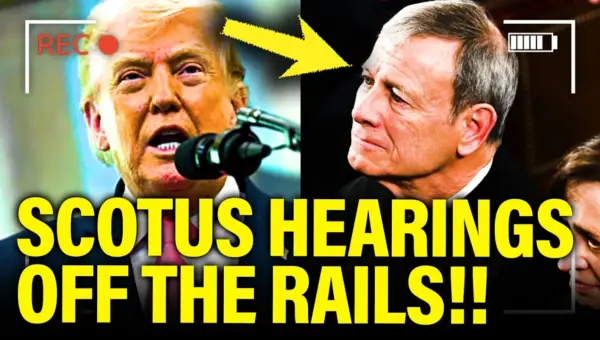
The Supreme Court's recent hearings on mail-in ballots and asylum suggest rulings that could restrict voting access and limit refugee claims. However, these decisions are based on statutes, giving Congress the power to enact fixes if Democrats regain power, potentially safeguarding these rights.
Polls Spell Doom: Republicans Face Voter Backlash
New polling data reveals a sharp decline in public confidence regarding the economic impact of Republican policies, particularly under Donald Trump. A significant majority now feel financially worse off, a trend that is especially pronounced among independent voters. This economic discontent poses a major challenge for the Republican party heading into future elections.


Americans Rally for Democracy Amidst War and Economic Woes
Thousands of Americans are participating in "No Kings" rallies nationwide, demanding accountability from leaders and drawing parallels to historical movements that spurred significant change. The protests occur amidst a controversial war with Iran, economic uncertainty, and a partial government shutdown. Organizers emphasize solidarity, joy, and the power of collective action in defending democracy.