Trump’s ‘Clown Car Cabinet’ Now a Liability as Iran Threat Spikes
President Trump's decision to launch military action against Iran, despite intelligence suggesting no immediate threat, has ignited a major conflict. Critics point to the dismantling of a key FBI counterintelligence unit and questionable leadership in defense and homeland security as alarming liabilities amidst escalating casualties and global concerns.


Trump’s Cabinet Faces Scrutiny Amidst Escalating Iran Conflict
In the wake of President Donald Trump’s decision to initiate military action against Iran, a move that has ignited a significant new conflict and raised global security concerns, the competence and preparedness of his administration’s national security leadership are facing intense scrutiny. Critics argue that key appointments within the defense and homeland security departments, characterized as a “clown car cabinet,” have created alarming liabilities precisely when the nation faces a potent and unpredictable adversary.
FBI Unit Crucial for Iran Threats Dismantled
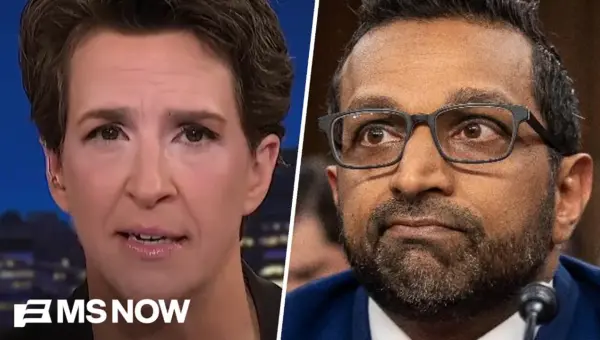
A critical unit within the FBI, known as CI-12, which specializes in counterintelligence threats emanating from Iran, was reportedly dismantled last week by FBI Director Kash Patel. This action, which saw a dozen agents and staff dismissed, occurred just days before the U.S. initiated airstrikes against Iran. The unit had a proven track record, credited with identifying an Air Force intelligence spy who defected to Iran, thwarting assassination plots against prominent U.S. officials like John Bolton and Mike Pompeo, and uncovering a plot to kill former President Trump.
The timing of these dismissals has drawn particular ire. The Washington Post and The New York Times reported that Trump’s decision to launch the Iran strikes was influenced by Saudi Arabia and Israel, despite U.S. intelligence assessments indicating that Iran posed no immediate threat to the U.S. mainland within the next decade. This has led to accusations that the President is prioritizing the directives of foreign allies over U.S. intelligence and national security interests.
One report highlighted the stark contrast: “The attack came despite U.S. intelligence assessments that Iran’s forces were unlikely to pose an immediate threat to the U.S. mainland within the next decade. But he did it anyway, because Israel and Saudi Arabia told him to, and he apparently does what they say.”
Escalating Conflict and Mounting Casualties
The consequences of the U.S. military actions have been swift and severe. Six American service members have been confirmed killed, with many more injured. The conflict has rapidly expanded, with reports indicating that the U.S. embassy in Riyadh, Saudi Arabia, has been targeted by two drones. Additionally, two U.S. Defense Department employees were wounded in an Iranian drone attack on a hotel in Bahrain.
Headlines reflect the escalating crisis: “Earthquake in the Gulf, Iran war expands to a dozen countries in 72 hours.” The New York Times front page warned of “U.S. troops killed as blasts jolt Mideast, fear of wider war after Iran’s response.” The Washington Post noted, “Trump pursues Iranian decapitation without a plan for what comes next.” Security officials globally are concerned that the U.S. action could “spill across borders, disrupt global trade, and lead to asymmetric terrorist attack reprisals.”
Questions Surround Defense and Homeland Security Leadership
Beyond the FBI, leadership within the Department of Defense and the Department of Homeland Security is also under fire. The Secretary of Defense’s prior role as a weekend co-host on Fox and Friends has been cited as an example of questionable appointments during a time of war. Compounding these concerns, reports emerged of U.S. military aircraft being lost due to friendly fire incidents, allegedly because of a failure to coordinate with allies in Kuwait.
The Department of Homeland Security, responsible for domestic security and cyber defense, is led by Kristi Noem. Her tenure has been marked by controversial decisions, including the deployment of federal troops domestically and efforts to establish detention facilities. Most alarmingly, in the context of escalating cyber warfare capabilities of Iran, the head of America’s cyber defense under Noem was reportedly removed from his position just days before the Iran conflict began.
This former cyber czar, appointed by Noem despite lacking federal experience, had a tumultuous tenure. He reportedly uploaded sensitive contracting documents into a public version of ChatGPT and failed a counterintelligence polygraph exam. While Homeland Security later dismissed the polygraph as “unsanctioned,” the appointment and retention of such an individual in a critical cybersecurity role, especially with Iran’s known sophistication in cyber warfare, has raised serious questions.
Further highlighting the perceived lack of operational competence, the airspace over El Paso was temporarily shut down due to Customs and Border Patrol accidentally shooting down Mylar balloons with a military laser. In another incident, a drone belonging to Customs and Border Protection was shot down over Texas airspace by the Defense Department, also utilizing a laser weapon.
A Nation Facing Unforeseen Consequences
The narrative presented suggests a stark disconnect between the gravity of the geopolitical situation and the apparent lack of seasoned, experienced leadership at critical junctures. The decision to initiate hostilities with Iran, a nation described as powerful with sophisticated intelligence services, has been characterized as a move undertaken “for no reason he can articulate.”
The article posits that instead of experienced Iran specialists, the nation now faces leaders whose qualifications and recent actions appear to be a liability. The dismantling of the specialized FBI unit, coupled with the questionable leadership in defense and homeland security, creates a climate of uncertainty regarding the nation’s readiness to manage the fallout from a conflict that has rapidly expanded and poses risks far beyond the immediate theater.
Looking Ahead
As the conflict with Iran intensifies and its repercussions spread, the focus will remain on the strategic decisions made by the Trump administration. The effectiveness of the remaining national security apparatus, particularly in light of the recent dismissals and appointments, will be closely watched. Furthermore, the international community will be observing how the U.S. navigates the escalating tensions and manages potential retaliatory actions, especially in the cyber domain, given the vulnerabilities highlighted.
Source: Maddow: Trump's CLOWN CAR CABINET now an alarming liability as threat from Iran spikes (YouTube)

Related Articles


Starmer Criticized Over Iran Stance, Straining UK-US Ties
Robert Jenrick has criticized Keir Starmer's foreign policy on Iran, arguing it strains the UK-US "special relationship." He also addressed concerns about economic impacts of the conflict and questioned recent MP pay rises.

FBI Elite Iran Unit Gutted Amidst Heightened Tensions
FBI Director Kash Patel has reportedly overseen the dismissal of a dozen agents from CI-12, an elite counterespionage unit specializing in threats from adversaries like Iran. This move, occurring amidst heightened global tensions, has raised concerns about the FBI's ability to counter foreign intelligence operations.
US War Aims in Iran Conflict Mired in Mixed Messaging
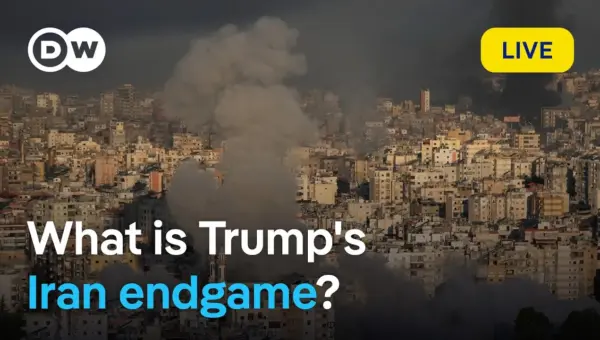
Conflicting signals from Washington regarding US objectives in the conflict with Iran are creating significant uncertainty, leaving allies and observers questioning the ultimate goals of American military engagement. Analysts and journalists highlighted the pervasive confusion, stressing the need for clear communication to avoid miscalculations and de-escalate regional tensions.