Trump’s ‘Civilization Dies’ Threat Sparks War Crime Fears
Former President Donald Trump's social media threat that "a whole civilization will die tonight" has sparked international outcry, with experts warning of potential war crimes. Analysts question the feasibility of such an attack and its devastating implications for regional stability and international law.

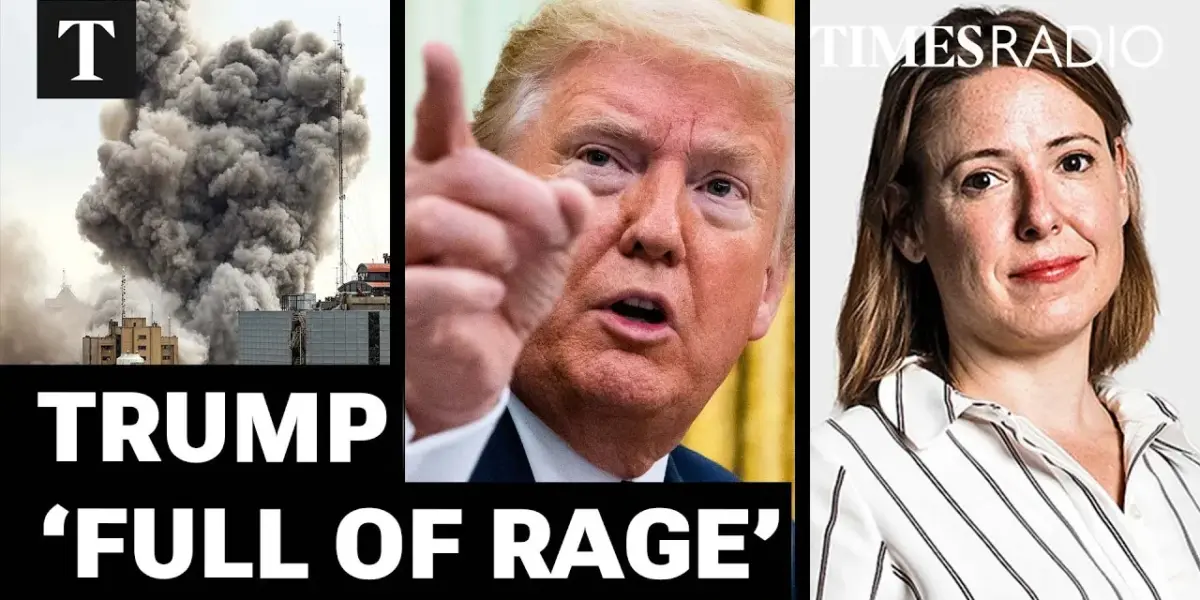
Trump’s ‘Civilization Dies’ Threat Sparks War Crime Fears
Former President Donald Trump ignited international alarm with a social media post threatening that “a whole civilization will die tonight.” The statement, made on his Truth Social platform, suggested a massive escalation of conflict, prompting condemnation from foreign policy experts who warned such actions could constitute war crimes.
Experts Decry ‘Nonsensical’ and Dangerous Rhetoric
Catherine Philp, World Affairs Editor for The Times, described Trump’s post as “frankly nonsensical.” She highlighted the contradiction in vowing to destroy a civilization while also offering a blessing to the Iranian people, who are inheritors of one of the world’s longest continuous civilizations. “You can’t vow to wipe out a whole civilization and then say God bless the Iranian people,” Philp stated, underscoring the illogical and dangerous nature of the rhetoric.
Trump’s post specifically mentioned targeting bridges and power plants, actions that could have devastating consequences for civilian life. Philp noted that while Israel has targeted railways, they provided warnings and cited the involvement of the Revolutionary Guard. In contrast, Trump’s rhetoric suggested a disregard for civilian impact, aiming to make Iran “unlivable” by attacking its infrastructure. “What Trump is threatening and saying he doesn’t care that it’s a war crime is about making Iran unlivable and hitting its civilian infrastructure,” Philp explained.
Feasibility and Regional Ramifications
Philp expressed doubt about the feasibility of executing such a large-scale attack in a single night, given Iran’s vast geographical size and population of 90 million people. She pointed out that even as the threat loomed, Iranian supporters were reportedly using themselves as human shields on bridges.
The potential for escalation sent waves of dread through the region. A friend in Jordan informed Philp that people were buying 30-day supplies of iodine, a measure taken in anticipation of nuclear fallout. This reaction illustrates the profound fear and instability Trump’s words generated across the Middle East.
Allies Distrust and International Law Concerns
The prospect of an attack on this scale also raises serious questions about the relationship between the United States and its allies. Philp believes such an action would likely preclude any cooperation from NATO or other allied nations. “These would be war crimes… if you hit these solely civilian targets,” she asserted, adding that it would represent a fundamental break in values between allies.
She recalled that some allies, like Kuwait, had already denied the use of their bases due to doubts about the legality of potential military actions, even when focused on military targets under the guise of an imminent threat. Trump’s suggested targeting of civilian infrastructure represents a completely different and more severe order of action.
Former Negotiator Calls Trump’s Behavior Unprecedented
Aaron David Miller, a former Middle East negotiator for the U.S. and now a Senior Fellow at the Carnegie Endowment for International Peace, was equally critical. He stated that no American president in history has behaved in such a manner, relishing the destruction of civilian infrastructure or using such cruel and unkind language. “No American president has ever deployed profanity, certain cruelty and unkindness of his language. No, it is an embarrassment. It is a shame,” Miller said.
Miller attributed Trump’s rhetoric to anger, rage, and frustration, suggesting a lack of moral self-governance. He contrasted this with the intentions of the nation’s founders, who feared leaders unable to control their own ambitions and interests for the public good. Miller believes Trump’s behavior is a result of a leader who cannot see beyond his own personal feelings.
Diplomatic Impasse and Escalation Outlook
Regarding the diplomatic situation, Miller expressed pessimism about the chances of a negotiated settlement. He noted that Iran’s demands, including compensation and guarantees regarding its proxy forces, are currently out of line with U.S. objectives. “The Iranian conception is we’re winning and if there’s going to be diplomacy, we’re need to be we’re going to need compensation,” Miller observed.
He concluded that there is currently no clear path out of the crisis, with no diplomacy or U.S. military pressure likely to change Iran’s risk calculus. “I think we’re in for some form of escalation. Whether it’s as comprehensive as severe as the president has promised, unclear,” Miller stated, suggesting that escalation is more probable than a de-escalation through negotiation.
Uncertainty Over Presidential Counsel
Miller also questioned the advice Trump is receiving, noting his history of firing advisors who offer unwelcome counsel. He suggested that without a figure like a James Baker to provide direct, honest feedback, it’s unlikely anyone in Trump’s current national security structure will effectively steer him away from potentially disastrous decisions. “You embarrass the president or you provide advice somehow that he isn’t happy with, you’re out,” Miller explained, highlighting the challenging environment for providing candid advice.
Ultimately, Miller believes the only constraint on Trump might be his own realization of having created a terrible situation, a realization he currently does not seem to possess. The lack of clear constraints and the prevailing uncertainty suggest a volatile and dangerous period ahead for the Middle East.
Source: If Trump Acted On His ‘Nonsensical’ Post, It Would Be A War Crime | Catherine Philp (YouTube)

Related Articles
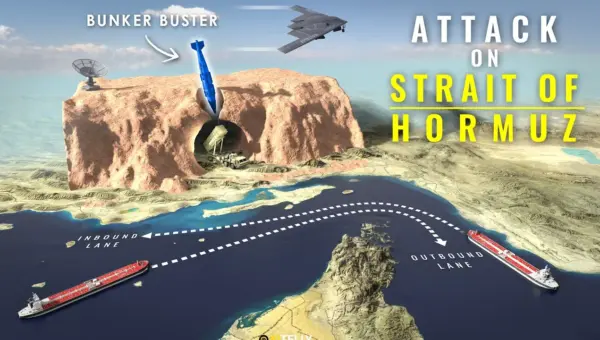
Iran’s Strait of Hormuz Trap: How the US Fights Back
Iran's strategy to control the Strait of Hormuz involves using islands as bases for anti-ship missiles and launching swarm attacks with small boats. The US counters with advanced defense systems, surveillance drones, and powerful bunker-buster bombs, highlighting the ongoing tension in this vital global shipping lane.
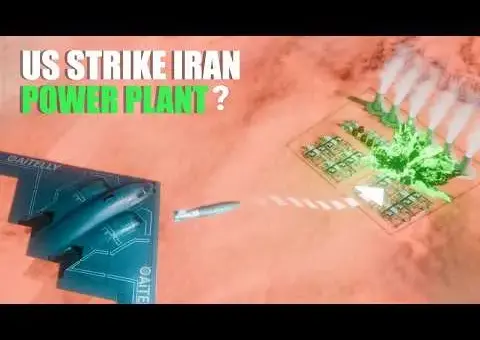
US Aims to Cripple Iran’s Power Grid to Secure Strait of Hormuz
A new US strategy reportedly targets Iran's power grid, including major plants like Damavand, to force open the Strait of Hormuz. The plan involves multi-stage air attacks using advanced bombers and precision munitions to cripple energy infrastructure and cause cascading failures.
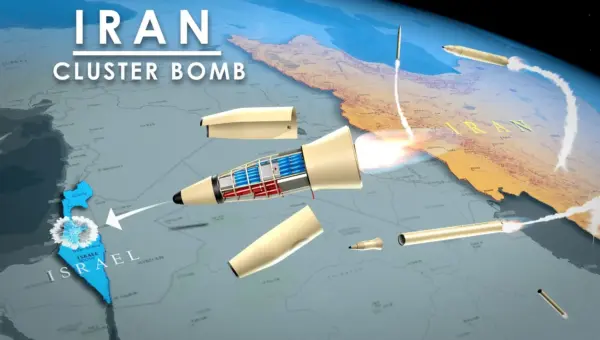
Iran’s Cluster Bombs: A Calculated Gamble to Overwhelm Defenses
Iran's use of cluster bombs against Israel was a deliberate tactic to overwhelm advanced missile defenses. These weapons scatter numerous smaller explosives, making interception difficult. While tactically advantageous, they raise serious humanitarian concerns due to their indiscriminate nature and unexploded ordnance.