Trump’s Ceasefire Deal Crumbles Amidst NATO Slights
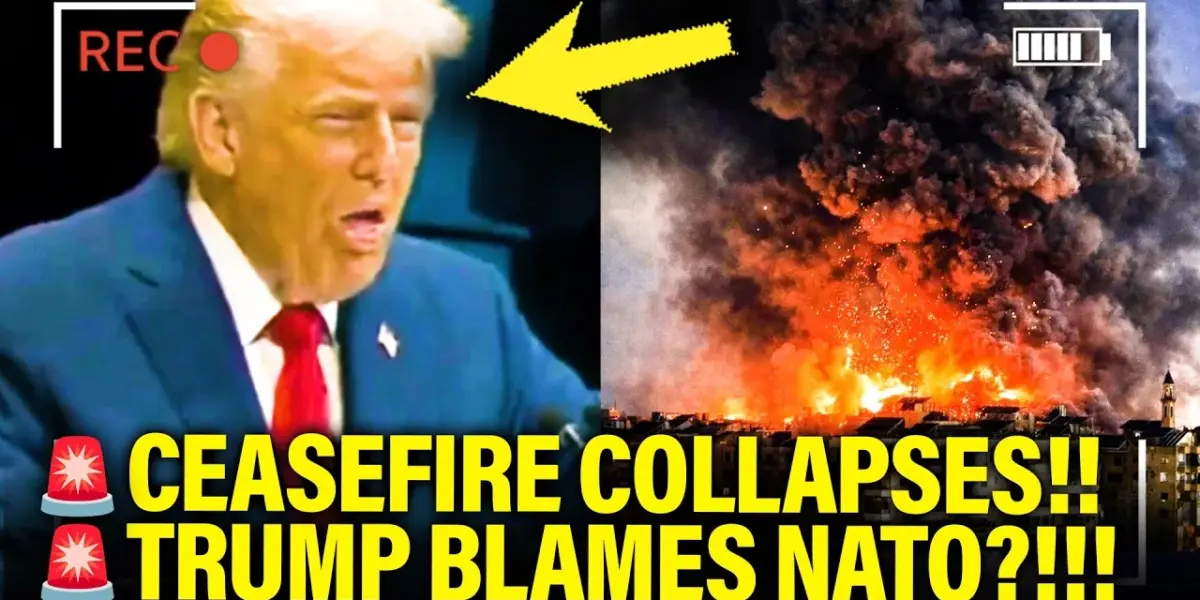
Donald Trump's reported ceasefire deal with Iran is facing collapse as new strikes hit Lebanon. The agreement, which included security guarantees for Lebanon, is being challenged by Iran, who blames the U.S. for Israel's actions. Meanwhile, Trump's criticisms of NATO and potential troop withdrawals add another layer of geopolitical uncertainty.

Trump’s Ceasefire Deal Crumbles Amidst NATO Slights
Donald Trump’s attempt to broker a ceasefire appears to be unraveling, with Iran publicly calling him out. The situation grew complicated when Trump announced an agreement to Iran’s 10-point plan, a move that contradicts earlier claims and has led to widespread disbelief. This uncertainty follows Trump’s recent criticisms of NATO, which some observers interpret as him acting as a proxy for Russian President Vladimir Putin.
The tension with NATO surfaced after a meeting between Trump and NATO Secretary General Jens Stoltenberg. Reports suggested Trump was considering withdrawing U.S. troops from NATO countries, potentially relocating them to nations he favors. This move was reportedly intended as punishment for NATO’s perceived failure during a conflict in Iran, which Trump described as unlawful and catastrophic. He felt NATO should have supported his actions, even when he stated he didn’t need their help and could manage the situation independently.
Trump’s frustration with NATO has been ongoing, with him frequently questioning the alliance’s relevance and his commitment to its security guarantees. Some analysts suggest NATO should consider allowing Trump to leave if he wishes to undermine the alliance, rather than waiting for further disruptions.
Ceasefire Collapses as Lebanon Strikes Escalate
The fragile ceasefire is showing signs of collapse, marked by recent Israeli air strikes in Beirut, Lebanon. These attacks follow earlier incidents that reportedly killed hundreds, many of them civilians. A significant event involved an Israeli strike on a funeral in Beirut, causing numerous casualties.
A key term in the reported Iran-U.S. ceasefire agreement, brokered by Pakistan, included security guarantees for Lebanon and Hezbollah. However, Iran’s Foreign Minister, Mohammad Javad Zarif, stated that the terms of the ceasefire are clear: the U.S. must choose between a ceasefire and continued conflict through Israel. He emphasized that the world is witnessing the events in Lebanon and that the responsibility lies with the U.S. to uphold its commitments.
A senior Iranian official, Mohsen Razi, further accused America of being responsible for the ceasefire’s breakdown, describing the U.S. as unable to control Israel, which he referred to as a “rabid dog.” He warned that Iran would not tolerate further violations of the ceasefire by the U.S.
“The Iran US ceasefire terms are clear and explicit. The US must choose ceasefire or continued war via Israel. It cannot have both.” – Iran’s Foreign Minister, Mohammad Javad Zarif (paraphrased from transcript)
Regional Powers React to Shifting Dynamics
The situation is complicated by accusations from the U.S., Israel, UAE, and Saudi Arabia that Iran has launched missiles into their territories. Meanwhile, Iran has presented evidence of the ongoing attacks in Beirut and other regions.
There are indications that the United Arab Emirates Air Force may have conducted strikes on an Iranian refinery plant after the ceasefire was announced, using Mirage 2009 fighters. This action, if true, allows the U.S. and Israel to claim they were not directly involved.
Concerns are rising among the UAE and Saudi Arabia, who reportedly fear that Trump’s agreement to Iran’s 10-point plan could elevate Iran’s regional influence. The plan reportedly includes Iran controlling the Strait of Hormuz and collecting tolls, which could significantly boost Iran’s economy. This prospect has allegedly led the UAE and Israel to work together to undermine the ceasefire.
Market Volatility and Conflicting Narratives
The instability surrounding the ceasefire is impacting global markets. WTI crude oil futures have seen a notable increase, suggesting anxiety about potential disruptions to oil supplies, particularly concerning Iran’s control over the Strait of Hormuz.
Adding to the confusion, JD Vance, a key figure in the Trump administration’s negotiations, has offered a different perspective. Vance suggested that misunderstandings in English might have contributed to the communication breakdown with Iranian negotiators. He also downplayed the significance of Lebanon in the ceasefire talks, a point directly contradicted by the reported terms of the agreement.
Vance’s statements have been met with skepticism, particularly his claims about increased traffic in the Strait of Hormuz, which contradict reports of decreased activity. He also addressed a question about a past threat to “wipe Iranian civilization off the map,” stating that the U.S. has leverage and aims to secure a deal beneficial to Americans.
Historical Context and Future Outlook
This situation echoes past instances where agreements have been challenged or broken, leading to increased tensions. The complex web of alliances and rivalries in the Middle East, coupled with shifting political dynamics, creates a volatile environment.
The future of the ceasefire, and by extension regional stability, remains uncertain. Iran’s stance is clear: it holds the U.S. accountable for upholding the agreed-upon terms. Meanwhile, actions by Israel and potential U.S. policy shifts under Trump continue to cast doubt on the longevity of any de-escalation efforts.
The ongoing conflict and the diplomatic fallout highlight the challenges of achieving lasting peace in a region with deeply entrenched interests and historical grievances. The effectiveness of international mediation and the commitment of major powers to de-escalation will be crucial in determining the path forward.
Source: Trump CRASHES OUT as CEASEFIRE COLLAPSES!!! (YouTube)

Related Articles

Iran War Looms as China Pushes for Deal
Confusion over draft registration changes and escalating tensions with Iran dominate geopolitical discussions. While China pushes for a diplomatic solution to prevent conflict, the US faces complex negotiations. Meanwhile, the First Lady addresses rumors, seeking to clear her name amidst ongoing scandals.

Ukraine Strikes Cripple Russian Oil Revenue
Ukraine's drone strikes are crippling Russia's oil revenue and exposing defensive vulnerabilities. These attacks are shifting battlefield dynamics, making Russia desperate and potentially hastening the end of Putin's regime. Meanwhile, international alliances face strain amidst evolving geopolitical strategies.

Iran’s Truce Claims Crumble Amidst Regional Tensions
Reports of a ceasefire between Israel and Iran, allegedly brokered with U.S. involvement, are collapsing. No public document or official agreement exists, leaving the U.S. as the sole willing partner with much to lose. Meanwhile, Iran escalates rhetoric and continues regional actions, while domestic U.S. controversies distract from foreign policy.