Trump’s Ceasefire Collapses, Exposing Mideast Chaos
Donald Trump's hastily arranged ceasefire with Iran has collapsed within hours, leading to the reclosure of the critical Strait of Hormuz. The deal, reportedly lacking a formal document and based on conditional statements, has exposed deep divisions and fueled renewed conflict in the Middle East.


Trump’s Ceasefire Collapses, Exposing Mideast Chaos
In a stunning turn of events, a supposed ceasefire brokered by Donald Trump has rapidly unraveled, leaving the Middle East in greater turmoil. Iran has announced the closure of the Strait of Hormuz, a critical global shipping route, just hours after it was reportedly reopened. This dramatic reversal highlights the deep complexities and fragile nature of the region’s conflicts, and questions the effectiveness of the approach taken.
The situation escalated quickly. Reports indicate that ships were warned by Iran’s IRGC Navy that transiting the Strait of Hormuz now requires their permission. Any vessel attempting to sail through without authorization faces being targeted and destroyed. This announcement came shortly after a ceasefire deal, grandly presented by Trump, fell apart. The speed at which this happened, within less than 12 hours, underscores the lack of firm agreement and the volatile dynamics at play.
A Deal Built on Shaky Ground
Adding to the confusion, CNN reported that this agreement did not appear to be based on a formal, written document. Unlike typical ceasefires, which are usually backed by clear terms and signed by all parties, this one seemed to be based on a series of understandings and public statements. Trump himself took to Truth Social, his social media platform, to express frustration and confusion over the developing situation, indicating a significant misunderstanding or breakdown in communication.
The narrative suggests that Trump, eager for a diplomatic win, may have agreed to Iran’s framework for a 10-point deal. However, Iran’s internal factions, which are reportedly not unified, had differing views on the fairness and scope of any ceasefire. This internal division likely contributed to continued hostilities. Throughout the night, reports indicated that Iran continued its firing, Israel retaliated against Lebanon, and the conflict persisted, contradicting the idea of a comprehensive ceasefire.
In fact, some statements emerging from Trump’s side suggested the ceasefire might not even include Israel and Lebanon, implying it was primarily a cessation of U.S. military action rather than a full regional peace. Trump’s own public statements on Truth Social illustrate this ambiguity. He initially stated that he would suspend bombing if Iran agreed to the reopening of the Strait of Hormuz. Shortly after, he reposted a statement from Iran’s foreign minister, which indicated that Iran would cease defensive operations if attacks against them were halted. These conditional statements, rather than concrete agreements, formed the basis of the supposed truce.
Internal Divisions and External Consequences
The lack of a signed document and the reliance on conditional statements created a situation where a genuine ceasefire was never truly established. This was further complicated by reports of explosions in the Tehran province and Iranian air defenses engaging drones in the area. State news agencies accused the U.S. and Israel of violating the ceasefire, adding another layer of accusation and counter-accusation.
Adding to the complexity, a White House official reportedly stated that the 10-point peace plan publicly released by Iran differed from the plan that Trump had deemed workable as a basis for negotiation. This discrepancy suggests a significant gap between what was publicly presented and what was privately understood, or perhaps intended, by the parties involved.
The situation was further muddied by what appeared to be superficial changes in Iran’s leadership structure, with the son of the Supreme Leader reportedly replacing his father in a key position. However, other significant figures, such as the head of the judiciary and the parliament speaker, remained the same, raising questions about the depth of any actual regime change or shift in policy.
Why This Matters
This situation is critical because it demonstrates the dangerous consequences of pursuing foreign policy through unclear, unwritten agreements, especially in volatile regions like the Middle East. The Strait of Hormuz is a vital artery for global oil supply, and its closure can have immediate and severe impacts on the world economy. The failure of this ceasefire not only prolongs conflict but also increases the risk of broader escalation.
The approach taken, relying on public statements and conditional promises rather than formal diplomatic channels and verified agreements, appears to have backfired. It has created a vacuum of understanding and trust, allowing hostilities to resume and potentially worsen. This highlights a broader trend of informal diplomacy that, while sometimes necessary, carries significant risks when not properly managed and documented.
Historical Context and Future Outlook
The Strait of Hormuz has long been a flashpoint in Middle East tensions. Its strategic importance has made it a focal point for regional powers seeking to exert influence and control. Historically, threats to shipping in the Strait have often been linked to broader geopolitical struggles, and any disruption there has immediate global repercussions.
The current situation reflects a pattern of escalating tensions and diplomatic missteps that have plagued the region for decades. The reliance on personal pronouncements and the apparent lack of robust interagency coordination within the U.S. administration raise serious questions about America’s ability to manage complex foreign policy challenges effectively. The outcome suggests a need for more structured, transparent, and verifiable diplomatic processes to de-escalate conflicts and prevent further instability.
The future outlook remains uncertain. With the ceasefire shattered and the Strait of Hormuz closed, the risk of further military confrontation is heightened. The international community will be watching closely to see if a more stable diplomatic path can be found, one that is built on clear agreements and mutual understanding, rather than on shifting sands of public statements and conditional promises. The current state of affairs represents a significant setback, leaving the region, and indeed the world, in a precarious position.
Source: Trump Humiliates Himself as Deal Blows Up (YouTube)

Related Articles


Hegseth Confronts Reporter on Iran Ceasefire Claims
A recent exchange saw Pete Hegseth challenge a reporter's question about Iran's alleged ceasefire. Hegseth expressed deep skepticism, suggesting Iran might be deceiving others if attacks continue. The incident highlights ongoing debates about verifying peace agreements in complex geopolitical situations.

Oil Prices May Drop $20 as Shipping Risks Ease
Oil prices may fall by as much as $20 per barrel as shipping risks ease through the Strait of Hormuz. Meanwhile, New York City's Mayor faces financial scrutiny in his first 100 days.
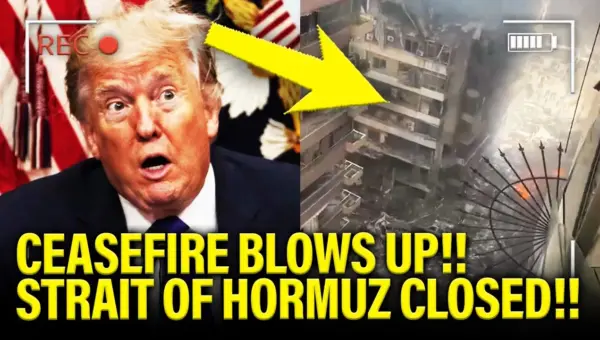
Trump’s Iran Deal Collapses Amidst Escalating Violence
A supposed ceasefire agreement involving Iran, brokered with the apparent acceptance of Donald Trump, is rapidly unraveling. Just as quickly as it was announced, the deal is showing signs of failure, leading to renewed conflict and criticism. The situation highlights the complexities of international diplomacy and the challenges of achieving lasting peace in volatile regions.