Trump’s ‘Casualties’ Remark Ignites Fierce Public Outcry
Former President Donald Trump's recent comments on military casualties have drawn sharp criticism, with critics calling his remarks callous and comparing them to dismissive internet memes. The controversy also highlights broader concerns about the alleged weakening of accountability mechanisms during his administration. The situation has prompted renewed calls for political vigilance and pressure on lawmakers to ensure robust oversight.


Trump’s ‘Casualties’ Remark Ignites Fierce Public Outcry
Washington D.C. – Former President Donald Trump has ignited a firestorm of criticism following remarks made in the wake of a military base strike, where he suggested that casualties were an expected part of warfare. The comments, which drew comparisons to a dismissive internet meme, have been decried as callous and indicative of a broader pattern of undermining accountability mechanisms within government.
‘This Is What Happens in War’: Trump’s Controversial Statement
The controversy erupted after an American military base was struck, prompting a response from the former president. According to the transcript, Trump stated, “This is what happens in war. There may be some casualties.” This assertion, particularly coming from a leader who has never served in the military, has been met with widespread condemnation. Critics have pointed to Trump’s own history, including his deferment from military service due to bone spurs, as a point of hypocrisy when discussing the potential sacrifices of others.
“He did the Lord Farquad meme, which is some of you may die in a sacrifice that I’m willing to make, which like [expletive] you for being so callous.”
This sentiment, as expressed by an unnamed commentator in the transcript, highlights the perception that Trump’s remarks trivialized the gravity of military conflict and the human cost involved. The comparison to the “Lord Farquad meme” further underscores the perceived flippancy with which the former president is accused of approaching matters of life and death for service members.
A Pattern of Undermining Accountability
Beyond the immediate backlash over the “casualties” comment, critics argue that Trump’s actions during his presidency deliberately weakened the structures designed to ensure governmental accountability. The transcript suggests a concerted effort to dismantle the “administrative state,” a term often used to describe the complex web of regulations, enforcement agencies, and oversight bodies that govern federal operations.
“The problem is Donald Trump and the people around him have very intentionally spent all of their time weakening any enforcement or accountability mechanisms,” the commentator stated. “When Donald Trump got into office, one of the first things he did was get rid of the administrative state as they call it. So now any enforcement mechanisms we have just aren’t there.”
This critique posits that Trump’s administration systematically dismantled or sidelined the very bodies responsible for enforcing laws and holding officials accountable. The implication is that this created an environment where actions could be taken with fewer repercussions.
The Erosion of Norms and Enforcement
The transcript further elaborates on the perceived breakdown of established norms and enforcement capabilities. It highlights a situation where even court rulings may lack effective enforcement mechanisms.
“There aren’t even enforcement mechanisms. There’s only court rulings. Like courts don’t have the ability to enforce things. So if a court does rule against the president, they can’t actually enforce that. There’s not like police officers of the court that go and enforce something, it’s just a ruling that’s kind of floating out there,” the analysis continues.
This perspective suggests that the traditional checks and balances, including the judiciary’s ability to enforce its decisions against the executive branch, have been compromised. The result, according to this viewpoint, is a “blowing through” of unspoken norms that previously guided presidential conduct and ensured a degree of accountability.
Calls for Democratic Vigilance and Pressure
In light of these concerns, the transcript issues a strong call for continued political engagement and pressure on Democratic representatives. The urgency stems from the perceived need to restore robust oversight and ensure that future administrations are held to account for their actions.
“That’s why we need Democrats to get into power. We need to pressure them as hard as we can. We need to use our platform every day to pressure them to have asses in chairs,” the commentator urged. The specific demand is for “asses in chairs on January 21st, 2029,” the day after a potential presidential transition, implying a need for ongoing scrutiny and accountability that extends beyond election cycles.
The call to action includes specific issues that require attention, such as the “Epstein files,” suggesting a broader agenda of transparency and investigation into potentially sensitive matters. The underlying message is one of sustained vigilance to counteract what is seen as a deliberate weakening of democratic institutions and accountability frameworks.
Looking Ahead: The Fight for Accountability Continues
The controversy surrounding Donald Trump’s remarks on military casualties underscores a deeper debate about leadership, responsibility, and the integrity of governmental oversight. As the political landscape continues to evolve, the focus remains on the effectiveness of existing accountability mechanisms and the public’s role in demanding transparency and ethical conduct from its leaders. The coming months will likely see continued scrutiny of past actions and further calls for robust enforcement to safeguard democratic norms.
Source: Trump Casualty Comment Sparks Backlash #politics #fyp #new (YouTube)

Related Articles

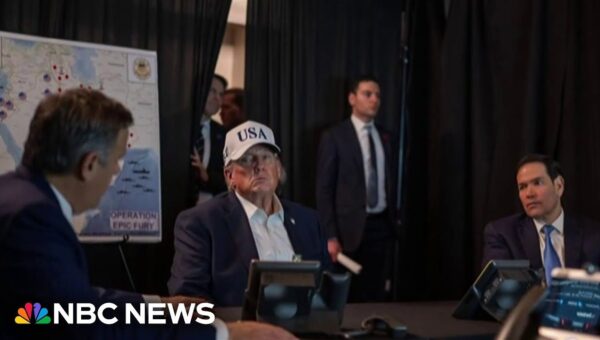
Trump: Iran Strikes Ahead of Schedule, Expects ‘Great Deal for World’
Three U.S. service members have been killed amid escalating conflict with Iran, President Trump confirmed. He stated that strikes are ahead of schedule, with senior Iranian leaders killed, and expressed optimism for a "great deal for the world" despite ongoing talks with Iranian officials.
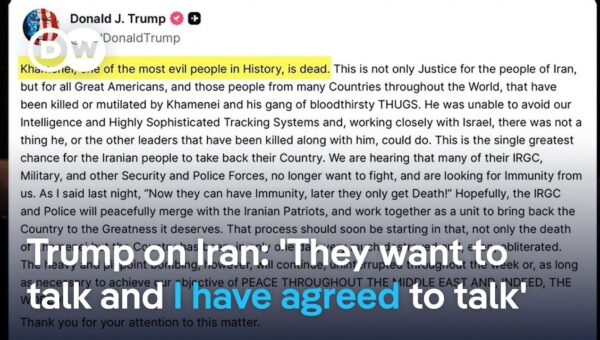
Trump Agrees to Talks with Iran After Major Strikes
President Donald Trump has agreed to talks with Iran's leadership following coordinated strikes that reportedly killed key figures, including the Supreme Leader. While Trump claims significant military successes, U.S. strategy remains unclear, and public opinion shows limited support for the actions amid rising American casualties.

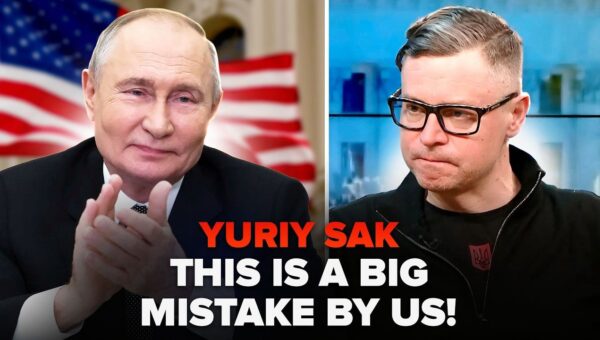
Trump’s Putin Stance: US Strategy and Global Implications
Analysis suggests Donald Trump's approach to the Ukraine war involves pressuring Kyiv, but US involvement is crucial for resolution. China's influence and the 'MAGA' agenda's geopolitical implications are key factors.