Trump’s ‘Bones’ Dictate Foreign Policy: A Risky Instinct?
Donald Trump's assertion that he'll end wars "when I feel it in my bones" raises serious questions about instinct-driven foreign policy. This approach bypasses expert counsel and data, potentially leading to unpredictable and risky international relations.


Trump’s ‘Bones’ Dictate Foreign Policy: A Risky Instinct?
In a recent, albeit brief, public statement, former President Donald Trump offered a glimpse into his decision-making process regarding foreign conflicts. When pressed on how he would know when a war should end, his response was disarmingly simple: “When I feel it in my bones.” This declaration, while perhaps intended to convey a sense of personal conviction and decisive leadership, raises profound questions about the basis of foreign policy and the role of instinct versus informed counsel in matters of war and peace.
The Allure and Peril of Gut Feelings
The appeal of a leader guided by intuition is understandable. In a complex world, the idea of a decisive figure who can cut through ambiguity with a clear, internal signal is attractive. It suggests a confidence and unwavering resolve that many voters seek. However, when that intuition is the sole or primary driver, particularly in the high-stakes arena of international conflict, it carries significant risks. The transcript highlights this by drawing a stark contrast:
“Imagine a female leader saying that. Imagine Biden saying, ‘When I feel it in my bones.’ We’re going based off of Trump’s instincts.”
This rhetorical framing points to a perceived double standard, but more importantly, it underscores the gravity of relying on personal sentiment. The implication is that such a statement from another leader might be met with skepticism or outright derision, yet from Trump, it is presented as a potentially acceptable, even desirable, mode of operation. This reliance on instinct, especially in foreign policy, bypasses the established mechanisms of diplomacy, intelligence analysis, and expert consultation that are typically considered essential for navigating international crises.
A Pattern of Instinct-Driven Assertions
The transcript also connects this declaration about war to other instances where Trump has relied on what he purports to “feel in his bones.” The example of windmills allegedly causing cancer, a claim that has persisted for decades, illustrates a pattern of deeply held beliefs that seem impervious to factual evidence or scientific consensus. This suggests that Trump’s “bones” might be less about prescient intuition and more about deeply ingrained, often unverified, personal convictions. Other examples cited include the belief that other countries pay for tariffs and assertions about gender dynamics.
This tendency to prioritize personal conviction over empirical data is a recurring theme. In foreign policy, where the consequences of misjudgment can be catastrophic, basing decisions on such foundations is not merely unconventional; it is potentially dangerous. The intricate web of geopolitical alliances, economic dependencies, and human costs associated with warfare demands a rigorous, evidence-based approach, not a reliance on a leader’s internal “feeling.”
Historical Context: The Weight of War Decisions
Throughout history, leaders have grappled with the immense responsibility of initiating or concluding wars. While personal conviction has always played a role, it has rarely been the sole determinant. The aftermath of major conflicts often reveals the pitfalls of decisions made without comprehensive intelligence, strategic foresight, and careful consideration of all available options. The Korean War, the Vietnam War, and numerous other conflicts serve as cautionary tales about the perils of unchecked executive authority and the potential for personal biases to lead nations astray.
The concept of a “gut feeling” in leadership is not entirely new. Leaders throughout history have claimed to possess extraordinary intuition. However, the modern era of warfare, with its complex technologies, global interconnectedness, and the sheer destructive capacity of modern weaponry, necessitates a more sophisticated and data-driven approach. The idea that a war’s end can be determined by a personal, almost mystical, internal signal stands in stark contrast to the meticulous planning, diplomatic maneuvering, and careful calibration of national interests that ideally precede and conclude military engagements.
Why This Matters
The implications of a foreign policy guided by personal “feelings” are far-reaching. Firstly, it undermines the institutional expertise and advisory structures that are crucial for informed decision-making. When a leader dismisses the input of intelligence agencies, military strategists, and diplomatic corps in favor of a gut feeling, the nation is deprived of a critical safety net. Secondly, it introduces an element of unpredictability that can destabilize international relations. Allies and adversaries alike need a degree of certainty about a nation’s intentions and decision-making criteria. A leader whose actions are dictated by internal “bones” creates an environment of uncertainty, potentially leading to miscalculations and escalation.
Furthermore, this approach risks prioritizing the leader’s personal ego or perceived strength over the actual needs and well-being of the nation and the international community. The human and economic costs of war are immense, and decisions to engage or disengage should be grounded in a sober assessment of these costs and benefits, not in a leader’s internal “vibe.”
Trends and Future Outlook
The current political landscape is marked by a growing polarization and, in some quarters, a skepticism towards traditional expertise. This environment can make pronouncements like Trump’s resonate with certain segments of the electorate who are disillusioned with established institutions and yearn for what they perceive as authentic, decisive leadership. The trend towards personality-driven politics means that such statements, however unconventional, can gain traction.
Looking ahead, the question of how leaders approach complex foreign policy challenges will remain critical. Will there be a continued emphasis on evidence-based decision-making, or will instinct and personal conviction play an increasingly dominant role? The answer will shape not only the effectiveness of foreign policy but also the stability of global affairs. The “feel it in my bones” approach, while perhaps politically expedient for some, represents a potentially perilous departure from the established norms of responsible statecraft, leaving the world to wonder what other seismic shifts might occur when a leader’s internal compass, rather than external reality, guides the ship of state.
Source: Trump Says War Ends “When I Feel It in My Bones” #politics #fyp #new (YouTube)

Related Articles

G7 Allies Clash Over Iran War Strategy, Urge Focus on Russia
G7 foreign ministers met in Paris, revealing deep divisions over the U.S. war with Iran. European allies urged the U.S. to pressure Russia, linking its actions to the conflict and fearing support for Ukraine will wane.


Iran Blocks China Ships, Exposing Beijing’s Weak Grip
Iran's recent decision to block Chinese ships at the Strait of Hormuz is exposing the limits of Beijing's influence in the Middle East. This action is causing delays and cancellations for Chinese manufacturers, turning a perceived geopolitical win into an economic strain.
Trump’s “Walk Away” Tactic Signals Tougher Stance on China
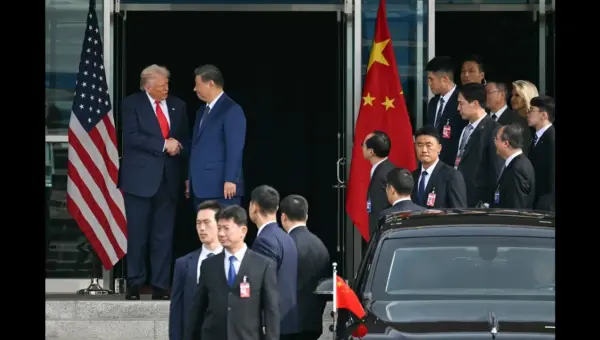
Retired Air Force Brigadier General David Stillwell believes President Trump's strategy of being willing to walk away from negotiations puts pressure on China. This tactic, combined with US global actions and strengthened alliances, signals a more assertive American foreign policy.