Trump’s Birthright Citizenship Plan Risks Undoing Progress
Kermit Roosevelt III, a constitutional law professor, argues that Donald Trump's challenge to birthright citizenship echoes post-Civil War efforts to undermine civil rights. The debate centers on the 14th Amendment's "subject to the jurisdiction" clause, with Roosevelt asserting the administration's interpretation is historically inaccurate and legally unsound. He believes the Supreme Court will likely reject the argument, but warns of broader implications for national identity and civil rights.


Trump’s Birthright Citizenship Stance Faces Legal Scrutiny
A legal scholar argues that Donald Trump’s efforts to end birthright citizenship, a practice deeply rooted in American law, could dismantle decades of progress. Kermit Roosevelt III, a constitutional law professor at the University of Pennsylvania Law School and author of “The Nation That Never Was,” explained that the arguments Trump’s administration is using echo those made by opponents of civil rights after the Civil War. These arguments seek to limit who is considered a citizen, potentially reversing hard-won gains in equality.
Historical Roots of Birthright Citizenship
Roosevelt highlighted that before the 14th Amendment, the rules around citizenship were less clear. However, he stressed that the current debate often misrepresents historical legal interpretations. The core of the issue lies in the 14th Amendment, which states that all persons born or naturalized in the United States and subject to its jurisdiction are citizens. Roosevelt pointed out that those who opposed this principle after the Civil War were often former Confederates trying to undermine Reconstruction and maintain a discriminatory social order.
“It’s those arguments that those people made against birthright citizenship that we’re hearing again now.”
The “Subject to the Jurisdiction” Clause
A key legal battleground is the phrase “subject to the jurisdiction thereof” within the 14th Amendment. The Trump administration argued this means a child’s parents must also be subject to U.S. jurisdiction for the child to be a citizen. Roosevelt countered this by explaining the straightforward interpretation: the clause refers to the child being born in the U.S. and bound by its laws. He clarified that this generally excludes children of diplomats with immunity or those in the country temporarily or without authorization. However, the children of these individuals are still fully subject to U.S. laws simply by being born here.
The administration’s theory, Roosevelt suggested, involves complex ideas about allegiance and reciprocal obligations, which he feels are not supported by the amendment’s history or plain language. He noted that such theories have been part of broader efforts, including those outlined in Project 2025, aiming to enact significant changes to the nation’s legal and social fabric.
Supreme Court’s Role and Skepticism
Roosevelt explained that such fringe legal arguments typically don’t reach the Supreme Court. However, he stated that Trump’s executive actions forced the issue onto the court’s agenda. During oral arguments, some justices, including Chief Justice John Roberts, appeared skeptical of the administration’s case. Roosevelt expressed optimism, believing there are not five votes to support Trump’s position. He suggested that justices who interpret the Constitution fairly, consider history objectively, and value the court’s institutional standing would likely rule against the administration.
“I definitely don’t think that there are five votes to support Trump’s position here.”
Broader Implications for Civil Rights
Beyond birthright citizenship, Roosevelt sees Trump’s actions as part of a larger pattern of efforts to undo progress in civil rights. He drew parallels between the attack on birthright citizenship and other legal challenges. These include the rollback of affirmative action, which aimed to promote racial equality, and the weakening of voting rights protections, which he linked to the 15th Amendment. Roosevelt also mentioned concerns about the school-to-prison pipeline as potentially undermining aspects of the 13th Amendment, which abolished slavery and involuntary servitude.
Looking Ahead
While Roosevelt is hopeful that the Supreme Court will reject the Trump administration’s argument on birthright citizenship, he warns that the underlying legal theories being pushed are dangerous for the nation’s identity. The debate over birthright citizenship and related civil rights issues underscores a broader struggle over the meaning of equality and citizenship in America. The Supreme Court’s eventual decision, regardless of the outcome, will have significant implications for the country’s future legal and social landscape.
Source: Kermit Roosevelt III: Trump’s birthright citizenship stance aims to ‘undo centuries of progress’ (YouTube)

Related Articles
Supreme Court Weighs Birthright Citizenship, America’s Identity
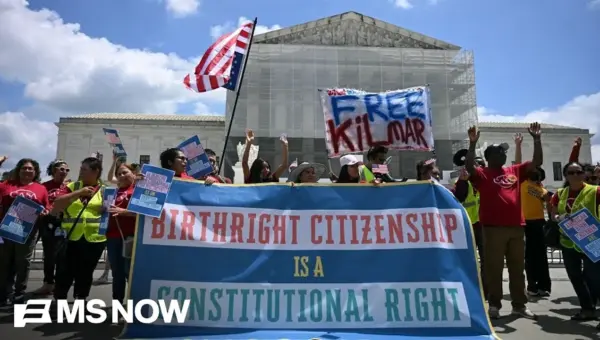
The Supreme Court is examining a case that could restrict birthright citizenship for children of undocumented or temporary immigrants. This legal challenge is seen as a larger debate about America's identity and the meaning of the 14th Amendment. A ruling against birthright citizenship could impact hundreds of thousands of children annually and create widespread legal chaos.
Vance Visits Hungary: A ‘Model’ for Trump’s America?
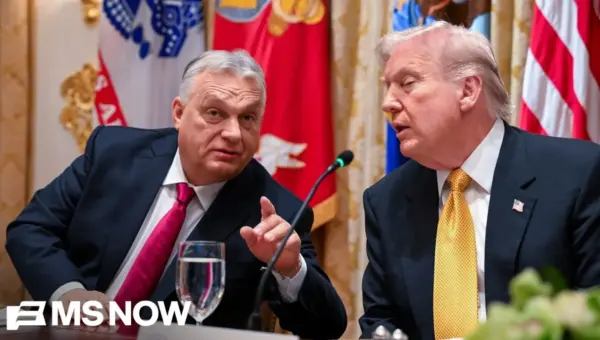
Vice President J.D. Vance's visit to Hungary signals support for Prime Minister Viktor Orban, raising questions about the U.S. embrace of Orban's governance model. Expert Anne Applebaum criticizes the move, linking it to a MAGA agenda for a European right-wing alliance and highlighting Orban's record of corruption and authoritarianism. The visit occurs amid concerns about Hungary's alignment with Russia and its impact on NATO cohesion.

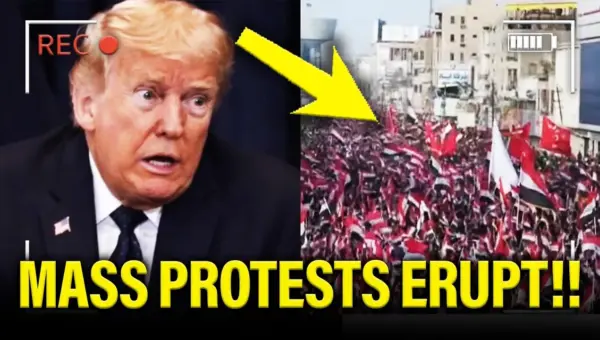
Protests Explode Across Middle East Amid War Escalation
Millions are protesting across the Middle East against the Trump and Netanyahu administrations. Large demonstrations in Baghdad, Syria, Yemen, and even Tel Aviv show widespread opposition to the ongoing war. Analysts criticize the aggressive rhetoric and strategy, warning of further escalation and regional instability.