Trump’s ‘Binary’ Worldview Clashes With Iran Attack Fallout
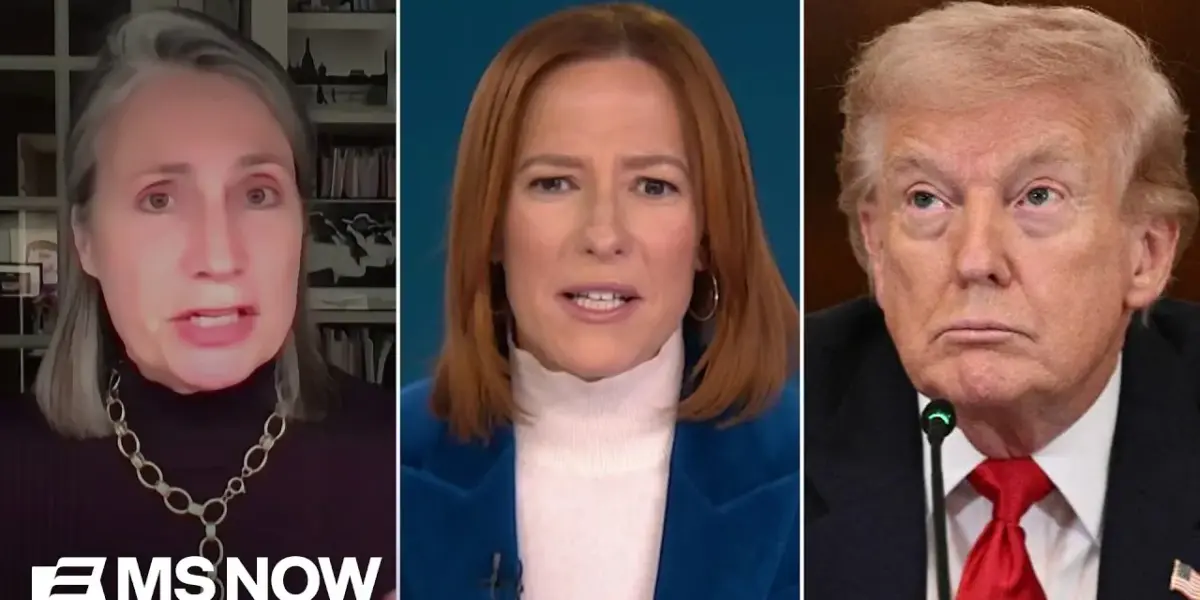
Reports indicate Russia may be sharing intelligence with Iran to target US troops, a development former NSC official Fiona Hill describes as foreseeable. Hill criticizes Donald Trump's "binary" worldview, suggesting it oversimplifies complex geopolitical realities and fosters "magical thinking" in foreign policy decision-making.

Russia-Iran Alliance Raises Alarms, Trump’s Response Under Scrutiny
In the wake of escalating tensions and complex geopolitical maneuvering, a developing alliance between Russia and Iran, potentially aimed at targeting American troops in the Middle East, has emerged as a significant concern. This intricate situation starkly contrasts with former President Donald Trump’s seemingly simplistic approach to international relations, particularly his reaction when first confronted with news of Russia sharing intelligence with Iran.
Last Friday, during a college sports roundtable at the White House, Trump was asked about reports of Russia potentially aiding Iran in targeting American forces. His initial response, captured on video, dismissed the question as “stupid.” He stated, “The Russians said that they have not been sharing. That’s what they said. So, you know, we can take them at their word.” This assertion, however, was quickly challenged by the understanding that Russia’s assurances are not typically considered reliable, a fact acknowledged by many observers of international affairs.
Despite his initial dismissal, Trump later appeared to shift his stance in a radio interview with Fox News host Brian Kilmeade. When pressed on whether he believed Putin was helping Iran, Trump conceded, “I think he might be helping them a little bit, yeah, I guess. And he probably thinks we’re helping Ukraine, right? And you are, right? Yeah, we’re helping them also.” He further drew a parallel, suggesting China would make a similar argument, framing international actions as a tit-for-tat exchange: “It’s like, hey, they do it and we do it.”
Expert Analysis: A ‘Magical Thinking’ Approach to Geopolitics
Fiona Hill, a former senior director on the National Security Council during Trump’s first term and a recognized expert on Russia, offered a critical perspective on the situation and Trump’s mindset. Hill noted that the concerns surrounding potential shocks to the global economy due to disruptions in oil markets, whether from Russia or Iran, were “completely foreseeable.” She also indicated that Russian President Vladimir Putin’s desire to assist Iran in its standoff with the United States was not surprising.
Hill questioned the decision-making processes within the Trump administration, particularly concerning critical geopolitical flashpoints like the Strait of Hormuz. “There have been so many moments during both Trump terms when you wonder… did they not discuss the strait of Hormuz and what could happen? Do they not discuss the number of casualties? Do they not discuss with the military?” she asked, highlighting a perceived lack of deep strategic deliberation.
Recalling Trump’s approach to the Situation Room, Hill explained that he rarely convened there, preferring instead to have advisors come to him in the Oval Office. This led to a situation where “whoever managed to get to talk to him… or whatever other settings they’re managing to grab him” would influence his decisions. Hill fears that this dynamic fosters “magical thinking” on the president’s part, where he avoids “irrefutable facts” and assumes adversaries will not act against his perceived interests.
“What I fear is happening is on the president’s part a lot of magical thinking, because people by journalists, that he doesn’t want to hear any nurse saying. And, you know, he obviously doesn’t even think that it’s relevant to have to deal with the irrefutable facts that other countries are going to take action. He just kind of assumes that somehow they won’t after what there’s been a lot of speculation about this but I’ve been wondering what you think…”
Trump’s Oversimplified View of Conflict and Military Power
Hill suggested that Trump’s perception of conflicts, including the recent events involving Iran, stems from a belief that “any conflict can be started and stopped with a few air strikes and by taking out the leader.” This view, she posits, is rooted in an “unfailing faith in US military powers and also an unfailing faith in himself.” She pointed to past actions, such as the strikes against Syria and the killing of Iranian Quds Force commander Qasem Soleimani, where Trump perceived no significant blowback, reinforcing this belief.
The former NSC director elaborated on Trump’s tendency to view international relations through a “binary” lens, often simplifying complex interactions into one-on-one scenarios. “He tends to look at things honestly into something of a vacuum… between his interaction with Putin for example, his interaction with Netanyahu, his interaction with you know, the Iranian leaders Russia and the United States, Iran, the United States, all pretty binary,” Hill explained. This approach, she warned, is “really problematic because the world is a very complex place.”
Hill emphasized that Trump’s Cold War-era understanding of international relations fails to account for the “second, third, and fourth, and even more order effects” and the intricate dynamics among various leaders and their respective states. This “binary thinking” is seen as a significant impediment to navigating the multifaceted challenges posed by current global events, including the potential ramifications of the Iran-Russia alignment.
Looking Ahead: The Unfolding Consequences
As the geopolitical landscape continues to shift, the implications of Russia’s potential support for Iran and the subsequent reactions from the United States and its allies remain a critical area to monitor. The effectiveness of sanctions, the stability of global energy markets, and the potential for miscalculation in volatile regions like the Middle East will be key indicators of the unfolding consequences. The world watches to see if a more nuanced understanding of international complexities will prevail over simplistic, binary approaches to foreign policy.
Source: Knock-on effects of Iran attack elude Trump's 'binary' thinking in a complex world (YouTube)

Related Articles

G7 Allies Clash Over Iran War Strategy, Urge Focus on Russia
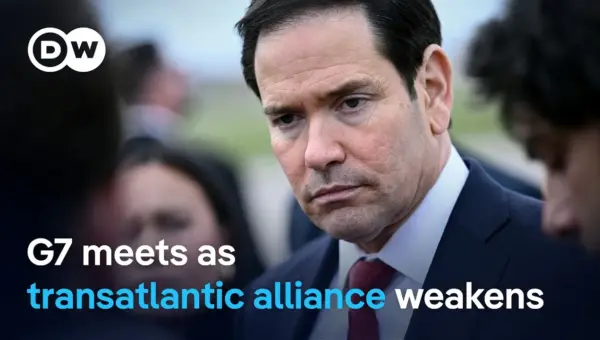
G7 foreign ministers met in Paris, revealing deep divisions over the U.S. war with Iran. European allies urged the U.S. to pressure Russia, linking its actions to the conflict and fearing support for Ukraine will wane.


Iran Blocks China Ships, Exposing Beijing’s Weak Grip
Iran's recent decision to block Chinese ships at the Strait of Hormuz is exposing the limits of Beijing's influence in the Middle East. This action is causing delays and cancellations for Chinese manufacturers, turning a perceived geopolitical win into an economic strain.
Rubio: US Can Achieve Iran War Goals Without Troops
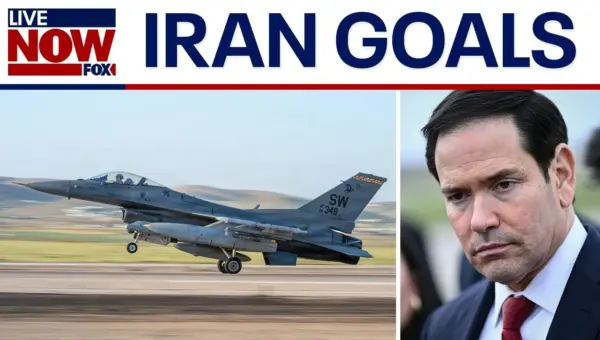
Senator Marco Rubio outlined a strategy to counter Iran without deploying U.S. ground troops, focusing on weakening the regime and enhancing maritime security. He also criticized Cuba's economic system and expressed concerns about West Bank violence.