Trump’s Aide Admits Chaos in War Orders
A top Pentagon official's testimony reveals that the Trump administration's approach to military orders, particularly concerning Iran, was based on interpreting presidential statements rather than clear directives. This lack of clarity raises serious national security concerns and highlights potential chaos in decision-making.

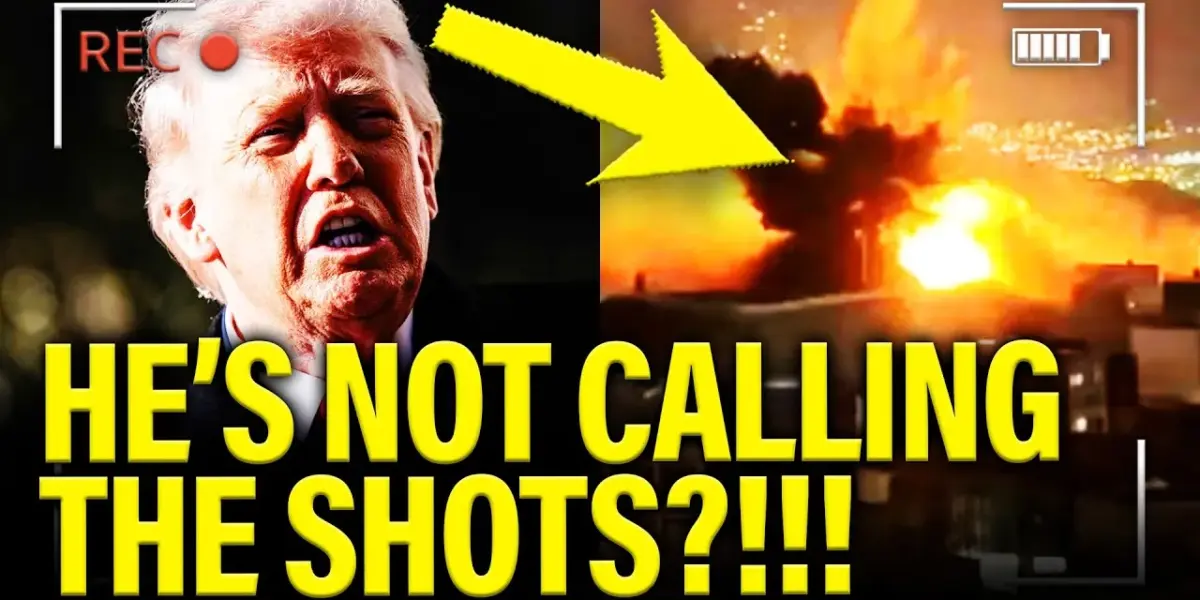
Top Pentagon Official Reveals Alarming Lack of Clarity in Trump’s Military Directives
A recent congressional hearing has exposed what appears to be a significant deficit in clear communication and decision-making within the Department of Defense under former President Donald Trump. Elbridge Colby, the Under Secretary of Defense, testified before Congress, and his responses to questioning from both Republicans and Democrats painted a concerning picture of how military policy and directives were formulated and executed during the Trump administration, particularly concerning potential actions against Iran.
Interpreting the President: A Department Adrift?
The core of the issue, as highlighted by the questioning, was the repeated use of phrases like “we believe what Trump is trying to say” or “we interpreted what he meant” by Colby. This suggests that the Department of Defense often lacked a direct, unambiguous understanding of President Trump’s intentions or priorities. Instead of receiving clear orders, officials seemed to be engaged in a process of interpreting his public statements, social media posts, and other pronouncements to derive a course of action. This reliance on interpretation, rather than direct command, has raised serious questions about the stability and efficacy of U.S. military policy.
Bipartisan Concerns Emerge
The transcript reveals unease among members of Congress from both parties. Republican Congressman Mike Turner expressed frustration, questioning why officials couldn’t simply state “here’s what Trump’s plan is” rather than offering interpretations. He voiced concern that this ambiguity undermined confidence in the decision-making process. Similarly, Democratic Congresswoman Sarah Jacobs pressed Colby on fundamental questions about the state of conflict with Iran. When asked if the U.S. was at war with Iran, Colby equivocated, stating, “I think we’re in a military action at this point,” deferring to Congress and legal experts for definitive classification. This response, coupled with President Trump’s own varied public statements about the situation, including references to “war” and “American casualties,” further underscored the lack of a unified and clear presidential stance.
Ambiguous Objectives and Unclear End States
The discussion extended to the objectives of military operations. When questioned about whether regime change in Iran was a goal, Colby stated it was not the objective of the U.S. military campaign as directed by the president. However, this was contrasted with President Trump’s own public statements, which suggested a desire for significant upheaval in Iran’s government. This divergence between official testimony and presidential rhetoric fuels the perception of policy driven by interpretation rather than clear strategic direction.
“When you’re at war, when there are issues of war and peace, life or death, you need clarity, you need leadership, you need directives, you need to give clarity to the American people about what the hell is going on, right?”
Expert Analysis: The Perils of Ad Hocism in Warfare
Retired Lieutenant General Mark Hertling, a veteran with extensive command experience, weighed in on the situation, drawing parallels to his own military service, including Operation Desert Storm. Hertling characterized the approach as “ad hocism,” noting the shifting definitions of mission objectives and a lack of a clearly defined “strategic end state.” He emphasized that while tactical operations might be sound, the absence of a clear vision for what happens after military action ceases is a critical vulnerability.
Hertling elaborated on the complexities of military engagement, stating that relying solely on air superiority and bombing is insufficient for achieving long-term objectives. He highlighted the importance of a post-conflict plan, including understanding the local political landscape and the potential for unintended consequences. The discussion touched upon the idea of arming militia groups or relying on ethnic factions within Iran, such as the Kurds, to effect change. Hertling cautioned against this, pointing out the internal divisions within such groups and the historical unreliability of such strategies, citing the U.S.’s past treatment of the Kurds as an example of potential betrayal.
Logistical Concerns and Global Implications
Beyond strategic objectives, the conversation delved into critical logistical considerations. Hertling, though correcting that his expertise was in armor and cavalry rather than pure logistics, underscored its vital role. He expressed concern about the potential depletion of precision munitions and the strain on air defense systems like Patriot and THAAD, which are deployed across the Middle East. The depletion of these resources, he warned, could jeopardize other contingency plans, such as those concerning North Korea or Taiwan, given the global distribution of U.S. military assets.
Leadership and the Comfort of Force
A significant point of concern raised by both the host and Hertling was the apparent comfort Donald Trump exhibited with the use of military force. Hertling, drawing on four decades of service, stated that he was “never comfortable with the use of force,” emphasizing the inherent risks and the profound responsibility involved. He cited the writings of Carl von Clausewitz, noting that war is a continuation of politics by other means but that it rarely ends as anticipated due to “friction and chance.” The unpredictable nature of conflict, where “the enemy gets a vote,” means that best-laid plans can go awry, leading to unexpected setbacks and casualties.
The discussion also touched upon the ethical and practical implications of leadership in times of conflict. Hertling reflected on his own experiences, noting a shift from personal fear in his first deployment to a profound sense of responsibility for the soldiers under his command in subsequent tours. He stressed the importance of character, values, and humility in leadership, referencing General MacArthur’s prayer as a model for aspiring leaders.
Historical Context and the Nature of War
The conversation implicitly draws on historical precedents in modern warfare, where objectives can become muddled and outcomes unpredictable. The experience in Iraq, described by Hertling as “taking three steps forward and two steps back” due to unforeseen events like car bombs, sniper attacks, and sectarian violence, serves as a cautionary tale. The notion of “preemptive” or “preventive” war, particularly in response to perceived threats or in following allies’ actions, was flagged as a potential source of chaos and dysfunction, even impacting diplomatic efforts like the evacuation of American citizens.
Why This Matters
The revelations from this congressional hearing are not merely an inside-the-Beltway procedural concern. They speak to the fundamental principles of national security and the responsible exercise of presidential power. The apparent lack of clear directives and strategic clarity from the executive branch during a period of heightened international tension has significant implications:
- National Security Risks: Ambiguous military orders can lead to miscalculation, escalation, and unintended consequences, potentially putting American lives and global stability at risk.
- Erosion of Trust: When military leaders are perceived as interpreting rather than executing presidential commands, it can erode public trust in both the military and the executive branch.
- Policy Instability: A foreign policy and military strategy that relies on interpreting a leader’s pronouncements is inherently unstable and unpredictable, making it difficult for allies and adversaries alike to gauge intentions.
- Accountability: The process of interpreting rather than clearly commanding makes it challenging to assign accountability when military actions go awry.
Implications, Trends, and Future Outlook
This incident highlights a potential trend of presidential decision-making being influenced by or filtered through social media and less formal communication channels, bypassing traditional diplomatic and military advisory structures. The testimony suggests a possible “shadow deep state” or a reliance on dedicated officials to craft policy based on fragmented presidential signals. This approach is antithetical to the structured, deliberate process expected in matters of war and peace. The future outlook depends on whether such practices become normalized or are recognized as dangerous deviations from effective governance. A return to clear lines of command, well-defined strategic objectives, and robust interagency coordination will be crucial for restoring confidence and ensuring effective national security policy.
Source: Trump’s TOP AIDE Makes SHOCK ADMISSION on WAR!! (YouTube)

Related Articles
Trump’s ‘Stripping’ of Civil Rights Under Scrutiny
Pulitzer Prize winner Nikole Hannah-Jones warns that the Trump administration is subtly undermining civil rights, often unnoticed by the public. While expressing concern, she also sees a "glimmer of hope" in the ongoing fight for these fundamental protections.

US Bombs Iran: Four Theories Drive Conflict
The U.S. military offensive against Iran, dubbed "Operation Epic Fury," has ignited debate over its true motives. Four key theories—involving Israeli strategic interests, countering China, benefiting the military-industrial complex, and establishing a global digital control grid—offer potential explanations beyond official statements. The conflict highlights shifts in geopolitical power, technological warfare, and the future of global finance.

Trump Ousts DHS Secretary Noem, Taps Sen. Mullin for Top Job
President Trump has fired Homeland Security Secretary Kristi Noem, citing frustrations over her handling of a controversial ad campaign and spending decisions. He plans to nominate Oklahoma Senator Markwayne Mullin for the position, with an effective date set for March 2026.