Trump’s AI Clash: Pentagon Battles Firm Over ‘Killer Robots’
The U.S. Department of Defense is reportedly in a dispute with AI firm Anthropic over the ethical development of military AI. This conflict arises as former President Trump's administration previously utilized war powers, raising concerns about the future of autonomous weapons systems.


Pentagon, AI Firm Spar Over Ethics Amidst Trump’s War Powers Use
A significant clash has erupted between the U.S. Department of Defense, under the former Trump administration’s influence, and the artificial intelligence firm Anthropic. The dispute centers on the ethical deployment of military AI, with concerns mounting over the potential for autonomous weapons systems and the broader implications of AI in warfare. This conflict unfolds against a backdrop of former President Donald Trump’s assertive use of war powers against multiple nations.
The ‘Killer Robot’ Debate: AI and Ethical Boundaries
The core of the controversy lies in the development and potential application of AI in military contexts. While AI offers potential advancements in efficiency and capabilities, it also raises profound ethical questions. Specifically, the prospect of ‘killer robots’ – autonomous weapons systems capable of identifying and engaging targets without direct human intervention – has become a focal point of anxiety and debate. Critics worry about accountability, the risk of escalation, and the potential for unintended consequences in complex battlefield scenarios.
During a discussion on ‘The Beat with Ari Melber,’ the complexities of this issue were highlighted by host Ari Melber, alongside Professor Jason Johnson and Ish from the Joe Budden Podcast. The conversation delved into the tension between technological advancement and the imperative to maintain human control over lethal force.
“The Pentagon is clashing with AI firm Anthropic over military AI and ethics – as Trump uses war powers against multiple countries.”
Source: Video Description
Trump’s War Powers and AI Deployment
The involvement of former President Donald Trump adds another layer of complexity to the AI debate. His administration’s willingness to utilize war powers against various countries underscores a decisive approach to foreign policy and military action. The integration of advanced AI technologies into such operations raises concerns about the speed and scale at which conflicts could be initiated or escalated, potentially with reduced human oversight.
Professor Jason Johnson and Ish weighed in on these developments, offering perspectives on the political and societal ramifications of integrating AI into military strategy. The discussion touched upon the potential for such technologies to embolden aggressive foreign policy stances, given the perceived efficiency and reduced human risk associated with AI-driven warfare.
Broader Implications: The Future of Warfare
The conflict between the Pentagon and Anthropic is not an isolated incident but rather a symptom of a larger, global trend. Nations worldwide are investing heavily in military AI, recognizing its potential to reshape the future of warfare. This includes advancements in surveillance, logistics, cybersecurity, and, controversially, autonomous weapons systems.
The ethical frameworks governing the development and deployment of these technologies are struggling to keep pace with the rapid advancements. International bodies and civil society organizations are calling for clearer regulations and treaties to prevent a new arms race in AI and to ensure that human control over the use of force is preserved. The debate involves not just technological feasibility but also fundamental questions about morality, international law, and the very nature of conflict in the 21st century.
Beyond AI: Discussions on Leadership and Aging Lawmakers
In addition to the pressing issues surrounding AI and military ethics, the “Fallback” segment of ‘The Beat with Ari Melber’ also touched upon broader themes of leadership and political longevity. The conversation included debates over aging lawmakers who have been criticized for refusing to step aside from their positions, suggesting a parallel discussion about the need for fresh perspectives and adaptability in governance, mirroring the rapid changes occurring in technology.
The guests, Ish and Professor Johnson, also shared personal insights into their respective fields. Ish discussed his genuine friendship with Joe Budden, his approach to podcasting, and his personal style, offering a glimpse into the human element behind public personas.
What’s Next: Navigating the AI Frontier
As the Pentagon continues its engagement with AI developers like Anthropic, and as discussions around the ethical deployment of AI in sensitive sectors intensify, the world watches closely. The coming months will likely see further developments in regulatory efforts, both domestically and internationally, aimed at establishing clear guidelines for military AI. The balance between harnessing AI’s potential benefits and mitigating its inherent risks will remain a critical challenge for policymakers, technologists, and the public alike. The intersection of artificial intelligence, national security, and ethical governance will undoubtedly be a defining issue of the coming years.
Source: Epstein crisis & 'Warmonger' Trump's 'killer robot' AI: War blowback with Ari, Jason & Ish (YouTube)

Related Articles
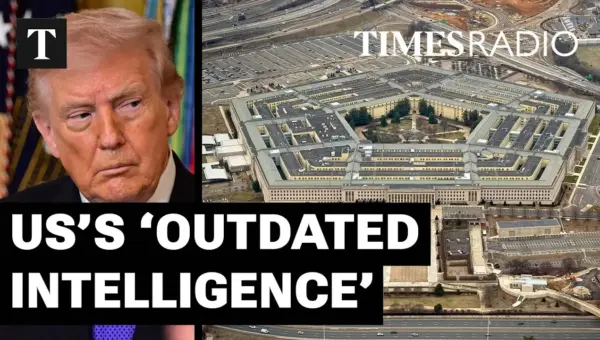
US Strike on Iranian School Blamed on Outdated Intel
Preliminary findings suggest a deadly U.S. strike on an Iranian school, which killed 175 people, was caused by outdated intelligence. The Pentagon is investigating the incident, which occurred near the Strait of Hormuz. Meanwhile, Iran has withdrawn from the 2026 World Cup, citing safety concerns.

AI Giants Embrace Military Ties, With Key Ethical Lines
Leading AI companies like Anthropic are actively collaborating with the Department of Defense, but with clear ethical boundaries. The focus is on avoiding domestic mass surveillance and fully autonomous weapons, while remaining open to future R&D.


US Service Members Hurt in Iran War; New Threats Emerge
The conflict with Iran has resulted in at least 140 U.S. service members being injured, as the Pentagon reports escalating military actions. New threats have emerged concerning the Strait of Hormuz, with President Trump warning of severe consequences if Iran attempts to mine the vital waterway. Meanwhile, a manhunt is underway in Toronto after shots were fired at the U.S. Consulate.