Trump’s Admin Seeks ‘Low IQ’ Loyalists for Government Jobs
An unearthed email from Liberty University Law School suggests the Trump administration prioritized political loyalty over qualifications for Department of Labor positions. This alleged strategy raises concerns about the erosion of meritocracy in federal hiring and its potential long-term impact on government functionality.

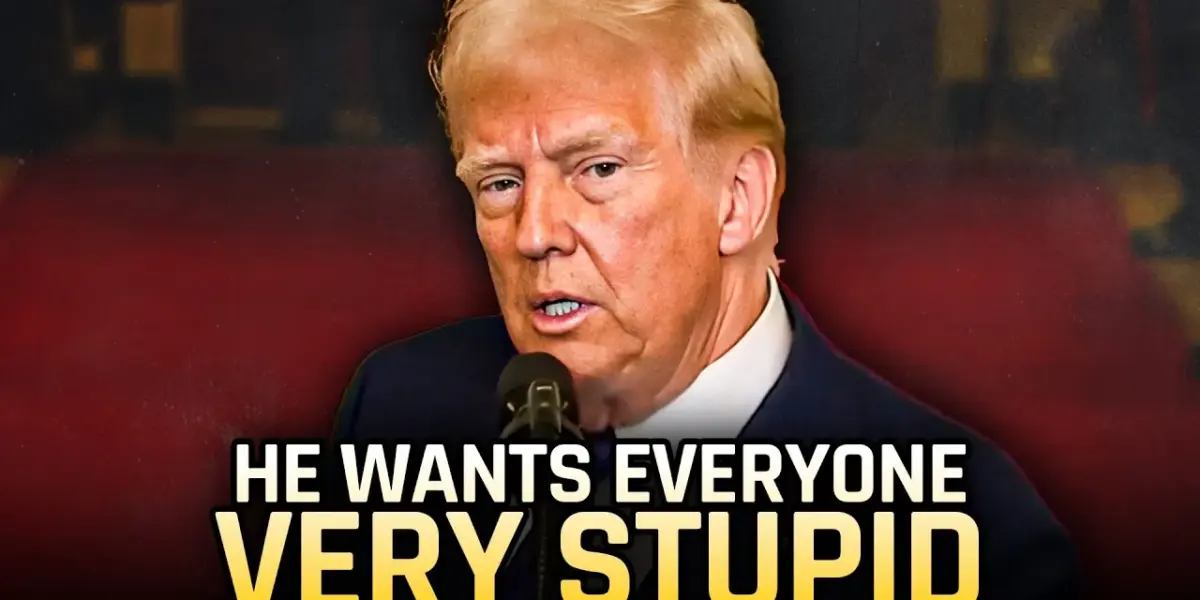
Trump Administration’s Unconventional Recruitment Strategy Raises Alarms
A recent discovery of an email originating from Liberty University Law School has ignited a firestorm of controversy, revealing what appears to be a deliberate recruitment strategy by the Trump administration to fill positions within the Department of Labor with individuals prioritizing political loyalty over intellectual prowess. The email, uncovered by Jud [Editor’s Note: Name not fully transcribed in original, assumed to be Jud L.] over at Popular Information, was sent to first and second-year law students, explicitly downplaying academic qualifications in favor of allegiance to Donald Trump.
Loyalty Over Smarts: The Core of the Recruitment Message
The communication, penned by Derek Green, an associate director at Liberty University Law School, outlined the essential criteria for potential applicants. According to the email, the two paramount requirements were a political alignment with President Trump and his administration, and a willingness to work hard. The message went further, explicitly stating, “Don’t be scared off by the transcript requirement. GPA is not a strong factor. If you meet those two requirements, you have a shot.” This sentiment was starkly reinforced with the assertion: “So, don’t worry if you’re an idiot. As long as you’re loyal to Trump, they’ll take you.”
The implications of such a directive are profound. The sender suggested that a lower level of cognitive ability might even be advantageous, positing that individuals who struggle with comprehension might be less inclined to question directives from the President. This raises serious concerns about the potential for a federal workforce that is not only politically biased but also potentially susceptible to carrying out questionable or illegal orders due to a lack of critical thinking skills.
Historical Context: Meritocracy Under Threat
The ethos of the modern civil service, established through reforms like the Pendleton Civil Service Reform Act of 1883, was intended to move away from the spoils system of patronage and towards a merit-based bureaucracy. This system aimed to ensure that government positions were filled based on qualifications, skills, and competence, thereby fostering efficiency, impartiality, and public trust. The alleged recruitment practices described in the Liberty University email appear to represent a stark departure from these foundational principles, harkening back to an era where political affiliation trumped all other considerations.
The Role of Liberty University and Its Graduates
The email’s origin from Liberty University Law School, a prominent right-wing evangelical institution, is significant. The communication indicated that a 2025 graduate of Liberty Law, Victoria Diodas, would be conducting interviews. Diodas, described as having no real-world experience beyond her recent graduation, was reportedly tasked with finding candidates who were not only loyal but also potentially less intellectually rigorous. Her contribution to the email included a memo describing the position as “a political position in which interns will serve the Trump administration for the duration of their internships and applicants must be willing to advance the president’s initiatives and deliver wins for the American worker.”
Furthermore, sample interview questions suggested by Diodas, such as “Did you vote for President Trump?” and “Do you disagree with the president on anything?” underscore the emphasis on political alignment. This approach to staffing raises questions about the professionalization of government service and the potential for politicization to permeate agencies that are meant to operate independently and serve the public interest impartially.
Broader Implications for Federal Governance
The video’s commentary expresses a deep concern that such hiring practices could inflict long-lasting damage on the federal government, potentially taking “a generation or more to fix.” The argument is made that the federal government should ideally be staffed by the most capable individuals, drawing from elite academic institutions and individuals with advanced degrees, such as those who might be members of Mensa or pursuing doctoral studies. Instead, the email suggests a recruitment drive targeting individuals deemed less intellectually capable but more ideologically aligned.
The prospect of a federal workforce composed of individuals who may lack critical thinking skills and are primarily driven by loyalty is alarming. It suggests a potential for compromised decision-making, reduced governmental efficiency, and a diminished capacity to address complex national challenges. The call for mass dismissals of Trump appointees by a future administration is a drastic measure, highlighting the perceived severity of the alleged damage to the integrity and functionality of the federal bureaucracy.
Why This Matters
The alleged recruitment practices detailed in the Liberty University email are not merely an administrative footnote; they strike at the heart of democratic governance. A civil service that prioritizes loyalty over competence risks undermining the very principles of impartial administration and public service that are essential for a functioning democracy. When government positions are filled based on political affiliation rather than merit, the public trust erodes, and the government’s ability to effectively serve all citizens is compromised. This situation raises critical questions about the long-term health of American institutions and the standards that should govern the professionalization of public service.
Trends and Future Outlook
This incident, if representative of a broader trend, suggests a concerning potential for increased politicization of the federal bureaucracy. The emphasis on loyalty over expertise could lead to a decline in the quality of government services and a weakening of institutional capacity. Future administrations, regardless of political leaning, will likely face the challenge of navigating a federal workforce potentially shaped by these new recruitment paradigms. The debate over civil service reform, the balance between political appointments and career professionals, and the ethical standards for government hiring are likely to intensify in the wake of such revelations.
The long-term outlook hinges on whether a commitment to meritocracy can be re-established and upheld. Without a robust system that values expertise, critical thinking, and impartial service, the effectiveness and legitimacy of the federal government could be significantly diminished. The prospect of having to systematically purge and rebuild a significant portion of the federal workforce underscores the profound impact that hiring decisions can have on the enduring strength and reliability of governmental institutions.
Source: Trump Is Seeking Out ‘Low IQ’ Job Applicants (YouTube)

Related Articles

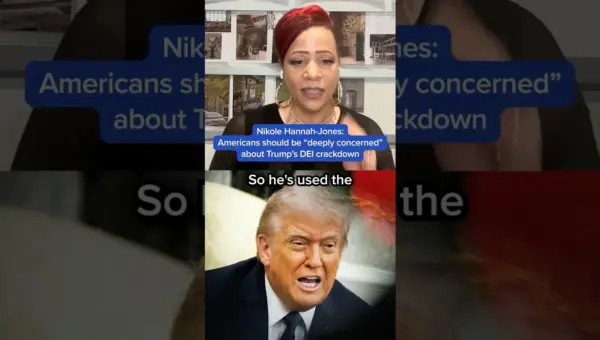
Nikole Hannah-Jones Warns of Autocratic Threat in DEI Ban
Pulitzer Prize winner Nikole Hannah-Jones warns that government crackdowns on Diversity, Equity, and Inclusion (DEI) initiatives echo tactics used in autocratic societies. She expressed deep concern over governmental restrictions on the use of terms like 'Black' and 'race,' deeming them a threat to free expression and societal progress.
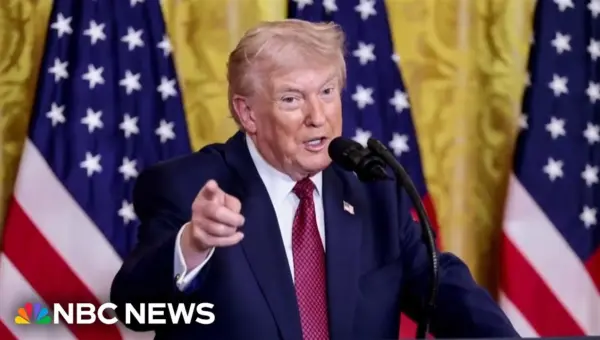
Iran War Sparks Oil Surge, Economic Woes for Trump
The war in Iran has triggered a sharp rise in oil prices, threatening economic stability and posing a significant challenge for the Trump administration. As gas prices surge and a key jobs report shows a slowdown, the White House faces mounting pressure to address domestic concerns. Meanwhile, regional tensions escalate with an intensifying conflict in Lebanon and ongoing investigations into civilian casualties.


Veterans Sound Alarm: Trump Administration Escalates Undeclared War
Veterans are sounding the alarm on the Trump administration's approach to military engagements, arguing that a deliberate obfuscation of the term "war" is being used to bypass congressional oversight. This op-ed delves into the concerns of veterans, the abdication of congressional duty, and the human cost of undeclared conflicts.