Trump Weighs Raid on Iran’s Nuclear Material
Reports indicate the Trump administration is considering a perilous special forces operation to seize Iran's highly enriched uranium stockpile. Experts warn of immense logistical challenges and safety risks, while also highlighting the danger of the material falling into the wrong hands.

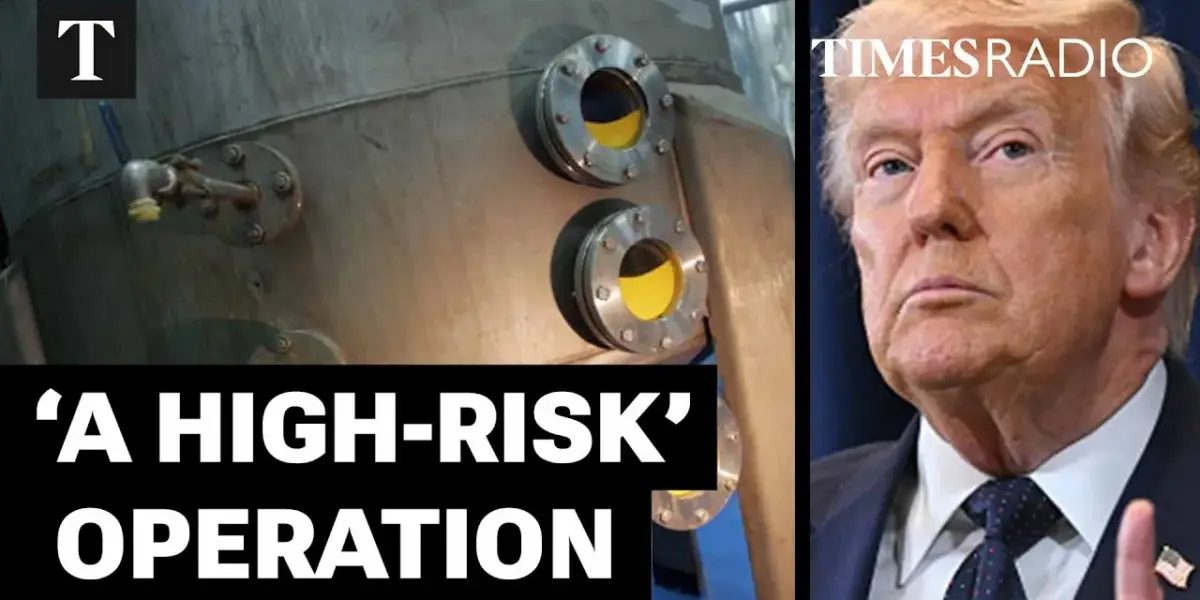
US Considers Daring Operation to Seize Iran’s Enriched Uranium
Amidst escalating geopolitical tensions, reports suggest the Trump administration is exploring a high-stakes military operation to physically seize Iran’s stockpile of highly enriched uranium. The potential mission, described as “very perilous” by former officials, aims to prevent Iran from acquiring enough fissile material to build multiple nuclear warheads. The discussion comes as Secretary of State Marco Rubio informed Congress that action may be necessary to secure the material.
Examining the Plausibility of a Special Forces Raid
Matthew Bunn, a professor of the practice of energy, national security, and foreign policy at the Harvard Kennedy School, discussed the immense challenges of such an operation in an interview with Times Radio. “In the middle of a war, it’s going to be a huge and difficult operation,” Bunn stated, echoing concerns raised by former Secretary of Defense Mark Esper.
The operation would involve flying special forces deep into Iran, potentially hundreds of kilometers, to reach underground facilities where the enriched uranium is believed to be stored in canisters. “Going into a probably well-defended deep underground tunnel where these canisters… are believed to be,” Bunn explained, highlights the significant risks involved.
Logistical Nightmares and Safety Concerns
Beyond the infiltration, the extraction process presents further complications. One potential method discussed involves carefully packaging the uranium. However, Bunn cautioned about the extreme danger: “if you put too much highly enriched uranium too close together, you’re going to have an accidental nuclear chain reaction.” The subsequent challenge would be transporting the material out of the tunnel and onto an aircraft for exfiltration, requiring substantial security forces.
An alternative, albeit destructive, option considered is the detonation of explosives on the canisters. Bunn clarified that while this would contaminate the tunnel and render it unusable, it would not create a nuclear bomb. “It’s not like a nuclear bomb. No,” he stated, though acknowledging the need for special safety measures for the troops involved.
Trump’s Stance and Diplomatic Avenues
Former President Trump has reportedly indicated he would only consider such a forceful intervention if Iran were significantly weakened. Bunn noted that diplomatic options were previously available. “According to the Omani mediators, the Iranians were offering to blend down this material before the war,” he said. He also pointed out that under the original Iran nuclear deal, Iran would not have amassed such a stockpile in the first place, a situation exacerbated when President Trump withdrew from the agreement in 2018.
“The Trump administration always seems to think that, you know, as soon as they have inflicted a lot of pain on someone that they will capitulate.” – Matthew Bunn
While the possibility of a future diplomatic resolution cannot be entirely ruled out, Bunn described the cooperative option as “very unlikely at present.”
The Nuclear Threshold: 60% vs. 90% Enrichment
A common misconception regarding Iran’s nuclear program is the enrichment level required for a weapon. While 90% enrichment is the standard for weapons-grade uranium, Bunn clarified that “you can make a nuclear weapon directly from 60% enriched material.” He explained that Iran would need to convert the uranium hexafluoride into metal, machine it into components, and assemble them. Although Bunn believes Iran may lack the current facilities for this post-bombing, the existing 60% enriched material is considered highly dangerous.
Risk of Proliferation and Illicit Trade
Bunn expressed concern about the security of the material itself, suggesting that individuals managing it might consider selling it amidst the current crisis. “One of the things I worry about is the people managing it right now thinking to themselves, goodness, I got to get out of Iran and with my family and… this could be my golden ticket if I sell it to somebody,” he stated.
This raises the specter of nuclear material falling into the hands of terrorists or rogue states, a concern that has prompted global summits on nuclear material security. Bunn described the material as “probably some of the highest risk material in the world right now.”
Timeline for a Nuclear Iran
The timeframe for Iran to develop a fully operational nuclear weapon is a subject of intense debate and classified information. Senior Israeli officials have estimated it could take between one to two years to go from having weapon-usable material to a deployable nuclear weapon on a missile. However, Bunn noted that a cruder device, potentially deliverable by unconventional means, could be developed more quickly.
Critical Stakes for Global Security
Securing Iran’s enriched uranium is deemed critical for international security. Bunn emphasized that leaving a weakened but resentful Iranian regime in possession of enough material for nuclear weapons would be a grave outcome for the U.S., Israel, and global stability. “If we leave a weakened but deeply embittered and angry regime in place with enough nuclear material for a handful of nuclear weapons, that’s not going to be a great result for the US security, for Israeli security, or for world security,” he concluded.
As the situation evolves, the international community will be closely watching the diplomatic and security responses to Iran’s nuclear program and the potential for drastic measures to prevent proliferation.
Source: How Trump Can Strike Iran’s Highly Enriched Uranium | Harvard Energy And National Security Professor (YouTube)

Related Articles
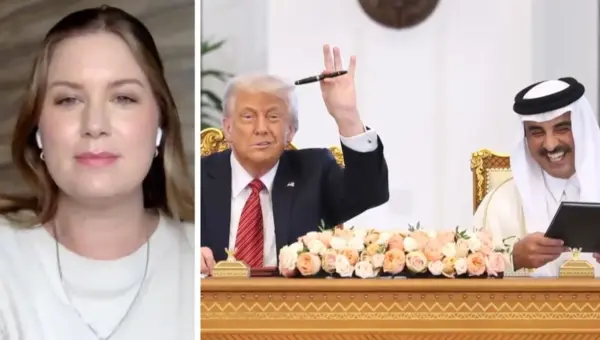
Gulf States Demand Seat at Table on Iran’s Nuclear Future
Gulf states are demanding a seat at the table for any U.S.-Iran talks regarding Iran's nuclear future. This move reflects a growing assertiveness and a desire to shape regional security directly. It signals a potential shift towards more inclusive diplomatic efforts in the Middle East.
Trump’s Name Everywhere: A ‘Stain’ on GOP Legacy?
Former President Donald Trump's efforts to brand national symbols, including a proposed signature on dollar bills, spark debate. Critics view this as an authoritarian attempt to embed his legacy, potentially staining the Republican Party's history and contrasting with democratic ideals of public ownership.

Trump’s War Talk Stuns Financial Crowd
Donald Trump's recent speech in Miami focused on his foreign policy, particularly his critical views on NATO and his vision for international relations. He declared the U.S. would no longer defend NATO allies, questioned the value of existing alliances, and suggested renaming the Strait of Hormuz. The speech also touched on his personal views of success, his allies, and his perceived role as a global peacemaker.