Trump Weighs Iran War Path Amid Pilot Capture Fears
Foreign affairs analyst Robin Niblett discusses the uncertain direction of President Trump's Iran strategy. The situation is at a critical hinge point, with fears growing over the capture of a missing U.S. pilot and its potential to escalate the conflict.

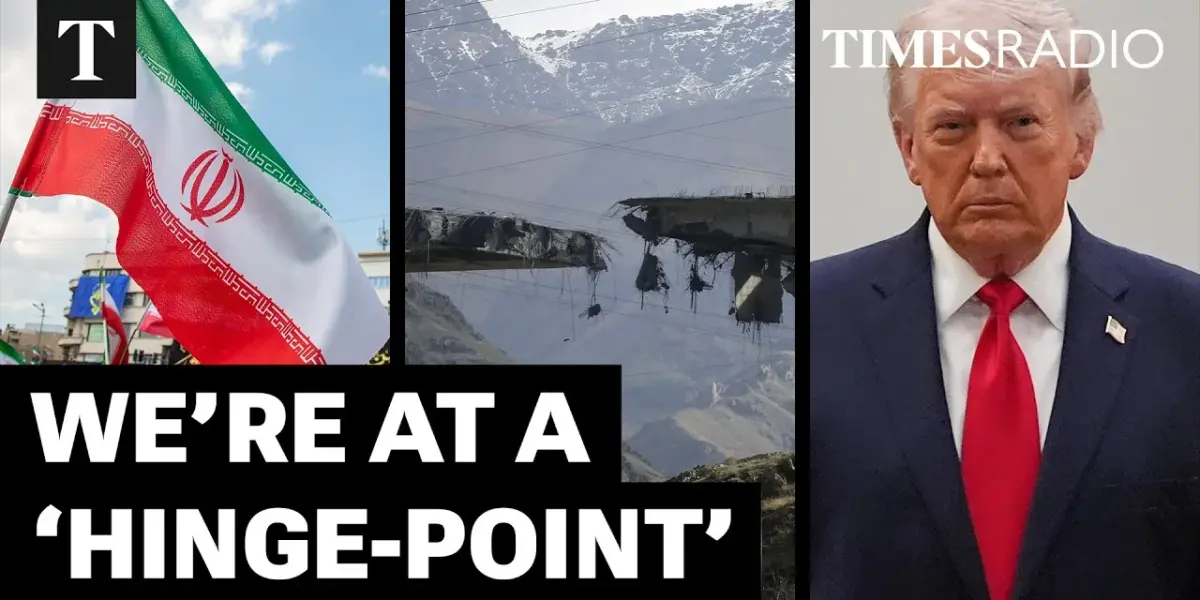
Trump’s Iran War Strategy Uncertain Amidst Pilot Fears
In a critical juncture for Middle Eastern foreign policy, President Donald Trump appears undecided on the future direction of military actions in Iran. With the conflict potentially nearing a two-to-three-week extension, a missing U.S. pilot has become a focal point, carrying the risk of escalating tensions and echoing past foreign policy failures.
A Hinge Point in the Middle East
Foreign affairs analyst Robin Niblett, former director of Chatham House, described the current situation as a “hinge point.” He noted that President Trump himself has not finalized his strategy, despite earlier predictions of a one-to-two-month operation. The U.S. has reportedly hit a significant number of targets, suggesting progress, yet the strategic control of the Strait of Hormuz by Iran remains a major concern.
“The problem is if the Iranian regime survives these last two to three weeks still in essence controlling the straits of Hammuz which they did not explicitly control before this conflict… at least the perception of the end of this intervention will be one that if not they won they definitely knocked the superpower US to a score draw.”
Niblett believes Trump is waiting for a sign of success, a “change in the weather,” to declare victory, but this moment has not yet arrived. This uncertainty is reflected in recent White House activities, including personnel changes and strained relations with European leaders, signaling a period of significant risk.
The Missing Pilot: A Potential Flashpoint
The disappearance of a U.S. pilot inside Iran presents a new layer of complexity. Niblett highlighted the immediate race to locate and secure the pilot, emphasizing the potential propaganda value for Iran if they capture him. This scenario carries echoes of past conflicts, specifically the U.S. pilots captured during the first Gulf War in 1990 and the failed hostage rescue attempt in Iran during the Carter administration.
The outcome hinges on how the pilot is treated and whether he is captured or rescued. A successful rescue could provide Trump with the desired narrative of success. However, capture and potential public display would be a significant blow, risking a humiliating repeat of historical events and potentially driving Trump towards more aggressive military action, including the deployment of ground forces.
“If that pilot were captured, if you were paraded, a lot will depend on how the Iranians play it,” Niblett stated. He added that such a situation could lead to a “groundhog day” scenario, reminding Trump of past perceived failures and influencing his reaction.
Navigating an Off-Ramp: The Iranian Perspective
Niblett suggested that Iran might also be seeking an “off-ramp” to survive the conflict. If they handle the pilot situation in a way that allows for negotiation rather than propaganda, it could lead to a resolution. This could enable Trump to frame the outcome as a success, having secured the pilot’s return and inflicted sufficient damage on Iran.
However, if Iran seeks propaganda value, it would undermine Trump’s need to be perceived as winning, potentially forcing his hand. The situation at the United Nations Security Council, with a potential vote on a resolution allowing member states to use defensive means to ensure passage through the Strait of Hormuz, adds another dimension. While the U.S. might support such a resolution to encourage allies, Russia and China’s reactions are crucial, as they might perceive it as U.S. justification for military action against Iran.
Geopolitical Stakes and Economic Ramifications
The ability to force open the Strait of Hormuz militarily remains questionable, as Niblett pointed out. Even with a UN resolution, the threat of Iranian actions like rocket-propelled grenades or limpet mines could keep the strait effectively closed. This highlights the complex geopolitical landscape, where Russia and China may benefit from continued disruption, given their economic ties with Iran and the U.S. spending on military assets.
China, in particular, has an interest in a stable global economy. Significant disruption to trade routes could harm its major markets in Asia and Europe, creating a divergence of interests between Beijing and Moscow regarding the conflict’s duration. The ongoing military expenditure by the U.S. and the long replenishment times for missile stocks further complicate the strategic calculus.
Looking Ahead
The coming weeks will be critical in determining the trajectory of the Iran conflict. The fate of the missing pilot, the strategic decisions made by the Trump administration, and the responses of international players like Russia and China will all shape the outcome. The potential UN Security Council vote and its implications for freedom of navigation in the Strait of Hormuz will also be closely watched.
Source: President Trump Doesn't Know 'Which Direction' He's Taking The Iran War | Sir Robin Niblett (YouTube)

Related Articles
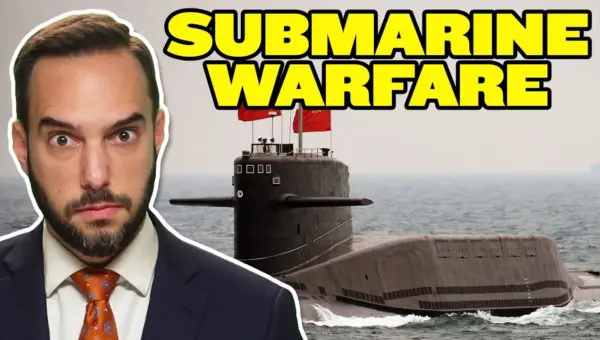
China Maps Seabed, Eyes Hawaii in Naval Power Play
China's extensive seabed mapping in the Pacific, particularly around strategic areas like Guam and Hawaii, is raising concerns about its preparation for submarine warfare. This effort, often disguised as scientific research, aims to enhance China's naval capabilities and challenge US dominance in the region.
Russia Faces Last-Ditch Offensive, Internal Cracks
Russia may be launching a final major offensive in Ukraine as it faces mounting internal pressures. Analysts suggest this push is a last resort before significant manpower and financial issues arise. Meanwhile, increasing domestic information control and official criticism highlight growing cracks within the Russian establishment.
Trump Threatens Iran, Shaking Global Stability
Former President Trump's aggressive Easter Sunday warning to Iran has ignited global concerns, highlighting a volatile intersection of politics, religion, and foreign policy. The analysis explores the motivations behind such rhetoric, the deep divisions within American society, and the potential for severe economic and geopolitical repercussions worldwide.