Trump Weighs Birthright Citizenship; World Order Faces Shifting Sands
The Supreme Court is reviewing birthright citizenship, a decision that could redefine who is considered an American. Meanwhile, the U.S. is reportedly considering its role in NATO, signaling potential shifts in global alliances. These events reflect a broader re-evaluation of long-standing policies and international commitments.

Trump Weighs Birthright Citizenship; World Order Faces Shifting Sands
The Supreme Court recently heard arguments about birthright citizenship, a topic that could significantly change how people born in the United States are viewed. President Donald Trump was present for these important discussions, showing the high stakes involved. This legal battle could impact millions and reshape understandings of citizenship in America.
At the heart of the matter is the interpretation of the 14th Amendment, which states that all persons born or naturalized in the United States are citizens. For years, this has been understood to mean anyone born on U.S. soil automatically receives citizenship. However, some argue this right shouldn’t automatically apply to children of parents who are not U.S. citizens or legal residents. This is a complex legal question with deep historical roots.
Iran Cease-Fire and Pentagon Options
Beyond domestic issues, the international stage also presented significant developments. Reports suggested that Iran was seeking a cease-fire. This comes at a time when President Trump was preparing to deliver a major speech. The White House reportedly discussed military options with the Pentagon to ensure the commander in chief had all necessary information for his address.
The idea of Iran seeking a cease-fire, if accurate, would be a notable development in a region often marked by tension. Such a move could signal a shift in diplomatic or military strategies. The Pentagon’s role in providing military options highlights the administration’s focus on maintaining a strong national defense posture while engaging in complex foreign policy discussions.
NATO’s Future Questioned
Adding to the global picture, questions arose about the United States’ commitment to NATO, the North Atlantic Treaty Organization. These discussions touched upon the very foundation of international alliances that have shaped global security for decades. The alliance, formed after World War II, has been a cornerstone of collective defense for many Western nations.
The potential for the U.S. to reconsider its role in NATO signals a broader re-evaluation of America’s place in the world. Such a shift could have far-reaching consequences for global stability and the relationships between allied nations. It reflects a growing debate about the benefits and costs of long-standing international commitments.
Why This Matters
These events, from the Supreme Court’s consideration of birthright citizenship to shifts in international relations, are not isolated incidents. They represent a period of significant change and re-evaluation. The Supreme Court’s decision could alter the lives of countless families and redefine American identity. On the global front, potential shifts in alliances and approaches to international conflicts could reshape the geopolitical map.
The administration’s actions and statements on these matters suggest a period of assertive policy-making. Whether concerning domestic legal interpretations or international agreements, the focus appears to be on reassessing existing frameworks. This approach invites scrutiny and discussion about the long-term implications for both the United States and the global community.
Historical Context and Future Outlook
The debate over birthright citizenship has echoes throughout American history, often surfacing during times of significant immigration or social change. The 14th Amendment itself was a product of post-Civil War Reconstruction, aiming to secure rights for newly freed slaves. Its interpretation has been tested before, but never quite in the context of modern global migration patterns.
Similarly, NATO’s role has evolved since the Cold War. While it provided a crucial bulwark against Soviet influence, its purpose in a post-Cold War world has been a subject of ongoing debate. Discussions about its future, including the commitment of member states, are natural as the global security landscape changes. The current administration’s questioning of these long-standing structures suggests a desire to forge new paths or redefine existing ones.
Looking ahead, the outcomes of these legal and geopolitical discussions will be critical. A change in birthright citizenship could set a new precedent for who belongs in America. A recalibration of international alliances could lead to a different global power balance. These are not small matters; they are fundamental questions about citizenship, security, and the United States’ role in the world.
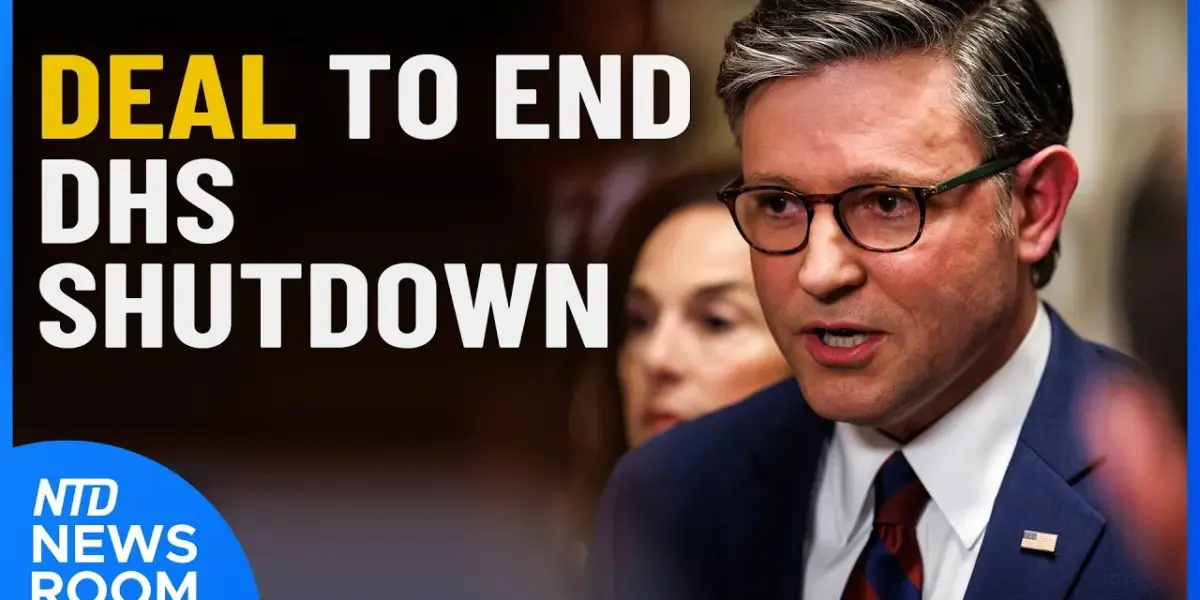
Source: GOP Leaders Announce Deal To End DHS Shutdown; U.S. To Exit NATO? | NTD Newsroom (April 1) (YouTube)

Related Articles


Trump’s Impossible Demands Reshape Justice Department
President Trump's demand for loyalty and action outside legal norms has reshaped the Justice Department. Recent departures, like Pam Bondi's, highlight the difficulty of fulfilling the President's "impossible tasks." The search for a new Attorney General continues amidst concerns about the DOJ's independence.


Trump’s Leadership: A Moral Vacuum for Young Learners?
Young people seek moral guidance from leaders, but what lessons does Donald Trump offer? Some argue his approach teaches negative behaviors like bullying and isolation, contrasting with traits like patience and gratitude seen in others. This raises questions about leadership character and its impact on societal values.


Trump’s Transparency: A Press Secretary’s Bold Claim
President Trump's press secretary, Sarah Huckabee Sanders, claims his public persona is identical to his private one. She states his directness eliminates guesswork, making her job easier by providing clear, unspun messages.