Trump Uses Trade Threats as ‘Play Money’ Against Allies
President Trump's use of trade threats as 'play money' against allies, exemplified by a recent ultimatum to Spain over defense spending, is raising concerns. Experts warn this tactic, while characteristic of Trump's approach, undermines global confidence and can have unintended negative consequences for U.S. businesses and consumers.

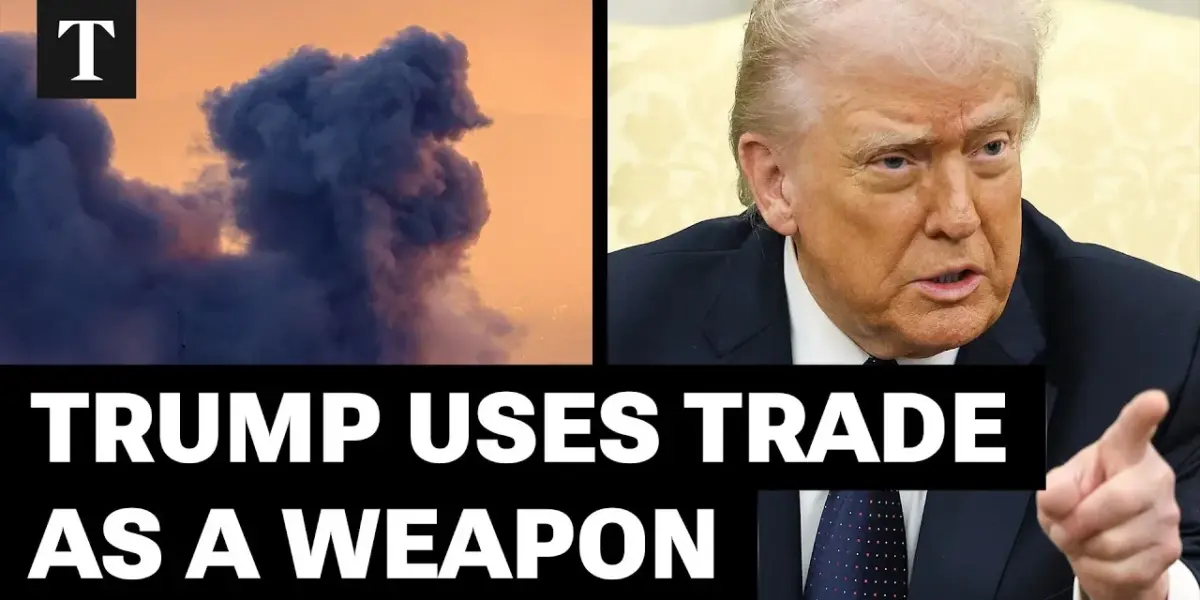
Trump Leverages Trade Threats as Bargaining Tools, Experts Warn
In a striking display of his unconventional foreign policy approach, President Donald Trump has once again employed trade threats as a primary weapon against allies who do not align with his diplomatic or military objectives. This tactic, described by a former senior trade official as using “play money,” was recently exemplified in the administration’s dealings with Spain, raising concerns among international observers about the unpredictable nature of U.S. global engagement.
Spain Faces Trade Cutoff Over NATO Defense Spending Dispute
Following President Trump’s critique of NATO allies’ defense spending, Spain found itself on the receiving end of a direct threat of trade cessation. The President stated that the U.S. would “cut off all trade with Spain” because the country had not met NATO’s defense spending target of 5% of GDP, and in fact, aimed to keep its contribution at 2%. Trump asserted that Spain “has absolutely nothing that we need, other than great people,” but criticized its leadership for not increasing its defense contributions, implying this unfriendliness led to the U.S. being denied access to Spanish bases.
“We’re going to cut off all trade with Spain. We don’t want anything to do with Spain,” Trump declared, a statement that prompted immediate analysis from international trade experts.
Trade as a ‘Weapon of Choice’: Expert Analysis
Harry Broadman, a former U.S. Assistant Trade Representative and Chief of Staff of the President’s Council of Economic Advisers under both George H.W. Bush and Bill Clinton, characterized Trump’s approach as typical, albeit alarming.
“Welcome to our world. By our, I mean the entire world’s world. I mean, this is part for the course with Mr. Trump. You know, he’s obviously obsessed with trade as the weapon of choice.”
Broadman elaborated on the President’s understanding of trade, suggesting a fundamental disconnect between Trump’s perception and economic reality.
“He doesn’t understand how trade works. He doesn’t understand pricing of goods and services that cross international borders. And so tariffs to him are just sort of like poker chips and sort of play money. But of course, they have real impacts, not the least of which on the U.S. economic fortunes.”
Unintended Consequences for U.S. Businesses and Consumers
Broadman highlighted a critical oversight in Trump’s trade strategy: the burden often falls on domestic businesses and consumers.
“He believes that it’s the exporters who are paying,” Broadman explained. “And you know, we can look at the recent data about who is paying what when it comes to tariffs. And, you know, the Supreme Court that ruled against his choice of law to put these tariffs on, I think frankly, reading between the lines, made a mockery of his judgment not only on how trade works but obviously getting very poor advice by his Treasury Secretary and his U.S. Trade Representative, which is really quite alarming.”
The implication is that U.S. companies importing goods from targeted nations, and American consumers seeking those products, would ultimately bear the cost of retaliatory tariffs, rather than foreign entities as the President often suggests.
The ‘Boy Who Cried Wolf’ Tactic
The unpredictable nature of Trump’s threats has led to skepticism among global leaders. Broadman likened the situation to Aesop’s fable, the boy who cried wolf.
“When Mr. Trump keeps crying wolf, and then when it’s time to have him, in the wolf’s cloak, come out and attack, he says, ‘Forget it, I didn’t mean it that way.’ So now, I think most rational people around the world really should not take him at his word. And I’m surprised that other leaders, they are obviously very mature adults, almost to a tea around the world, but you know, they really should not be taking him seriously.”
This pattern of issuing strong threats and then seemingly backing down, as seen in the Greenland acquisition attempt, has created an environment where allies may no longer take U.S. pronouncements at face value, potentially eroding diplomatic leverage.
Broader Economic Implications of Global Instability
Beyond specific trade disputes, Broadman discussed the wider economic ramifications of geopolitical instability, particularly in the context of potential conflict in Iran.
“It’s clearly going to soften the economy and it’s going to engender inflation because of the price of oil going up,” he stated. While the U.S. dollar might strengthen due to its relative stability, and the U.S. economy might be somewhat insulated, the erosion of global confidence is a significant concern.
“This is eroding confidence in the globe and U.S. economic leadership,” Broadman warned. “And I think people are just counting the hours and the days and the years when he’s no longer in the White House. We can get back to more sensible issues. But in the meantime, there’s going to be inflation. There’s going to be a lot of pressures on the U.S. as well as the world economy.”
Looking Ahead
As the Trump administration continues to navigate complex international relations through aggressive trade tactics, the long-term consequences for U.S. credibility and economic stability remain a critical point of observation. The global community will be watching closely to see if these confrontational strategies yield desired outcomes or further alienate allies and disrupt global markets.
Source: Trump Uses Trade Threats Like ‘Play Money’ Against Allies Who Refuse To Join Iran Conflict (YouTube)

Related Articles
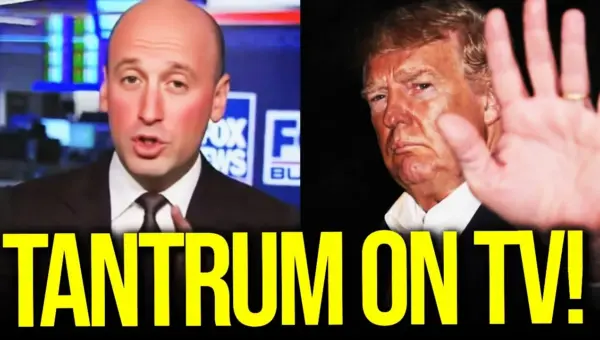
Miller’s War Rhetoric Echoes Bush, Alienates Americans
Stephen Miller's return to hawkish rhetoric, echoing George W. Bush's "with us or with the terrorists" line, is met with public weariness, not support. The analysis critiques the lack of a coherent plan, the reliance on historical grievances, and the human cost of escalating military actions, suggesting a betrayal of Trump's anti-war promises.
Trump Admin Lacks Post-War Iran Strategy Amid Escalating Conflict
The U.S. war against Iran has escalated dramatically, drawing in NATO and expanding deep into Iranian territory. However, the Trump administration has offered no clear post-war strategy, leaving experts questioning the long-term objectives and potential consequences of the deepening conflict.
Iran Missile Near NATO Airspace Triggers Alliance Scrutiny
A ballistic missile launched from Iran, intercepted near Turkish airspace, has drawn NATO into heightened scrutiny. The incident prompts discussions around Article 4 and potentially Article 5 of the NATO treaty, signaling a critical escalation in regional tensions with significant geopolitical and market implications.