Trump Unveils Ambitious ‘Board of Peace’ Initiative for Gaza Reconstruction, Invites Russia and China to Join
Trump has launched the 'Board of Peace' initiative to oversee Gaza's reconstruction, with plans to invite Russia and China to join the coalition. The ambitious project promises $10 billion in funding and envisions everything from immediate humanitarian aid to futuristic infrastructure projects, while raising questions about its relationship with the UN.

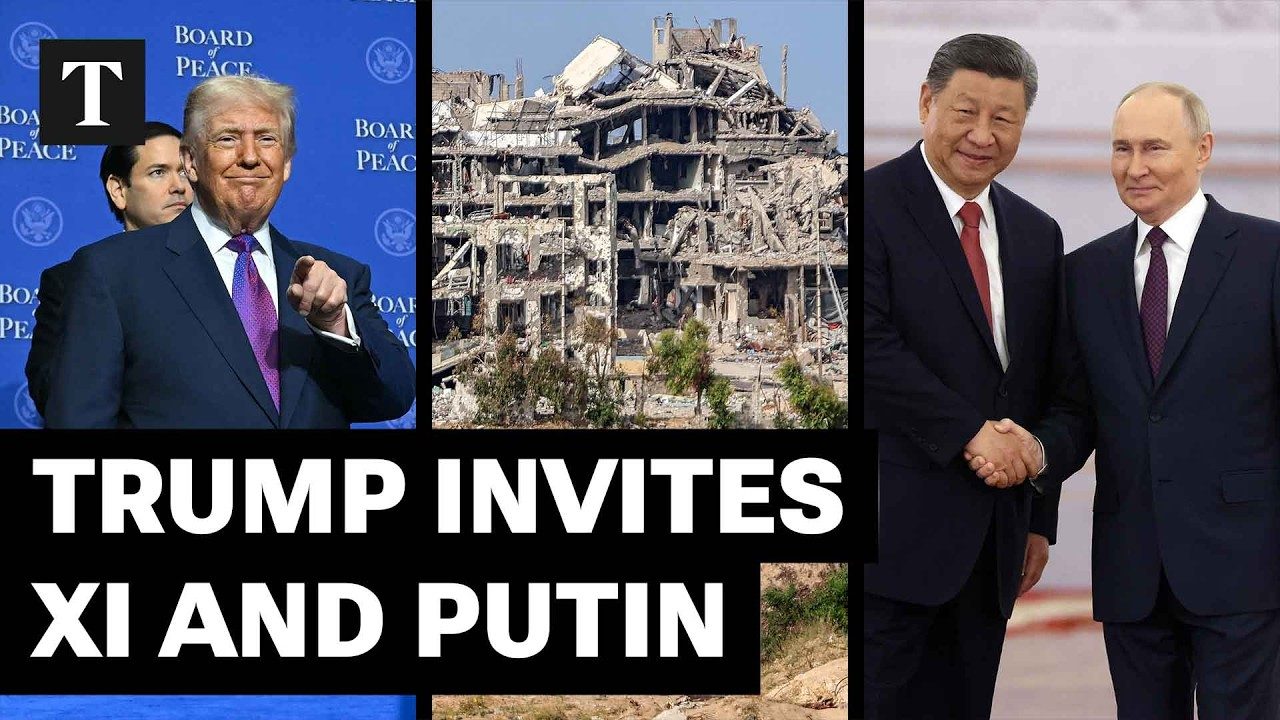
Former President Donald Trump has launched an ambitious new international initiative called the ‘Board of Peace’ aimed at overseeing Gaza’s reconstruction and humanitarian recovery, with plans to invite both Russia and China to participate in the unprecedented coalition.
A New Approach to Gaza Reconstruction
The Board of Peace represents Trump’s attempt to create an alternative framework for addressing Gaza’s post-conflict reconstruction, potentially challenging the traditional role of the United Nations in such endeavors. Trump has positioned himself as the permanent chairman of this body, indicating his intention to maintain leadership regardless of his presidential term status.
The initiative’s first meeting brought together a diverse group of nations, primarily those that have maintained friendly relations with the Trump administration. Countries represented included Hungary, Argentina, Italy, and several wealthy Gulf monarchies. Notably absent were major European powers, raising questions about the initiative’s broader international legitimacy.
Scope and Vision: From Practical to Ambitious
The Board of Peace meeting revealed a wide spectrum of proposed projects for Gaza’s future. On the practical side, discussions focused on immediate humanitarian needs including upgrading communication systems, rebuilding hospitals, and ensuring food distribution to the population. These bread-and-butter issues reflect the urgent realities facing Gaza’s residents.
However, the initiative also presented more ambitious visions for Gaza’s long-term future. Among the most striking proposals was a dramatically produced AI video presentation by FIFA showcasing plans for multiple football stadiums throughout the territory. The vision extended to creating what organizers termed a ‘Gaza Riviera,’ suggesting a transformation of the war-torn region into a coastal destination.
International Participation and Notable Absences
While the initial meeting included countries known for their ability to move quickly through political processes, the absence of major European powers highlighted potential diplomatic challenges. The participating nations were characterized as having political systems that could rapidly approve participation without extensive legislative processes.
Trump’s announcement that he wants both China and Russia to join the Board of Peace represents a significant diplomatic gambit. This ecumenical approach to including major global powers, regardless of their current relationships with the United States, suggests an attempt to create a truly international consensus on Gaza’s future.
Israeli and Palestinian Perspectives
Israeli representatives attended the meeting with a clear priority: ensuring that the ideology that led to Hamas does not resurface in Gaza. This position appeared somewhat at odds with other messages presented during the meeting, highlighting the complex political dynamics at play.
Palestinian representation came through what was described as a ‘technocratic’ body theoretically positioned to take over Gaza’s governance. However, many fundamental questions remain unresolved, including the structure of Gaza’s future governance, the role of police forces, Hamas’s future involvement, and the composition of any international stabilization force.
Financial Commitments and Funding Questions
The Trump administration has pledged $10 billion to the Board of Peace initiative, though significant questions remain about the source and authorization of these funds. Congressional approval would likely be required for such expenditures, and it’s unclear whether the administration plans to redirect existing funds or seek new appropriations.
Other participating countries have also committed financial resources and, in some cases, military personnel for an international stabilization force, though specific details about these commitments remain limited.
Relationship with the United Nations
The Board of Peace initiative raises important questions about its relationship with existing international organizations, particularly the United Nations. Critics worry about potential duplication of efforts, conflicting governance structures, and resource diversion from established UN programs.
However, Trump has indicated a more complex relationship with the UN than his previous positions might suggest. He has discussed plans for significant UN reform, including increased US financial contributions and even physical renovation of the UN building in New York. This represents a notable shift from his earlier skeptical stance toward multilateral organizations.
Challenges and Skepticism
The initiative faces several significant challenges. The absence of broad European participation raises questions about international legitimacy and support. The dramatic contrast between Gaza’s current devastated state and the ambitious long-term visions presented has led some observers to question the realistic nature of certain proposals.
The AI-generated videos showing transformed Gaza landscapes with modern infrastructure and sports facilities stand in stark contrast to the immediate humanitarian needs of the population, leading to questions about prioritization and feasibility.
Looking Forward
The Board of Peace represents an unprecedented approach to post-conflict reconstruction, attempting to bypass traditional multilateral frameworks in favor of a more flexible, rapid-response model. Its success will likely depend on several factors: sustained international support, effective coordination with existing organizations, realistic project implementation, and genuine buy-in from both Israeli and Palestinian stakeholders.
The inclusion of major powers like Russia and China, if realized, could provide the initiative with significant resources and global reach. However, it also introduces complex geopolitical dynamics that could complicate decision-making and implementation.
As Gaza continues to face immediate humanitarian challenges, the Board of Peace initiative represents both an opportunity for innovative international cooperation and a test of whether alternative frameworks can effectively complement or replace traditional multilateral approaches to conflict resolution and reconstruction.
Source: Trump Pushes For Russia And China To Join The Board Of Peace To Help Decide Gaza's Future (YouTube)

Related Articles


Trump’s ‘Board of Peace’ Meeting Sparks Fiscal and Ethical Outcry, Draws Condemnation for Hamas Remarks
Former President Donald Trump's inaugural 'Board of Peace' meeting has ignited a firestorm of controversy, marked by his demand for $10 billion in taxpayer money for an unofficial entity and a stunning commendation for Hamas regarding the return of hostage bodies. Critics immediately raised concerns about fiscal transparency, potential self-enrichment, and the profound ethical implications of praising a designated terrorist organization.


Billion-Dollar Ultimatum: Canada and Mexico Reject Controversial ‘Board of Peace’ Proposal
A controversial 'Board of Peace' proposal, demanding a $1 billion fee for permanent membership and reportedly chaired by Donald Trump for life, has been rejected by Canada and Mexico. Critics view the initiative as a 'pay-to-play' scheme that undermines traditional diplomacy and raises concerns about U.S. foreign policy, particularly its implications for North American relations and the reconstruction of Gaza.
Trump’s ‘Board of Peace’ Initiative Faces Scrutiny as Iran War Tensions Escalate
Donald Trump's newly announced 'Board of Peace' has drawn criticism as a potential vanity project amid escalating military tensions with Iran. Expert analysis suggests the initiative may prioritize profit over Palestinian welfare while diplomatic relations hang in the balance.