Trump to Address Nation on Iran: Exit, Escalation or Both?
President Trump is set to address the nation on the Iran situation, with potential announcements ranging from a swift military withdrawal to further escalation. His recent statements suggest a desire to leave the region within weeks, while also shifting responsibility for the Strait of Hormuz to allies. Analysts express concern over the mixed signals and the potential consequences for global stability and the economy.

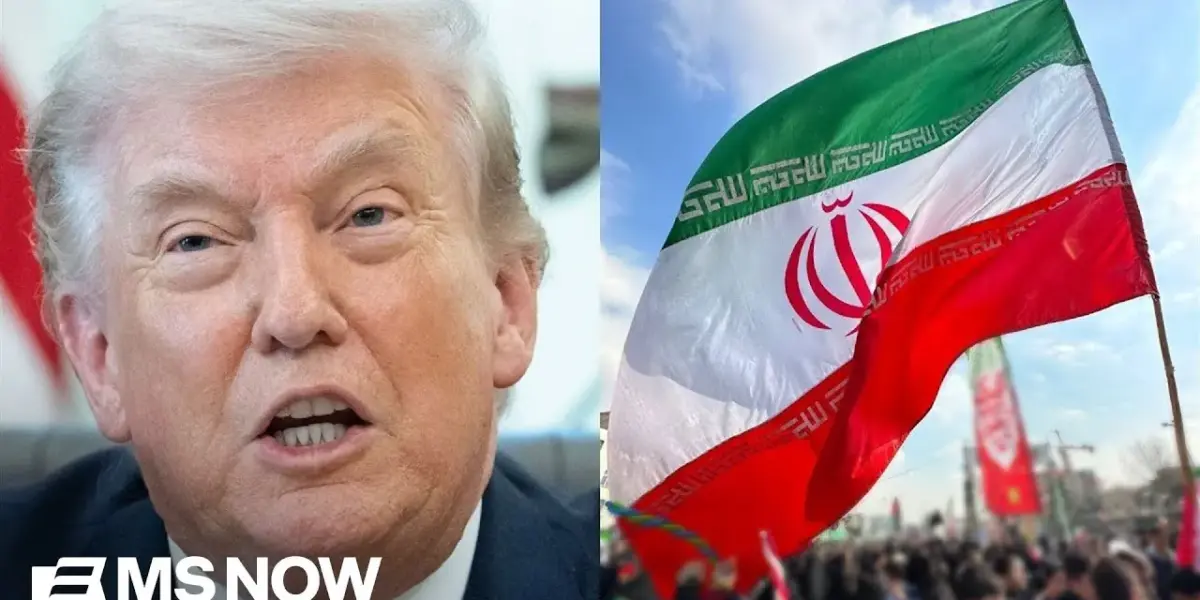
Trump to Address Nation on Iran: Exit, Escalation or Both?
President Trump is set to deliver an important update to the nation on Wednesday concerning the ongoing situation in Iran. The White House has described the address as a critical update, signaling a potential shift in U.S. policy and military involvement in the region. This comes as the President yesterday provided a new timeline for when the United States military offensive there may wind down.
Mixed Signals on Withdrawal and Future Actions
Speaking to reporters in the Oval Office, President Trump stated that U.S. forces could leave Iran in two to three weeks, with or without a deal. He reiterated his claim that regime change has been achieved, though details were not provided. The President also asserted that his goal of dealing with Iran’s nuclear program has been met. However, conflicting signals suggest that a complete withdrawal may not be the only outcome. More military assets are arriving in the region, with the potential for a ground operation being discussed. This could involve actions in areas like Carg Island or searching for uranium, for which the necessary assets are now in place.
Shifting Responsibility to Allies
President Trump also placed responsibility on U.S. allies to manage the Strait of Hormuz, which has been a focal point of recent tensions. He suggested that if other countries, such as France or China, wish to transport oil and gas through the vital waterway, they should manage its security. “I think that the people understand it, we’ll be leaving very soon,” Trump said. “And if France or some other country wants to get oil or gas, they’ll go up through the Strait of Hormuz. They’ll go right up.” He added that any threats to ships passing through could be handled by those nations, rather than the U.S.
Expert Concerns Over Unstable Strategy
This approach has drawn significant criticism from foreign policy experts. Suzanne Maloney, a senior fellow at the Brookings Institution, described the idea of walking away from the Strait of Hormuz as “unbelievably irresponsible.” The strategy appears to be a combination of continued military force, operations to target remaining sites in Iran, and a push for direct negotiations. However, the evidence for genuine direct talks remains unclear. The President’s declarations of victory, including achieved regime change and resolved nuclear program issues, are viewed with skepticism by many analysts. The potential consequence of leaving the Strait of Hormuz closed is seen as a defeat for the United States, potentially impacting the global economy.
“The rest of the world does need to step up and take responsibility. But the idea that that’s for you to worry about that the United States started a war that led to the closure of the Strait of Hormuz and then we walk away and say that’s your problem France and China not not ours but that will that will rub people the wrong way.”
Iran’s Resilience and Future Hardliners
The conflict has also highlighted Iran’s resilience and preparedness. Some analysts suggest Iran has planned for this scenario, spreading its assets and understanding the potential for conflict. The war’s outcome, in this view, is that Iran survived the initial U.S. offensive and may emerge with even tougher, more hardline leadership. Figures like Mohammed Bakr Kalibaf, who has a long history with the Revolutionary Guard, are seen as potential successors, suggesting that the prospect of a future with reformers may not align with reality.
Market Reactions and Economic Implications
Financial markets have reacted positively to the prospect of an end to hostilities, as the conflict has been painful for the global economy. However, the ongoing uncertainty and the potential for Iran to control the Strait of Hormuz could still impact oil prices. While the immediate effect on consumers might be minimal, the ability for Iran to control this vital shipping lane raises concerns about global energy stability. The Wall Street Journal editorial board has argued that it is too dangerous to leave the straits unsecured after initiating the conflict, citing risks to the world economy.
Uncertainty and Potential for Escalation
The President’s address is seen by some as an attempt to explain the U.S. involvement to the American people and allies, particularly if the case for the war was not clearly made earlier. It is possible that Trump will announce a partial withdrawal, an escalation, or even both. Despite claims that the war is nearing its end, military assets continue to arrive in the region. The possibility of a ground operation remains, which would represent a significant market escalation. Conversely, if the U.S. withdraws and the Strait of Hormuz remains closed, it could be viewed as a defeat, maintaining economic pressure on Iran.
Looking Ahead
The coming days will reveal the true direction of U.S. policy in Iran. Whether President Trump announces a decisive withdrawal, a strategic escalation, or a combination of both, the implications for regional stability and the global economy will be significant. The world will be watching closely to see how the U.S. navigates this complex situation and what the long-term consequences will be for international relations and energy markets.
Source: Withdrawal, escalation or both? What Trump could announce during Wednesday address (YouTube)

Related Articles
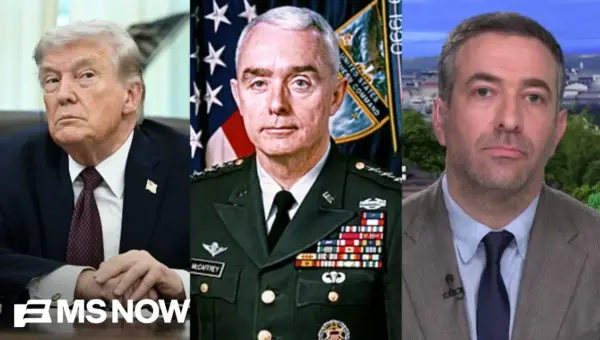
Trump’s War Costs Soar as F-15 Downed Over Iran
An F-15 fighter jet was shot down over Iran, prompting a search for a missing crew member, while a second U.S. plane crashed and its pilot was rescued. The incidents contradict earlier U.S. intelligence claims about Iran's weak air defenses, as war costs are projected to exceed $1.5 trillion. Experts question the strategic planning and execution of the conflict initiated by President Trump.


Iran Claims Air Combat Victory, Risks Pilot’s Capture
Iran claims to have downed U.S. aircraft, using the event for propaganda. An exiled prince's aide warns of grim fates for any captured U.S. airman, citing the regime's hostility and disregard for international law. He highlights widespread Iranian discontent, suggesting citizens may help, not betray, a captured pilot.
US Jet Downed Near Iran; Pentagon Eyes $1.5 Trillion Budget
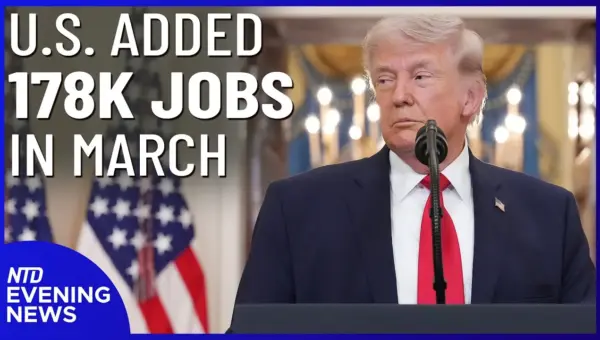
A U.S. fighter jet was downed near Iran, leading to search efforts and strong presidential warnings. Meanwhile, the Pentagon is proposing a historic $1.5 trillion defense budget for 2027. The U.S. economy showed strength with a robust March jobs report, but a DHS shutdown continues.