Trump Threatens Iran: US Troops Stay, War Could Reignite
President Trump has warned Iran that U.S. forces will remain near the country until a "real agreement" is reached, threatening severe military action if terms are not met. A fragile two-week ceasefire is being tested by ongoing regional incidents and stalled negotiations.

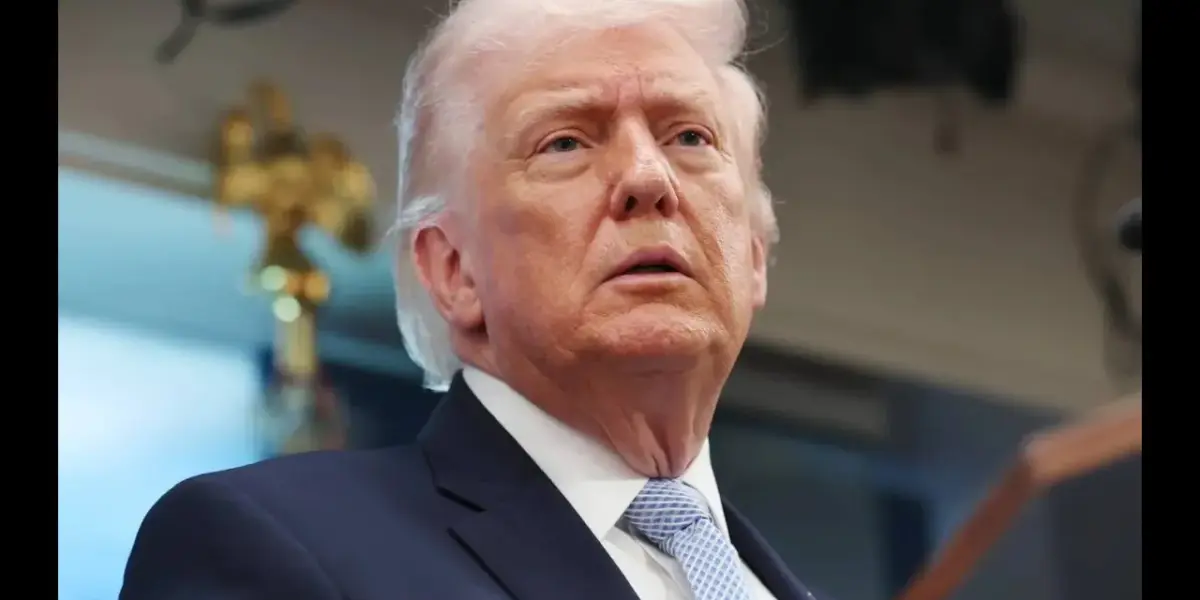
Trump Threatens Iran: US Troops Stay, War Could Reignite
President Trump has issued a stern warning to Iran, stating that U.S. forces will remain in and around the country until a “real agreement” is reached. This move comes as a two-week ceasefire is being tested, with ongoing talks and lingering tensions in the region.
U.S. Military Ready for Action
In a post on Truth Social, President Trump declared that all U.S. ships, aircraft, and military personnel would stay in place. They will be equipped with necessary ammunition and weaponry, ready for the “lethal prosecution and destruction of Iran.” He emphasized that these forces would remain until a comprehensive agreement is fully met. The President also warned that if the agreement isn’t honored, any conflict would be far larger and more intense than anything seen before.
This strong stance was echoed by War Secretary Pete Hex. He also warned Iran that the U.S. military would be present in the region during the current two-week truce. “We’re going to make sure Iran complies with this ceasefire and then ultimately comes to the table and makes a deal,” Hex stated. He added that troops are prepared to defend, go on the offense, and restart operations at a moment’s notice if needed.
Ceasefire Under Pressure
The two-week truce, announced by President Trump, is facing significant challenges. Reports indicate that Iran has continued to fire at Gulf states. Meanwhile, Israel has also carried out strikes in Lebanon. Traffic in the crucial Strait of Hormuz remains largely stalled, despite the ceasefire.
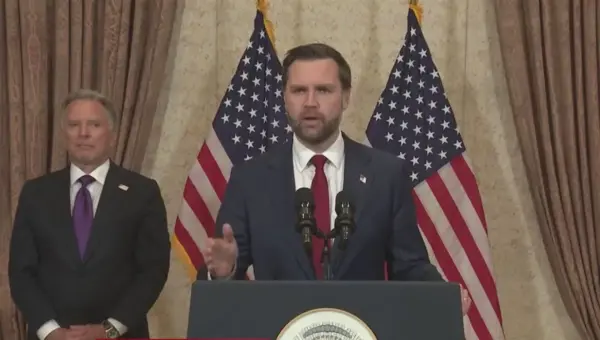
Vice President JD Vance suggested there might be a misunderstanding on Iran’s part. He believes Iran may mistakenly think Lebanon is included in the U.S.-Iran peace proposal. Vance clarified that the focus is strictly between the U.S. and Iran. However, he also warned Iran that if the Strait of Hormuz is not reopened as promised, the U.S. will continue its strikes.
“The deal is a ceasefire, a negotiation. That’s what we give. And what they give is the straits are going to be reopened. If we don’t see that happening, the president is not going to abide by our terms if the Iranians are not abiding by their terms.”
Diplomatic Efforts Underway
Despite the show of military force, diplomatic efforts are also in motion. Vice President Vance, who has reportedly expressed some reservations about conflict with Iran compared to other cabinet members, is now taking a central role in negotiations. He is scheduled to travel to Pakistan with Jared Kushner and special envoy Steve Wickoff for in-person talks with Iran during this critical period.
Media Critiqued, Private Talks Emphasized
President Trump has sharply criticized media outlets like the New York Times and CNN. He called a reported 10-point plan for Iran negotiations “fake” and a “hoax” intended to discredit those involved in the peace process. The White House pushed back against such reports, suggesting Iran has been feeding false information to the press.
According to the White House, what Iran says publicly differs greatly from its private communications with the U.S. government. “Never underestimate President Trump’s ability to successfully advance America’s interests and broker peace,” stated White House Press Secretary. “President Trump has a proven track record of achieving good deals on behalf of the United States and the American people, and he will only accept one that puts America first.”
The White House insists that the peace proposal guiding current negotiations is more reasonable than the 10-point plan that circulated in the media. President Trump has a busy schedule at the White House, with policy meetings planned throughout the afternoon.
Why This Matters
This situation highlights the delicate balance between military deterrence and diplomatic engagement in international relations. President Trump’s strategy appears to be one of strong pressure, using the threat of military action to force Iran to the negotiating table. The presence of U.S. forces near Iran serves as a constant reminder of the potential consequences of non-compliance.
The effectiveness of this approach is debatable. While it might pressure Iran, it also risks escalating tensions and miscalculation, especially with a fragile ceasefire in place. The involvement of Vice President Vance in direct negotiations suggests a potential shift towards more direct dialogue, even as the military posture remains firm.
Implications and Future Outlook
The ongoing standoff could have significant implications for regional stability and global energy markets, particularly concerning the Strait of Hormuz. Any breakdown in the ceasefire or escalation of conflict could disrupt vital shipping routes and lead to increased oil prices.
The future outlook depends heavily on whether Iran chooses to engage constructively in the private talks or continues actions that undermine the ceasefire. The U.S. administration’s commitment to a “real agreement” suggests a desire for a lasting solution, but the path forward remains uncertain. The focus on private communication over public statements from Iran indicates a strategy to manage information and potentially avoid further inflaming tensions through media leaks.
Historical Context
Tensions between the U.S. and Iran have a long history, marked by periods of confrontation and attempts at diplomatic resolution. Past agreements, like the Joint Comprehensive Plan of Action (JCPOA), have been contentious and subject to change with different administrations. This current situation is part of a broader, complex relationship characterized by mutual distrust and strategic maneuvering.
The use of military presence as a negotiating tool is not new in international diplomacy. However, the specific language used by President Trump, emphasizing “lethal prosecution and destruction,” signals a particularly aggressive posture. The involvement of figures like Jared Kushner in these negotiations also points to a less conventional, perhaps more personalized, approach to foreign policy.
Source: Trump Says US Forces to Stay Near Iran, Ready for Next Move (YouTube)

Related Articles


Trump Accused of War Crimes Amidst Failed Iran Talks
Former President Donald Trump faces accusations of war crimes following the collapse of talks with Iran. Legal experts argue his actions violated international law and ignored allies' calls for a ceasefire, raising serious questions about accountability.
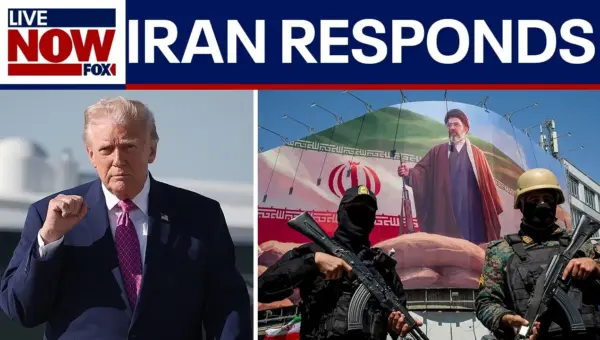
Iran Warns Trump Over Hormuz Strait Blockade Threat
Iran has issued a stern warning against any U.S. military vessels attempting to blockade the Strait of Hormuz, calling it a violation of a ceasefire. The U.S. blockade aims to cut off Iran's oil revenue, impacting both Iran and China. The situation is at a critical juncture, with potential for further escalation.
Iran Talks Collapse: US Blocks Strait, Escalates Tensions
Peace talks between the U.S. and Iran have collapsed over Iran's nuclear ambitions. In response, the U.S. Navy has initiated a blockade of the Strait of Hormuz, escalating tensions and threatening global oil supplies. This move follows Iran's refusal to meet key American demands.