Trump Threatens Iran: Strait of Hormuz Deadline Looms
President Trump issued a stark warning to Iran, demanding the reopening of the Strait of Hormuz by Tuesday or face military action against its infrastructure. In parallel, a daring U.S. military operation successfully rescued a downed airman from Iran. Meanwhile, OPEC plus agreed to boost oil production, though its impact depends on the Strait's status, and regional tensions escalated with an Israeli strike on an Iranian facility.

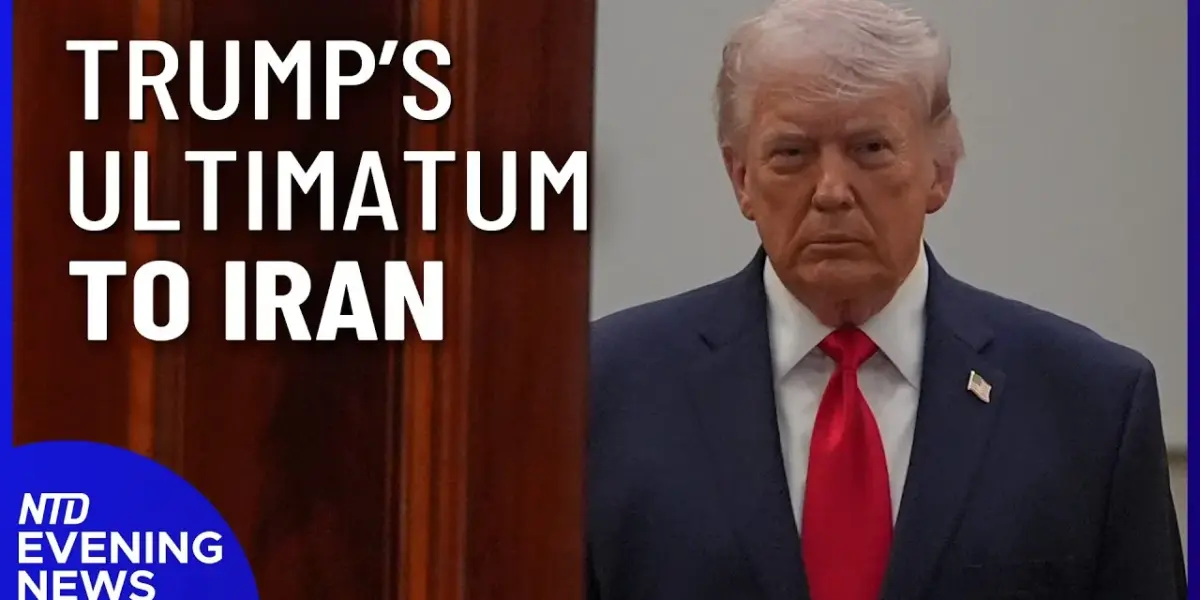
Trump Issues Stark Warning to Iran Over Strait of Hormuz
President Trump has delivered a forceful ultimatum to Iran, demanding the reopening of the Strait of Hormuz by Tuesday or face significant consequences. In a series of posts on Truth Social, the President declared that Tuesday would be “power plant day and bridge day” in Iran if his demands were not met. This warning comes as Iran has been obstructing a key global shipping route, raising serious concerns about international energy supplies and the potential for widespread disruption.
The Strait of Hormuz is a critical waterway, vital for the transport of roughly one-fifth of the world’s oil and natural gas. Its blockage in recent weeks has already sent ripples of anxiety through global markets. President Trump has previously mentioned a 48-hour window for Iran to act, emphasizing the urgency of the situation. The White House has not yet provided an immediate comment on the President’s specific timeline or threats.
Dramatic Rescue Operation for Downed US Airman
In a separate but related development, a daring rescue mission successfully extracted a second U.S. airman whose fighter jet crashed in Iran. The operation unfolded after the aircraft was shot down, with the airman evading capture for over a day. President Trump celebrated the success, stating, “We got him.” He highlighted the bravery of the airman, who was behind enemy lines in treacherous terrain while being pursued by Iranian forces.
The rescue involved extensive U.S. military and intelligence efforts, with leadership closely monitoring the airman’s location and planning meticulously. The airman, injured after ejecting from the damaged F-15E jet, used survival training to hide in the mountains and evade pursuers. Sporadic emergency signals helped guide U.S. forces to his location. A complex deception campaign by the CIA was also employed to keep Iranian forces unsure of the airman’s status.
Challenges and Risks of a Hostile Territory Rescue
Steve Nisp, a retired Air Force pararescue (PJ) veteran, explained the extreme difficulty of such operations. He noted that executing a rescue within hostile territory like Iran carries immense risks. These include threats from surface-to-air missiles, anti-aircraft artillery, and small arms fire as rescue teams approach the target area.
Nisp also highlighted the critical danger of a “SAR trap,” where an enemy might use deceptive signals to lure rescue forces into an ambush. The operation to rescue the second airman was particularly complex, requiring a specialized special operations force designed for high-value target assaults and hostage rescues. This force had to be quickly assembled and deployed.
The Resilience of the Downed Airman
The survival of the airman for over 48 hours behind enemy lines speaks volumes about his mental and physical fortitude. All pilots undergo extensive Survival, Evasion, Resistance, and Escape (SERE) training, equipping them with crucial survival tactics. The first 24 hours are critical for rapid response, but the subsequent 48 hours demand strategic evasion, moving away from populated areas and known routes into the most challenging, inconvenient places.
The airman’s climb to a 7,000-foot mountain ridge and the use of rope rescue systems demonstrate the extreme measures taken. Nisp emphasized the psychological pressure of being the “most wanted man on the planet” during that period, requiring the airman to blend in and find effective hiding places. This successful rescue underscores the U.S. military’s capability, prowess, and unwavering resolve to leave no American behind.
OPEC Plus Agrees to Boost Oil Production
In parallel with the geopolitical tensions, members of the OPEC plus alliance have agreed to increase oil production for the upcoming month. However, the actual impact of this decision hinges on the evolving situation in the Strait of Hormuz. The group aims to signal readiness to raise output once the critical shipping lane is reopened.
Eight countries, including Saudi Arabia, Russia, and Iraq, committed to raising their collective output by 206,000 barrels per day. This would bring their total production to 33.7 million barrels per day. Despite this agreement, the ongoing disruption in the Strait of Hormuz, which chokes off about one-fifth of the world’s oil supply, continues to fuel market volatility.
Middle East Tensions Escalate: Israel Strikes Iranian Facility
The conflict in the Middle East has intensified, with Israel announcing it struck an Iranian energy facility linked to Iran’s military and nuclear programs. This action follows President Trump’s warning regarding the Strait of Hormuz. In response, Iran reportedly launched strikes on energy sites in Bahrain and Abu Dhabi, and also hit an Israeli-linked vessel in the Strait of Hormuz, setting it ablaze.
Heavy black smoke was observed rising over Iran’s southwestern industrial zone, with state media reporting five injuries before a fire was extinguished. Israeli Prime Minister Benjamin Netanyahu confirmed Israel’s involvement, stating the targeted facility produced materials for explosive devices and missiles. Israel has indicated it is preparing for further strikes on Iranian energy facilities as early as the following week.
Regional Spillover and Diplomatic Complexities
The violence is spreading across the region, with exchanges of fire now affecting neighboring countries. In northern Israel, an apartment building was hit by an Iranian missile, causing injuries. This escalation raises fears of a wider conflict. Iran has vowed to maintain control over the Strait of Hormuz even after hostilities cease, a statement that Gerard Fility, an analyst for Middle East affairs, described as a “huge concern.”
Fility explained that if the Strait is only open on Iranian terms, it could funnel revenue to the Iranian regime, prolonging conflict. He suggested that the U.S. and allied nations must ensure the waterway remains open to international traffic. Options include military action, such as strategic bombing of Iranian assets, or a diplomatic resolution that includes Iran agreeing to keep the strait open as part of a peace deal.
Transnational Repression Targets Shen Yun Performances in Toronto
In Canada, artistic freedom is facing challenges as Shen Yun Performing Arts had six performances cancelled in Toronto due to fake bomb threats. These threats have been linked to the Chinese Communist Party (CCP) as part of a campaign of transnational repression aimed at silencing criticism of human rights abuses in China.
The Four Seasons Centre for the Performing Arts cancelled the shows after receiving the threats, which police later deemed unfounded. Canadian lawmakers, including Garnett Jennis and Judy Zro, have condemned the actions, calling them deeply alarming and a form of foreign interference. Shen Yun performances often highlight China before communism and expose ongoing human rights violations.
Escalating Threats and Audience Disappointment
Over the past two years, Shen Yun has faced more than 150 similar threats globally, with no actual explosives ever found. Investigations have traced some threats to actors linked to the CCP, including in China and the United States. The U.S. State Department has also condemned the intimidation tactics targeting the company.
The cancellation in Toronto left many audience members deeply disappointed and frustrated, with some traveling long distances and incurring significant costs. Performers with Shen Yun have shared personal stories of persecution by the CCP, including family members imprisoned for their faith and constant surveillance. The incidents raise serious questions about freedom of expression and the reach of foreign influence in democratic societies.
New York City Grapples with Gun Violence
New York City is mourning the tragic death of a seven-month-old baby, Caori Patterson Moore, who was killed by a stray bullet during a suspected gang-related shooting. Community leaders and activists held a vigil to honor the infant and call for an end to violence.
The incident occurred when two men on a moped fired shots at a group on the street. The baby, who was in a stroller, was struck by a stray bullet. The suspects fled the scene but crashed their moped, leading to the arrest of the suspected shooter, 21-year-old Amuri Green, who has pleaded not guilty. An 18-year-old, Matthew Rodriguez, was also apprehended. Community members expressed a strong desire for gun violence to cease, highlighting a lack of respect among young people and a need for accountability.
President Trump Visits Arlington National Cemetery
President Trump made an unannounced visit to Arlington National Cemetery on Easter morning. His motorcade drove through an area being considered for a new national monument, potentially a large commemorative arch standing around 250 feet tall. The administration suggested this structure could be completed in time for the nation’s 250th anniversary celebration.
Arlington National Cemetery serves as the final resting place for over 300,000 service members, veterans, and their families, representing a significant national memorial. The visit underscored the President’s connection to military heritage and remembrance.
Source: NTD Evening News Full Broadcast (April 5) (YouTube)

Related Articles
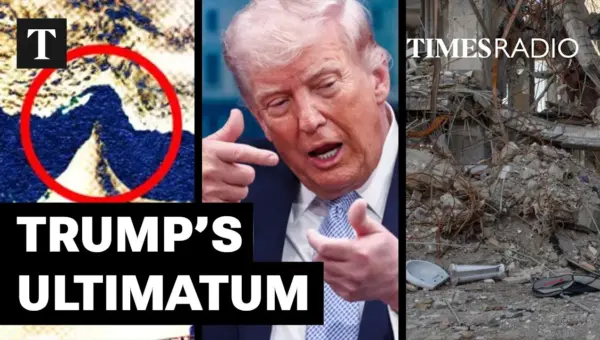
Trump Threatens Iran’s Infrastructure in Hormuz Standoff
President Trump has threatened to cripple Iran's infrastructure, including bridges and its power grid, if it continues to harass shipping in the Strait of Hormuz. Former Congressman Bob McEwen explained this strategy aims to force Iran to negotiate by severely damaging its operational capacity. The discussion also addressed the potential for such actions to be considered war crimes, with McEwen distinguishing between infrastructure attacks and the targeting of civilians.
Trump’s Rhetoric and Health Concerns Fuel Global Unease
Recent public appearances by Donald Trump have fueled concerns about his health and the aggressive nature of his rhetoric. His threats towards Iran, coupled with puzzling public statements and a focus on unusual topics, raise significant questions about his fitness for office and the potential impact on global stability and domestic policy.
Trump’s Iran Threat Looms as Artemis II Reaches New Space Heights
Former President Trump issued a stern warning to Iran regarding a potential deal, while the Artemis II mission achieved a new distance record in space. The Education Department also announced it is rescinding Title IX agreements related to gender identity policies.