Trump Threatens Iran: ‘Civilization Will Die’
President Donald Trump has issued his most severe threat yet against Iran, warning of 'existential consequences' as a deadline for a deal expired. The conflict has escalated with strikes on civilian infrastructure, raising concerns about war crimes. Experts suggest Trump's rhetoric may mask desperation amid an unpopular war with unclear objectives.

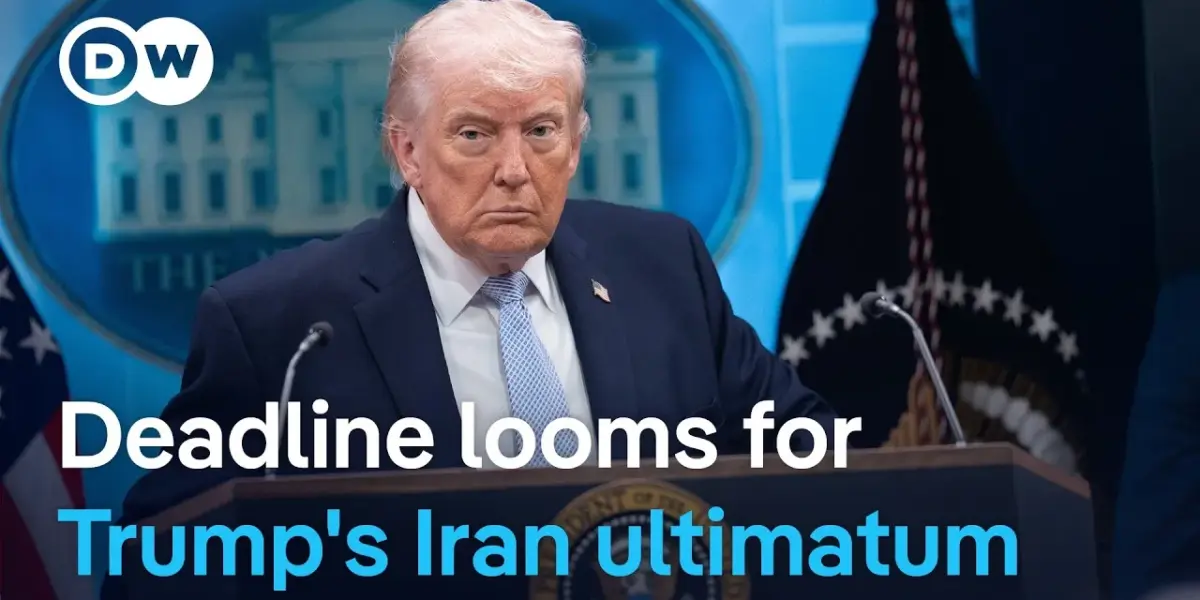
Trump Issues Stark Warning to Iran as Deadline Looms
President Donald Trump has issued his most severe threat yet against Iran, warning of “existential consequences” if the nation fails to reach a deal to end the ongoing conflict and reopen the vital Strait of Hormuz. The deadline set by the U.S. president has now expired, following previous extensions. Trump’s strong words, posted on social media, suggested that “a whole civilization will die tonight, never to be brought back again.” He added, “I don’t want that to happen, but it probably will.” This stark message came as hostilities continued across the Middle East.
Escalating Conflict Amidst Diplomatic Threats
The president’s rhetoric stands in contrast to the ongoing military actions in the region. Sharif University of Technology in Tehran, often called Iran’s MIT, reportedly suffered damage from U.S.-Israeli strikes. Israel had previously warned its civilians to avoid trains and railway stations due to security concerns. Shortly after, an Israeli strike reportedly injured at least one civilian near a local train line northwest of Tehran. The U.S. also reported striking military targets on KG Island, a key hub for Iran’s oil exports.
Meanwhile, Iran continued its own strikes, targeting military and civilian sites in Israel and the Gulf region. An Iranian missile landed near a public bomb shelter in Israel, causing damage. Satellite images released by Iran’s military showed damage from drone attacks on a U.S. military base in Saudi Arabia and a U.S. helicopter base in Kuwait.
UN Condemns Attacks on Civilian Infrastructure
The United Nations has raised concerns about the legality of attacking civilian infrastructure. The UN Secretary-General has emphasized the importance of international law, stating that civilian infrastructure, including energy facilities, should not be attacked. Even if considered a military objective, international humanitarian law still prohibits such attacks.
President Trump has previously indicated he is unconcerned about potential war crimes. His latest social media post, which openly discussed the potential “permanent eradication” of “a whole civilization,” has drawn significant attention and criticism.
Expert Analysis: Rhetoric vs. Reality
Nevada Joan Lee, a policy fellow at the European Council on Foreign Relations, offered her perspective on Trump’s threats. “I think Trump’s rhetoric does not always match his actions,” Lee stated. She noted that the U.S. had already taken a significant escalatory step by targeting regime leaders. Lee suggested that Trump has a unique ability to frame events as victories for his domestic base and expressed hope that his latest warnings were primarily rhetoric.
However, she also acknowledged uncertainty. “I hope his escalatory remarks in this 8:00 p.m. deadline is just rhetoric and not anything beyond that, but I’m not entirely sure it will be,” Lee commented. She questioned the strategic value of destroying an entire civilization, especially if the Iranian regime remains in place, asking, “If the regime remains in place no matter how battered the country, then how does destroying everything advance this um the the American and Israeli war aims?”
Public Opinion and War Aims
Lee highlighted the unpopularity of the war within the United States, citing a poll where only 40% of Americans supported the conflict, with 60% opposed. “Americans know that this doesn’t actually advance Americans interests. It’s why it’s incredibly unpopular,” she said, adding that even parts of Trump’s base are fracturing over the issue.
She reiterated that destroying a civilization would not further war goals or help reopen the Strait of Hormuz. Lee believes the most escalatory move was already made by targeting the regime’s leader, suggesting Trump might be “floundering” now. The continuing unpopularity of the war at home and abroad supports this view.
What to Expect Next?
Brian Culis, a senior fellow for U.S. foreign policy at the Middle East Institute, described Trump’s communications as increasingly desperate. “He’s gotten involved in a very unpopular war in the Middle East. His political support here in the United States has plummeted as a result of it,” Culis explained. He views the threats, which he calls “hyperbolic and actually amount to threats of war crimes,” as signs of desperation, especially given the unclear plan to open the Strait of Hormuz or secure nuclear material.
Culis sees little chance of Iran complying with the demands. He believes the remnants of the Iranian regime might be incapable of making a consensus decision, or if they can, their path will be defiance. He also criticized the U.S. approach, stating, “the Trump administration has not operated in good faith when it came to negotiations.” He suggested the U.S. used Oman as a “prop” for political theater rather than engaging in genuine discussion.
Potential Scenarios: De-escalation or Further Destruction
With the deadline approaching, Culis outlined two main scenarios. The first is that Trump might back down, a move he referred to as “Trump always chickens out,” possibly realizing the high cost of further military action. This could involve bombing a bridge and claiming victory.
The second scenario, which Culis finds more dangerous, is that Trump “doubles down with Israel in what is a very destructive campaign and continues to strike its civilian infrastructure.” He recalled the early days of the war when over a hundred schoolgirls were reportedly killed, with no expression of remorse or thorough investigation. Such actions, he warned, could lead to greater destruction not only for Iran but for the wider Middle East and the world.
The Specter of War Crimes and Limited Options
Culis expressed concern about the potential for war crimes, noting that attacks on civilian infrastructure like power grids and bridges cross a line. He criticized the lack of public debate and congressional action regarding the moral and legal implications of the war. “Congress has not lifted up its voice in any meaningful way,” he stated, pointing out that Trump is reportedly seeking an additional $200 billion in funding for the conflict.
He questioned whether the U.S. and Israel are running out of military targets. While acknowledging Iran’s drone manufacturing capabilities, Culis emphasized that Trump has not articulated a clear end goal for the war. The outcome, he fears, could be a less predictable and more hardline regime in Iran, or even chaos within the country.
The possibility of extreme measures, including the use of nuclear weapons, has been discussed, though Culis hopes this is not the case. He concluded that Trump’s options appear limited, and his strong rhetoric likely reflects his growing desperation and understanding that the war has come at a significant cost to the U.S. and his political standing.
Source: Trump's Iran deadline expires soon | DW News (YouTube)

Related Articles

Gingrich: War with Iran Risks American Cities
Former Speaker Newt Gingrich warns that failing to confront Iran could put American cities at risk. He compares the current situation to pre-WWII threats, urging decisive action to prevent catastrophic consequences.

Iran Talks Stall; Striking Now Is Key, Says Gingrich
Newt Gingrich argues that Iran's diplomatic tactics are designed to delay and gain leverage. He believes the current moment is critical for the U.S. to take decisive action against Iran's nuclear and missile programs, warning of severe future consequences if action is not taken now.

Dem Lawmaker Slams Trump: “Most Criminal Person Ever President”
Democratic Congressman Robert Garcia has voiced grave concerns over President Trump's fitness for office, calling for immediate action under the 25th Amendment. Citing the president's alleged threats and detachment from advisors, Garcia described the current situation as a constitutional crisis, criticizing Republican inaction and the lack of congressional oversight.