Trump Threatens Iran, Allies Urge Restraint
President Trump has issued new threats to Iran, warning of U.S. military strikes on infrastructure if the Strait of Hormuz is not reopened. These statements have drawn criticism from Democrats, who cite potential war crimes and alienation of allies. Iran has responded by blaming the U.S. and demanding financial compensation.


Trump Threatens Iran with Infrastructure Strikes
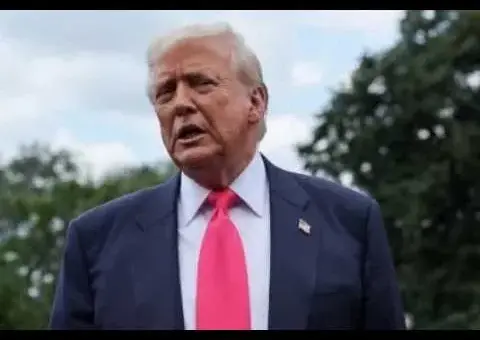
President Trump issued new, strong threats against Iran, stating that U.S. forces would strike Iranian infrastructure if the country does not reopen the Strait of Hormuz. He posted on social media, calling Tuesday the day for power plants and bridges. The president used explicit language in his post, warning of attacks on Iran’s infrastructure if they did not “reopen the effing strait.” He later posted a more cryptic message, setting a specific deadline: Tuesday at 8:00 PM Eastern Time, for these potential attacks.
Shifting Deadlines and Diplomatic Stalemate
Over the past few weeks, President Trump has set and then extended several deadlines in this ongoing conflict. This often happened after he mentioned that negotiators were making progress toward a deal with Iran. However, in a recent phone call, he stated that “normal people would make a deal if they were smart.” He also did not rule out sending U.S. ground troops if a deal could not be reached. Furthermore, he suggested that no infrastructure targets would be off-limits if the U.S. and Iran failed to reach an agreement.
Criticism and Concerns Over War Crimes
The president’s threats have drawn criticism from those who point out that targeting civilian infrastructure is considered an international war crime. Senate Minority Leader Chuck Schumer was among the critics, calling President Trump’s social media posts “ranting like an unhinged madman.” Schumer also stated that the threats involve possible war crimes and could alienate U.S. allies. Others are calling for President Trump to end the conflict immediately, stating, “I think we need to. In this war as soon as possible. We don’t need deploy more Americans into harm’s way in a war that lacked a that lacked a plan.” They suggest working with allies to solve the situation at the Strait.
Iran’s Response and Demands
Iran’s leaders have publicly responded to President Trump’s latest threats. The speaker of Iran’s parliament blamed the U.S. and President Trump for the conflict. In response to the threats, he stated, “Your reckless moves are dragging the United States into a living for every single family and our whole region is going to burn.” He added, “Make no mistake, you won’t gain anything through war crimes.” Another Iranian official indicated that the Strait of Hormuz could only be reopened if Iran received financial compensation for war damages. This suggests they might use transit revenue to cover these costs.
Global Impact and Future Scenarios
The escalating tensions between the U.S. and Iran over the Strait of Hormuz have significant global implications. This waterway is crucial for global oil supplies, with a large percentage of the world’s oil passing through it daily. Any disruption could lead to sharp increases in oil prices, affecting economies worldwide. The conflict also tests U.S. alliances, as European partners often favor diplomatic solutions over military threats, especially those that could lead to war crimes. The situation highlights a broader geopolitical struggle for influence in the Middle East.
Historical Context and Competing Interests
The U.S. and Iran have a long history of complex relations, marked by periods of hostility and attempts at diplomacy. The current standoff is partly rooted in the U.S. withdrawal from the 2015 Joint Comprehensive Plan of Action (JCPOA), also known as the Iran nuclear deal, and the re-imposition of sanctions. Iran views these actions as hostile and a violation of international agreements. The U.S., on the other hand, aims to curb Iran’s nuclear program and its regional influence, which it sees as destabilizing. Iran’s actions in the Strait of Hormuz can be seen as a response to economic pressure and a way to assert its regional power.
Economic Leverage and Sanctions
Economic pressure is a key tool in this conflict. The U.S. has imposed extensive sanctions on Iran, aiming to cripple its economy and force it to change its behavior. Iran’s ability to export oil, its primary source of revenue, has been severely limited. In turn, Iran has used threats and actions related to the Strait of Hormuz to pressure the U.S. and its allies, highlighting its ability to disrupt global energy markets. Iran’s demand for compensation for war damages also underscores the economic stakes involved.
Potential Future Paths
Several future scenarios are possible. One path involves continued escalation, with potential U.S. strikes on Iranian infrastructure and further Iranian retaliation, possibly leading to a wider regional conflict. Another scenario could see renewed diplomatic efforts, perhaps spurred by international pressure or a change in calculated risks by either side. A third possibility is a prolonged stalemate, with ongoing tensions and sporadic incidents but no full-scale war. The likelihood of each scenario depends on the decisions made by leaders in Washington and Tehran, as well as the reactions of international partners.
Source: War in Iran: Democrats urge Trump to deescalate | NewsNation Prime (YouTube)

Related Articles


Trump’s Actions Demand 25th Amendment, Experts Argue
Experts and commentators are increasingly discussing the use of the 25th Amendment to remove President Trump, citing concerns over alleged corruption and reckless foreign policy decisions. The discussion highlights the strategic importance of the Strait of Hormuz and the potential for personal enrichment through presidential actions. Critics argue that Trump's presidency has worsened global instability and call for greater accountability.


US Scrambles to Find Missing American Pilot Shot Down in Iran
The US military is intensifying its search for an American pilot shot down in Iran, amid rising international tensions. Meanwhile, wildfires rage in California, fueled by a dry winter, and astronauts on the Artemis II mission share stunning views from deep space.
Trump’s Easter Threat: War and Faith Collide
Donald Trump's Easter Sunday announcement, filled with threats of war and a call to "open the straight, you crazy bastards, or you'll be living in hell," starkly contrasted with the holiday's message of peace. Even allies questioned the jarring rhetoric. This incident highlights the complex relationship between faith, politics, and leadership.