Trump Sons’ CNBC Interview Sparks Controversy with ‘Ponzi Scheme’ Remark and Incoherent Defenses
A recent CNBC interview with Donald Trump Jr. and Eric Trump has ignited controversy, with the brothers defending their business practices against allegations of leveraging their father's political influence. Their responses, described as incoherent by some, included Eric Trump's rambling account of banks canceling them due to political affiliation, and a striking remark from Donald Trump Jr. about being "at the top of the Ponzi scheme that was banking," a statement that has raised significant legal and ethical concerns.

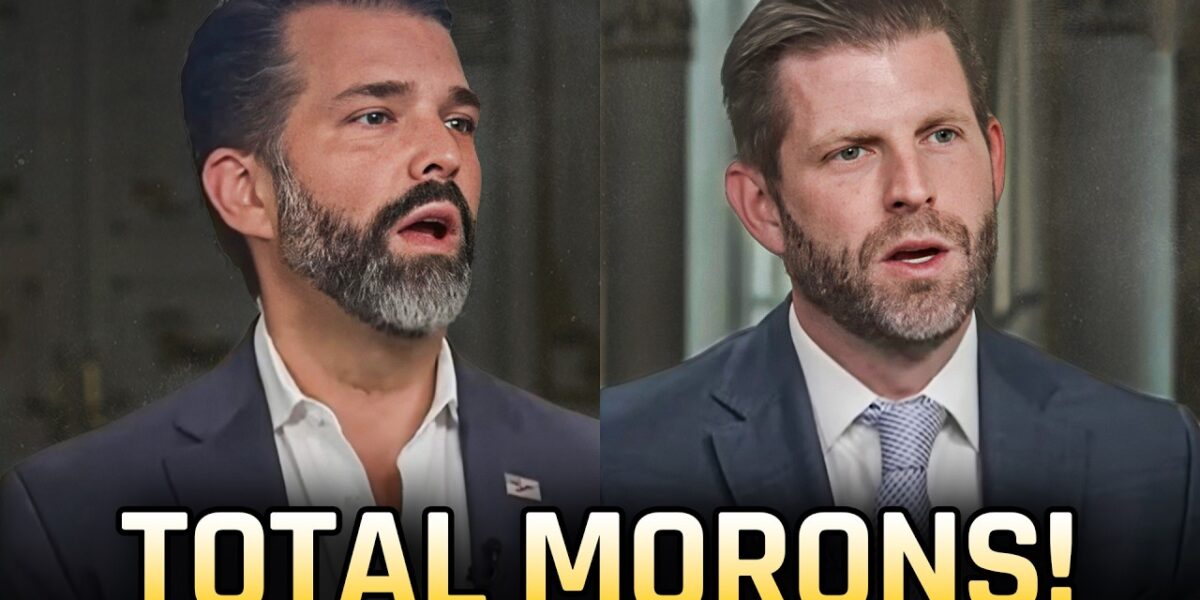
Trump Sons’ CNBC Interview Sparks Controversy with ‘Ponzi Scheme’ Remark and Incoherent Defenses
An interview with Donald Trump Jr. and Eric Trump on CNBC this week has ignited a firestorm of criticism, drawing attention to the Trump family’s controversial business dealings and raising eyebrows over statements described as both incoherent and potentially incriminating. The sons of former President Donald Trump appeared to defend their business practices against allegations of leveraging their father’s political influence, but their responses have been widely parsed, with one remark, in particular, about being at the "top of the Ponzi scheme that was banking," causing significant alarm.
Allegations of Influence Peddling and Shady Dealings
The interview, conducted by CNBC anchor Sarah Eisen, delved into the Trump family’s financial ventures, specifically touching upon their crypto business, World Liberty Financial, and investments from foreign governments, including the United Arab Emirates (UAE). Critics have long alleged that the Trump name and the prestige of the White House were, and continue to be, exploited by the family for personal gain, with foreign entities potentially currying favor through lucrative business arrangements.
These allegations are not new. Throughout Donald Trump’s presidency, his family’s vast business empire faced intense scrutiny over potential conflicts of interest. The Emoluments Clause of the U.S. Constitution, which prohibits federal officials from accepting gifts or payments from foreign governments without congressional approval, became a frequent point of contention. While the former president was in office, the Trump Organization continued to operate, accepting payments from foreign governments through hotel stays, golf course memberships, and other ventures. Critics argued that such transactions created an undeniable perception of influence peddling, regardless of intent.
The recent focus on World Liberty Financial and UAE investments falls squarely within this pattern of scrutiny. The concern is that these financial relationships with foreign governments could be transactional, offering financial benefits to the Trump family in exchange for potential future political favors or influence, especially given Donald Trump’s ongoing political activities and potential presidential bid.
The "They Made Us Do It" Defense
During the CNBC segment, Sarah Eisen directly confronted the Trump sons with these criticisms, asking about the "credibility factor" associated with the Trump name and the perception that "everyone is here to curry favor." The responses from Eric and Donald Trump Jr. quickly pivoted to a narrative of victimhood and perceived necessity, effectively blaming external forces and even the American public for their father’s alleged corruption and their own business decisions.
Eric Trump responded, "I think the great irony here is they didn’t give us much of a choice." Donald Trump Jr. then elaborated on this sentiment, stating, "they created this monster, so it’s our fault, right? We created the monster that is their hugely corrupt criminal father. We did that. Like we goofed somehow and we forced him to be corrupt."
This line of defense suggests that the family’s controversial business practices were not a matter of choice but a reaction to external pressures, a narrative frequently employed by the Trump family to deflect criticism. It implies that the "monster" of alleged corruption was a creation of the public or political adversaries, rather than an outcome of their own decisions or business ethics.
Eric Trump’s Convoluted Explanation of "Cancellation"
The interview took a turn towards the bewildering when Eric Trump attempted to explain the circumstances that supposedly forced their hand. His statements regarding banks and financial institutions "canceling" them were notably disjointed and grammatically challenging, leaving many listeners struggling to decipher his meaning.
He stated, "When you had very every big bank in the world for doing nothing wrong, when you had every big bank in the world for doing nothing wrong, just based on the fact that we all wore a hat that said, ‘Make America great again.’ My father happened to be running as a Republican. Cancelled us." He continued, "I mean, I was getting these calls. 300 bank accounts Capital One in the middle of the night. These are commercial buildings, residential buildings, you know, golf courses, you know, are around the world. These aren’t political entities. And they were pulling these accounts like us from us like we were absolute dogs."
While the precise nature of these alleged cancellations remains unclear due to the convoluted phrasing, Eric Trump appeared to be referencing a phenomenon often dubbed "de-banking" or "cancel culture" in financial services. This refers to instances where banks or financial institutions terminate relationships with individuals or businesses, often citing reputational risk, compliance issues, or, as Eric Trump implies, political pressure. While banks do have the right to choose their clients, the claim that major financial institutions would collectively "cancel" hundreds of accounts globally solely based on political affiliation without any other stated reason would be an extraordinary and largely unprecedented event, especially for a family with a vast and established financial footprint.
The difficulty in parsing Eric Trump’s statements highlights a recurring issue in the Trump family’s public communications, where clarity and coherence sometimes take a backseat to emotive, often accusatory, rhetoric.
Donald Trump Jr.’s "Top of the Ponzi Scheme" Remark
Perhaps the most startling moment of the interview came when Donald Trump Jr. attempted to further elaborate on their family’s financial situation and decision-making. In a segment where he discussed their ability to "push back" against perceived injustices and create "efficiencies" in the system, he uttered a phrase that immediately garnered widespread attention and concern:
"And we just realized we were sort of at the top of the Ponzi scheme that was banking."
This statement is profoundly significant. A Ponzi scheme is a form of investment fraud that pays profits to earlier investors with funds from more recent investors, rather than from legitimate profits. It relies on a consistent flow of new money to survive and inevitably collapses when new investments dry up. Being "at the top of the Ponzi scheme" implies direct involvement in orchestrating or benefiting from such a fraudulent operation.
Legal experts and financial analysts immediately flagged this comment as potentially self-incriminating. While it is possible Donald Trump Jr. was using the term metaphorically to describe a perceived hierarchical or exploitative nature of the banking system, the casual admission of being "at the top" of a "Ponzi scheme" on live television is an extraordinary gaffe. In a legal context, such a statement could be construed as an admission of a serious financial crime, carrying severe penalties including imprisonment and substantial fines.
The remark underscores a perceived lack of understanding or disregard for the gravity of financial terminology and its legal implications. It also contributes to the ongoing narrative of the Trump family’s alleged involvement in questionable financial practices, which has been a consistent theme throughout their public life.
Broader Implications and Public Perception
The CNBC interview, and particularly the controversial statements made by Eric and Donald Trump Jr., offer a window into the ongoing challenges faced by the Trump family in separating their political brand from their business interests. The constant allegations of conflicts of interest, the victimhood narrative, and the often-unconventional communication style continue to shape public perception.
For critics, the interview merely confirms long-held suspicions about the family’s business ethics and their willingness to leverage political power for personal gain. For supporters, the narrative of being "canceled" by establishment banks and a "woke" financial system might resonate, reinforcing the idea that the Trump family is fighting against a corrupt system.
However, the "Ponzi scheme" comment is likely to transcend partisan divides, raising fundamental questions about financial literacy and legal responsibility. In an era of heightened scrutiny over corporate governance and financial transparency, such a statement from prominent public figures associated with a former president is unlikely to be dismissed lightly.
As the Trump family continues to navigate the intersection of business, politics, and public opinion, interviews like this serve as critical moments, revealing not only their strategic messaging but also the inherent risks of unfiltered public commentary. The fallout from this CNBC appearance is likely to fuel further debate and investigation into the complex and often controversial world of Trump family finances.
Source: Trump Sons EXPLODE Like Disheveled, Blotchy Balloons (YouTube)

Related Articles
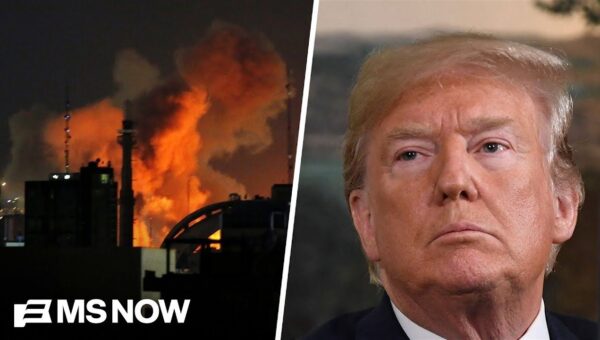
Congressman Swalwell Slams Trump’s Iran Strikes, Cites ‘No Plan’
Congressman Eric Swalwell has strongly condemned the recent U.S. military strikes in Iran, deeming them illegal and lacking a clear strategic plan. He joins Democrats in demanding a War Powers vote, asserting that the administration has failed to present evidence of provocation or a post-strike strategy. Swalwell criticizes the move as a distraction from domestic issues and a departure from campaign promises.
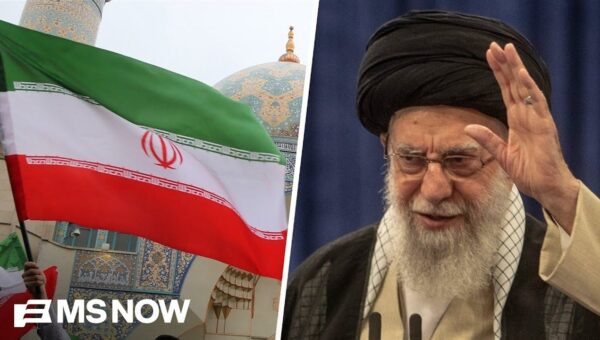
Iran Celebrates After Israeli Strikes Eliminate Top Leaders
Following Israeli airstrikes that reportedly killed Iran's Supreme Leader and top staff, celebrations have erupted among the Iranian diaspora. While a "monumental event," analysts caution against immediate expectations of a smooth democratic transition due to the IRGC's power and a divided opposition.

AI’s Ethical Divide: Trump’s Ban Sparks Fierce Debate
The Trump administration's blacklisting of AI firm Anthropic over its refusal to allow autonomous weapons and mass surveillance has ignited a fierce debate. The move highlights deep ethical divides in AI development and raises concerns about future government-tech partnerships.