Trump Skips NATO, Signals Alliance Rethink
President Trump's recent address to the nation on Iran notably omitted any mention of NATO, despite prior threats to withdraw the US from the alliance. This silence, coupled with Secretary General Mark Rutte's upcoming White House visit, signals a potential shift in US commitment and raises global concerns about the future of transatlantic security. The move deviates from decades of US support for the collective defense pact.

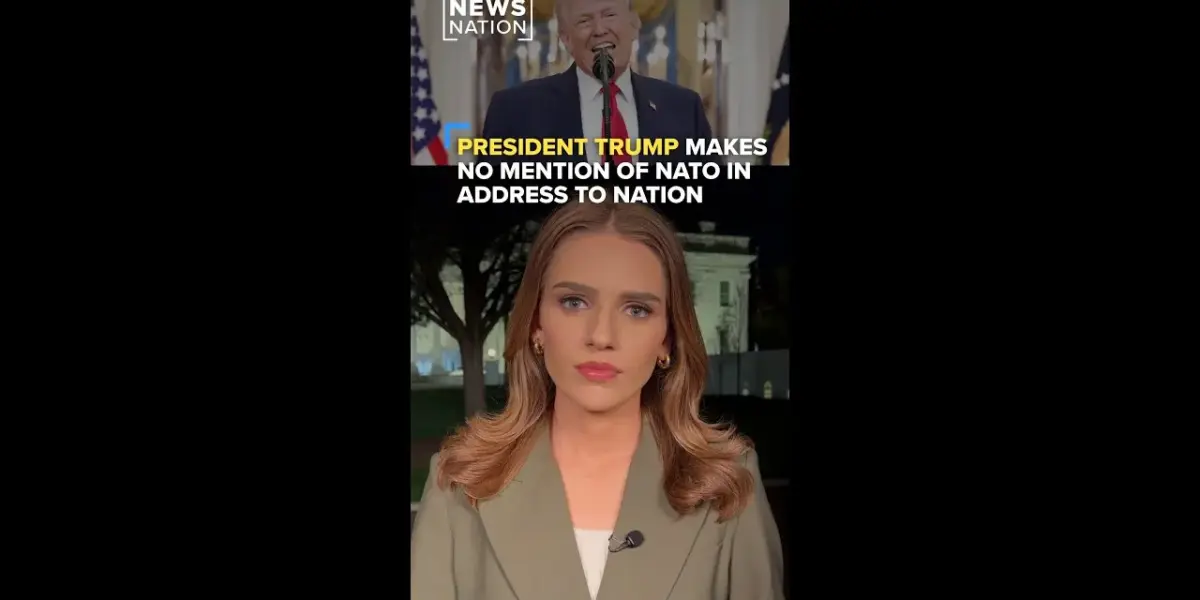
Trump’s NATO Silence Sparks Global Unease
President Trump delivered a 20-minute address to the nation regarding the ongoing US operation in Iran. While the speech offered little new information for those following the situation closely, it aimed to reassure the American public about the military action. The operation has been underway for four and a half weeks. President Trump set a timeline of two to three weeks for its expected duration.
Key Omission Fuels Alliance Doubts
A striking aspect of President Trump’s address was the complete absence of any mention of the North Atlantic Treaty Organization (NATO). This omission is particularly noteworthy given recent statements from the President. In the past 24 hours, he had publicly threatened to withdraw the United States from the alliance. This signals a potential shift in US commitment to long-standing security partnerships.
Reactions From Washington and Beyond
Sources close to the President described the speech as clear and concise. However, reactions from various circles highlight the significance of the NATO silence. Lawmakers on Capitol Hill and individuals within the White House expressed relief that NATO was not brought up. They were reportedly glad the President avoided complicating the current situation in Iran with alliance discussions. Yet, many were also shocked by the President’s decision to ignore NATO, especially after his recent critical remarks.
NATO Chief’s Visit Underscores Tension
The upcoming visit of NATO Secretary General Mark Rutte to the White House adds another layer of significance to these developments. His meeting with President Trump is likely to address the future of the alliance and the United States’ role within it. The President’s recent rhetoric has created uncertainty for America’s European allies, who rely on the collective security provided by NATO.
Motivations and Interests at Play
President Trump’s focus on domestic reassurance and a clear timeline for the Iran operation suggests his primary interest is managing public perception and demonstrating control over foreign policy actions. His past criticisms of NATO often center on perceived unfair financial burdens on the United States, arguing that other member nations do not contribute enough to collective defense. He believes the US pays too much for security that benefits allies more directly. Secretary General Rutte, on the other hand, represents an alliance designed for mutual defense. His interest is to maintain the strength and unity of NATO, which he sees as crucial for European and global security. For European allies, NATO represents a vital security guarantee against potential threats, and US withdrawal would leave a significant void.
Historical Context of US Alliances
The United States has been a cornerstone of NATO since its founding in 1949. The alliance was created after World War II to counter the Soviet Union. It established a commitment to collective defense, meaning an attack on one member is considered an attack on all. This principle has been a bedrock of transatlantic security for over seven decades. President Trump’s questioning of these commitments represents a departure from decades of bipartisan US foreign policy that has supported NATO as a key pillar of American global strategy.
Economic and Strategic Considerations
While the transcript doesn’t detail economic figures, NATO’s economic implications are vast. Member nations contribute to a common defense budget, and the alliance facilitates military interoperability and joint procurement, which can lead to cost savings. The perceived strength of NATO also contributes to regional stability, which is essential for economic activity and trade. The US, as the alliance’s most powerful member, benefits from a stable Europe that can serve as a trading partner and ally in global security matters. Any weakening of NATO could have ripple effects on global trade routes and economic confidence.
Global Impact: Reshaping the World Order
President Trump’s repeated questioning of NATO’s value and his threat of withdrawal, coupled with his silence on the alliance in a key address, signals a potential reorientation of US foreign policy. If the US were to significantly reduce its commitment or withdraw, it could weaken NATO’s collective security umbrella. This might embolden adversaries and create instability in Eastern Europe and beyond. European nations would likely scramble to bolster their own defenses, potentially leading to a more fragmented security landscape. The long-term impact could be a less predictable and more dangerous international environment, where alliances are less reliable and conflicts are more likely to escalate without a strong collective security framework.
Future Scenarios
One scenario is that President Trump’s statements are a negotiating tactic, designed to push European allies to increase their defense spending, a long-standing demand. In this case, the US might remain in NATO but with altered terms. Another scenario involves a significant reduction in US involvement, perhaps through scaled-back military commitments or a formal withdrawal. This would fundamentally alter the European security architecture. A third, less likely, scenario is that the US recommits fully to NATO, influenced by diplomatic pressure from allies or a reassessment of global threats. The upcoming meeting with Secretary General Rutte will be crucial in determining which path the alliance takes.
Source: President Trump makes no mention of NATO in address to nation (YouTube)

Related Articles

Ukraine Strikes Russian Oil Hubs, Crippling Exports
Ukrainian strikes on Russian oil export terminals are crippling Russia's ability to sell oil, impacting its war funding. This strategy, supported by U.S. policy, targets Russia's core economy and exploits its limited storage capacity, potentially leading to long-term damage to its energy sector.

Bondi’s Loyalty Fails: Trump Fires AG Over Failed Grudges
Pam Bondi's departure from the Trump administration was reportedly driven by a failure to prosecute political enemies, not the Epstein files. Her exit highlights the transactional nature of loyalty in Trump's orbit and raises questions about DOJ priorities and future accountability.

North Korea Sells Arms, Labor to Russia
Russia's reliance on North Korea for artillery shells and labor highlights Moscow's weakening military and economic position. Meanwhile, China leverages Russia's dependence for strategic gain, demonstrating a significant shift in regional power dynamics.