Trump Signals Troop Buildup Amidst Press Event Exit
Former President Donald Trump's abrupt exit from a press conference coincided with a significant U.S. military deployment to the Middle East. The move raises questions about potential ground operations and regional stability amidst rising oil prices and international tensions.

Trump Signals Troop Buildup Amidst Press Event Exit
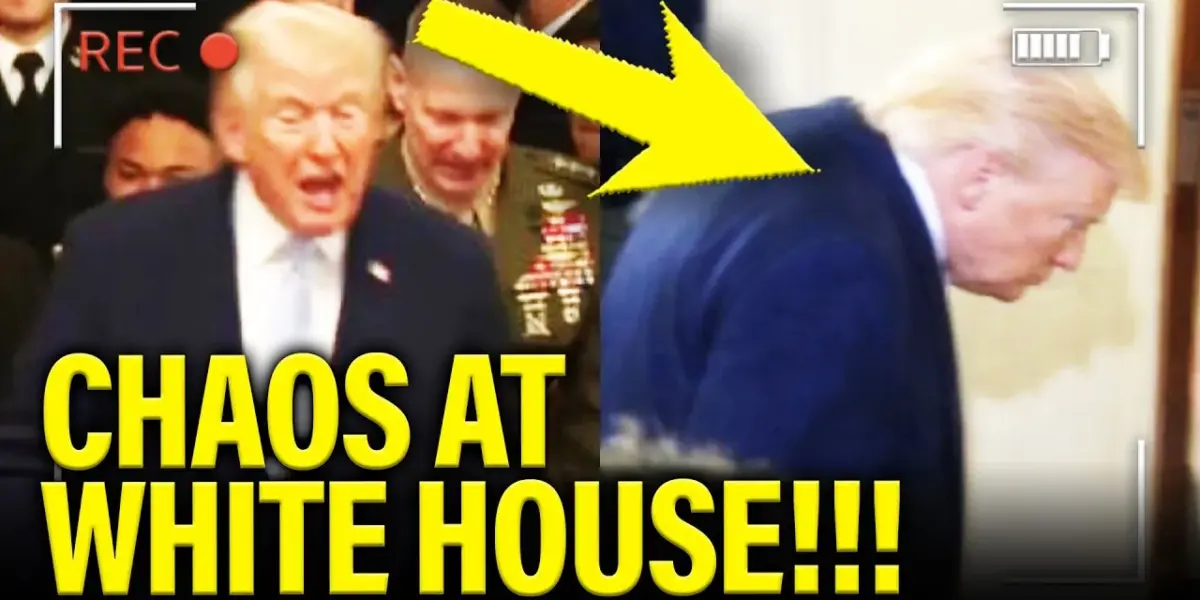
In a dramatic turn of events, former President Donald Trump abruptly left a White House press conference, refusing to answer questions. This departure coincided with reports of a significant military deployment to the Middle East, raising questions about the administration’s strategy and intentions.
Military Deployment to the Middle East
The Pentagon has announced the deployment of three warships and thousands of additional Marines to the Middle East. Approximately 2,200 to 2,500 Marines from the USS Boxer Amphibious Ready Group and the 11th Marine Expeditionary Unit are en route to the US Central Command. This move has led to speculation about potential ground operations, with some officials suggesting a possible ground move on Qeshm Island, a vital economic area for Iran.
“We’ve always had boots on the ground in conflicts under every president, including Trump. I know this is a fixation in the media, and I get the politics, but the president is going to do what is right.”
Axios reported that a senior official stated this, highlighting the ongoing presence of American troops in various conflicts. Another official indicated that President Trump desires swift action, and if taking Qeshm Island is necessary, it will happen. This potential move might require further strikes and troop reinforcements to weaken Iranian influence over the next month.
President’s Remarks and Social Media Activity
During an event honoring the US Naval Academy football team, Trump held a football and exited the press area. He questioned why the U.S. wasn’t seizing Iranian naval ships instead of destroying them, suggesting they could be incorporated into the U.S. Navy. He remarked that the difference was the Iranians “didn’t know how to use them.”
Earlier that morning, Trump posted on social media, criticizing NATO for not taking a stronger stance against Iran. He called NATO a “paper tiger” and accused member nations of being “cowards” for not helping to secure the Strait of Hormuz, which he believes is the primary cause of high oil prices.
Economic Concerns and Energy Market Volatility
The current economic climate is marked by rising gas prices and inflation. Reports from Saudi Arabia suggest oil prices could soar past $180 a barrel if disruptions persist. Chris Wright, identified as a former energy secretary, acknowledged the “terrifying” nature of Iran’s attacks on energy infrastructure and called for the U.S. military to “defang Iran’s ability” to conduct such actions.
The International Energy Agency (IEA) has urged global citizens to reduce oil demand by working from home, driving slower, and flying less. This call comes in response to what the IEA describes as the largest disruption of oil supply in history, pushing oil prices above $100 per barrel. The agency recommends measures like carpooling and switching to electric cookers to mitigate the crisis.
Political Reactions and Historical Context
Senator Joni Ernst, speaking on Fox News, described the troop deployment as providing “leverage” for the president. She emphasized that Trump prioritizes the best interests of the United States and its service members, stating he would not engage troops unnecessarily. She also highlighted the importance of partner nations stepping up to stabilize the Middle East.
Congressman Hardoupos, when asked about seizing Qeshm Island, viewed it as an “occupation of a vital economic interest.” He drew historical parallels to the occupation of Japan after World War II and the lessons learned from the Iraq War. He noted that while China and Japan rely heavily on oil from that region, the U.S. has become less dependent due to increased domestic oil production and new partnerships.
Broader Geopolitical Implications
The situation is further complicated by reports of the U.S. Justice Department potentially pursuing criminal charges against the president of Colombia, which some interpret as a tactic to pressure world leaders who oppose Trump. Additionally, Iran has reportedly warned Arab nations about potential dangers to recreational areas and tourist destinations, urging evacuations.
These developments occur as many Arab nations have sought to diversify their economies beyond oil, investing in tourism and business infrastructure. The current tensions threaten these efforts, potentially destabilizing the region and impacting global energy markets. The ongoing military posturing and diplomatic rhetoric underscore the complex challenges facing the U.S. in the Middle East.
Source: Trump RUSHES OUT of PRESS EVENT as GROUND TROOPS DEPLOY!!! (YouTube)

Related Articles
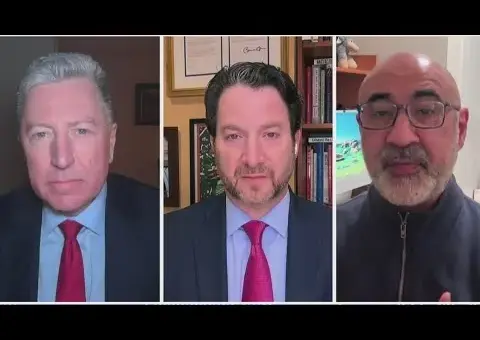
U.S. Iran Tensions Rise Amid Shifting Alliances
Rising tensions between the U.S. and Iran are creating a volatile geopolitical situation. With conflicting signals on de-escalation and potential shifts in alliances like NATO and U.S.-Israel relations, the path forward remains uncertain. The global economy and regional stability hang in the balance.


Iran Targets US With Cyberattacks, Escalating Digital Warfare
Iran is increasingly using cyberattacks to challenge the U.S., as seen in a recent hack of the FBI director's account. Experts say this is a strategic shift due to Iran's limitations in conventional warfare. The U.S. needs to strengthen its digital defenses, focusing on encryption and cloud computing, rather than solely relying on traditional security measures.
Ukraine Strikes Russian Oil Refinery, Eyes Iran Threat
Ukrainian forces struck a key Russian oil refinery, disrupting Moscow's war capabilities. Meanwhile, Finland's president urged continued U.S. support for Ukraine, as Kyiv shares its air defense expertise globally amid growing geopolitical complexities involving Iran and potential sanctions against Hungary.