Trump Signals Tough Stance on Iran, Offers Negotiation Path
The U.S. has clearly stated objectives to curb Iran's nuclear and missile programs, while President Trump intentionally sends mixed messages. This dual strategy offers negotiation opportunities alongside a strong military presence, signaling readiness for action if needed.

U.S. Outlines Clear Goals for Iran, While Diplomatic Opening Remains
The United States has laid out a set of firm objectives regarding Iran’s nuclear program, defense capabilities, and naval power. These goals include crippling Iran’s ability to produce drones and ballistic missiles, and preventing it from acquiring enriched uranium for nuclear weapons. A key focus is also on securing vital waterways like the Strait of Hormuz.
According to a former CIA official, President Trump is intentionally sending mixed signals on how these objectives will be achieved. This strategy appears designed to give Iran an opportunity to engage in negotiations. This approach aligns with a consistent pattern of offering diplomatic avenues for de-escalation.
Military Readiness Signals Strength
At the same time, the administration is signaling a readiness for forceful action if diplomacy fails. U.S. military presence in the region remains substantial, with over 15,000 troops deployed. The presence of a new aircraft carrier, the USS George H.W. Bush, underscores this commitment to military readiness.
This dual approach—offering a path for talks while maintaining a strong military posture—is seen as a deliberate tactic. It aims to pressure Iran into making concessions while providing a clear alternative to conflict. The administration believes this strategy offers the best chance for achieving its stated goals without resorting to full-scale military engagement.
Understanding the Strategy
The former CIA official explained that the President’s messaging is not contradictory but rather a calculated move. The clear objectives are to degrade Iran’s defense industrial base, its drone and ballistic missile programs, and any remaining nuclear ambitions. Furthermore, the U.S. is focused on locating approximately 1,000 pounds of enriched uranium. This would prevent Iran from having the material needed to build a nuclear bomb.
The mention of the Strait of Hormuz highlights its strategic importance as a global oil transit route. Any disruption there could have significant economic consequences worldwide. The administration wants to ensure freedom of navigation and prevent Iran from using it as a bargaining chip or a point of conflict.
The ‘Hammer Ready’ Approach
The phrase “hammer ready” refers to the significant military resources available. This includes the large troop deployment and the powerful naval assets like the aircraft carrier. These resources serve as a clear deterrent. They also provide the capability to act decisively if diplomatic efforts do not yield the desired results. This military strength is intended to back up the diplomatic overtures.
This strategy aims to create leverage in negotiations. By showing both a willingness to talk and a capacity for forceful action, the U.S. hopes to compel Iran to return to the negotiating table with a more constructive approach. The goal is to achieve a verifiable and lasting resolution to concerns over Iran’s nuclear program and its regional activities.
Market Impact
Such geopolitical tensions can create volatility in global markets, particularly in oil prices. The Strait of Hormuz is a critical chokepoint for oil transport. Any threat to its stability can lead to price spikes. Investors closely watch developments in the Middle East for potential impacts on energy supplies and broader economic stability. This situation could affect companies involved in energy production, shipping, and defense sectors.
What Investors Should Know
Investors should monitor geopolitical developments closely. Understand that mixed signals in diplomacy often signal a complex strategy. The combination of diplomatic outreach and military readiness can lead to periods of uncertainty. This uncertainty may translate into market fluctuations, especially in energy and defense stocks. Long-term implications depend on whether diplomatic channels ultimately lead to a de-escalation or if military action becomes necessary.
The U.S. objective to prevent Iran from obtaining nuclear weapons is a long-standing policy. The current administration’s approach appears to be a continuation of this policy, employing a strategy of pressure and engagement. Investors should stay informed about official statements and actions from both the U.S. and Iran to gauge the evolving situation.
Source: 'HAMMER READY': Trump's delivering mixed messages on Iran intentionally, ex-CIA official says #short (YouTube)

Related Articles
Iran Downs US Jet, Exposing Global Power Shifts
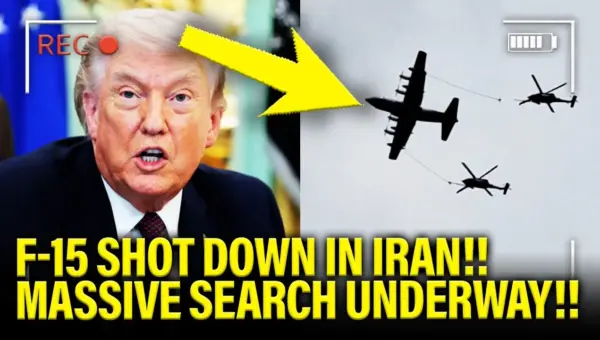
An F-15E jet shot down over Iran sparks a rescue mission and highlights global power shifts. Allies question U.S. predictability while domestic debates rage over military spending. This incident underscores complex regional tensions and evolving international dynamics.
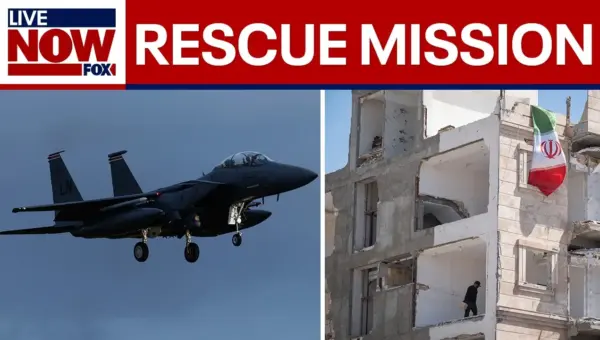
US Jet Downed in Iran: One Pilot Rescued, Search Continues
A US F-15 fighter jet has crashed in Iran, leading to a large-scale rescue operation. One pilot has been rescued, but an intense search continues for a second crew member. The incident occurred in a challenging mountainous region, and the cause of the crash is still under investigation.


Oil Shock: Hormuz Closure Triggers Global Financial Crisis
A prolonged closure of the Strait of Hormuz could trigger a global financial crisis, leading to soaring energy prices, bond market instability, and a stock market crash. Analysts warn of potential job losses and asset devaluation, with limited safe havens for investors.