Trump Signals End to Iran Strikes, Blasts Allies for Inaction
President Trump announced the U.S. is close to meeting objectives in Operation Epic Fury, signaling a potential end to strikes in Iran. He also strongly criticized NATO allies for their lack of military support in securing the Strait of Hormuz.


Trump Signals End to Iran Strikes, Blasts Allies for Inaction
President Trump has announced that the United States is nearing the end of its military objectives in Iran, suggesting a potential winding down of Operation Epic Fury. This declaration comes as he openly criticizes NATO allies, labeling them as “paper tigers and cowards” for their lack of military support in securing the vital Strait of Hormuz.
Objectives Near Completion
According to reports, President Trump stated that the U.S. is very close to achieving its goals for the operation. These objectives included preventing Iran from acquiring ballistic missiles, dismantling its navy and air force, and crippling its defense industrial base, all while protecting Middle Eastern allies and ensuring no nuclear development. The administration claims that Iran’s military capabilities have been severely degraded, with 58 vessels reportedly destroyed in just two days.
Strait of Hormuz Dispute
A key point of contention is the Strait of Hormuz, a critical waterway for global energy transport. President Trump emphasized that nations relying on the strait should be responsible for its security. He pointed out that the U.S. does not heavily depend on the strait, unlike major consumers such as Europe, Japan, and China, which he says get a significant portion of their energy through it. He called for these nations to contribute militarily to keep the passage open.
“We don’t use the straight. We don’t. The United States, we don’t need it. Europe needs it. Korea, Japan, China, China uses it 90% of their energy. Japan is 95% of the energy. It would be nice if those countries would get involved.”
Allies’ Response
The President’s remarks follow a joint statement from five European nations, Japan, and Canada, indicating potential support for a coalition to secure the Strait of Hormuz. The United Kingdom has also approved the use of its bases for U.S. strikes on Iranian missile sites targeting ships. However, President Trump criticized this support as being too late and lacking concrete military commitment. He suggested that these allies are only complaining about high oil prices now that the military conflict is largely won and poses little danger to them.
Military Superiority Claimed
Central Command released footage highlighting the effectiveness of U.S. military strikes against Iranian targets. The footage suggests a significant advantage of American military hardware over Iranian equipment, much of which is reportedly sourced from Russia and China. President Trump asserted that Iranian military equipment, despite being modern and plentiful, proved “useless” against U.S. forces.
Concerns Over Disinformation
Beyond military actions, the administration is also focusing on what it describes as Iran’s mastery of media manipulation and disinformation. Reports indicate that Iran has been using artificial intelligence to spread false narratives, including fabricated videos of attacks on U.S. assets and coordinated online campaigns. President Trump has expressed strong criticism of some American media outlets for disseminating what he calls “falsehoods,” even suggesting treason charges for some. He has praised FCC Chairman Brendan Carr for his efforts to scrutinize broadcast licenses, particularly concerning coverage of Operation Epic Fury.
Why This Matters
This development signals a potential shift in U.S. foreign policy regarding Iran, moving from active military engagement towards a phase of consolidation and demanding greater burden-sharing from allies. The President’s strong rhetoric towards NATO members highlights a growing tension over military contributions and strategic priorities. His focus on disinformation also points to a broader concern about the weaponization of information in international conflicts.
Implications and Future Outlook
If Operation Epic Fury is indeed wound down, it could lead to a de-escalation of direct military conflict in the region. However, the underlying political tensions between the U.S. and Iran, as well as the strained relationships with some European allies, are likely to persist. The emphasis on allies taking responsibility for regional security, particularly the Strait of Hormuz, could reshape future security arrangements in the Middle East. Furthermore, the administration’s stance on media and disinformation suggests a continued focus on countering perceived enemy propaganda, potentially leading to increased scrutiny of both foreign and domestic media.
Historical Context
The Strait of Hormuz has long been a strategically vital chokepoint, and its security has been a recurring concern in international relations, particularly concerning oil supplies. Tensions between the U.S. and Iran have been high since the 1979 revolution, with periods of direct confrontation and proxy conflicts. Operation Epic Fury appears to be a more direct and forceful response to perceived Iranian aggression compared to previous U.S. strategies. The criticism of NATO allies is also not new, as various U.S. administrations have called for greater defense spending and burden-sharing from European nations.
Source: Trump Says US Very Close to Meeting Military Objectives, Considers ‘Winding Down’ Iran Operation (YouTube)

Related Articles


Trump’s Iran Claims: Shocked or Deluded by War Games?
Donald Trump claimed surprise over Iran's actions in the Strait of Hormuz, but experts suggest retaliation was inevitable. Military war games likely predicted such a scenario, raising questions about the advice given to the President.

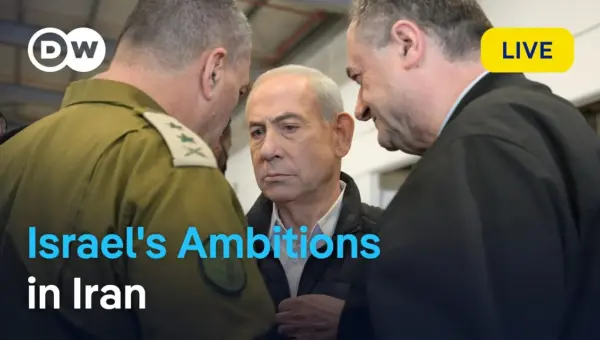
Israel’s Strategy Against Iran Revealed
Israel's strategy to counter Iran's nuclear ambitions and regional influence centers on containment, utilizing a mix of covert military actions, intelligence operations, and diplomatic pressure. Analysts highlight the growing urgency due to Iran's nuclear advancements, while also noting the persistent risk of escalation in the volatile Middle East.
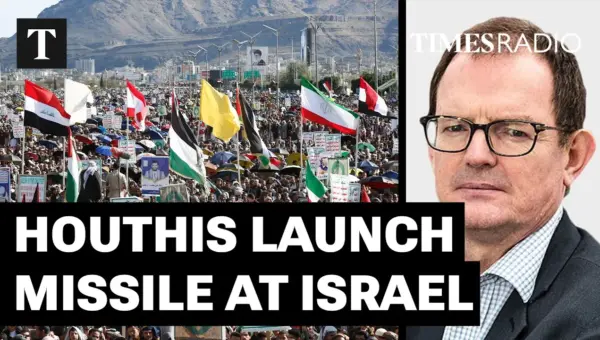
Houthis Fire Missile at Israel, Iran’s Guard Takes Center Stage
Yemen's Houthi group has fired a missile at Israel, signaling a potential escalation of the regional conflict. Meanwhile, Iran's powerful Islamic Revolutionary Guard Corps (IRGC) appears to be consolidating its control over the country's leadership following reported strikes. This shift places hardline figures at the forefront of decision-making.